Origins and Escalation
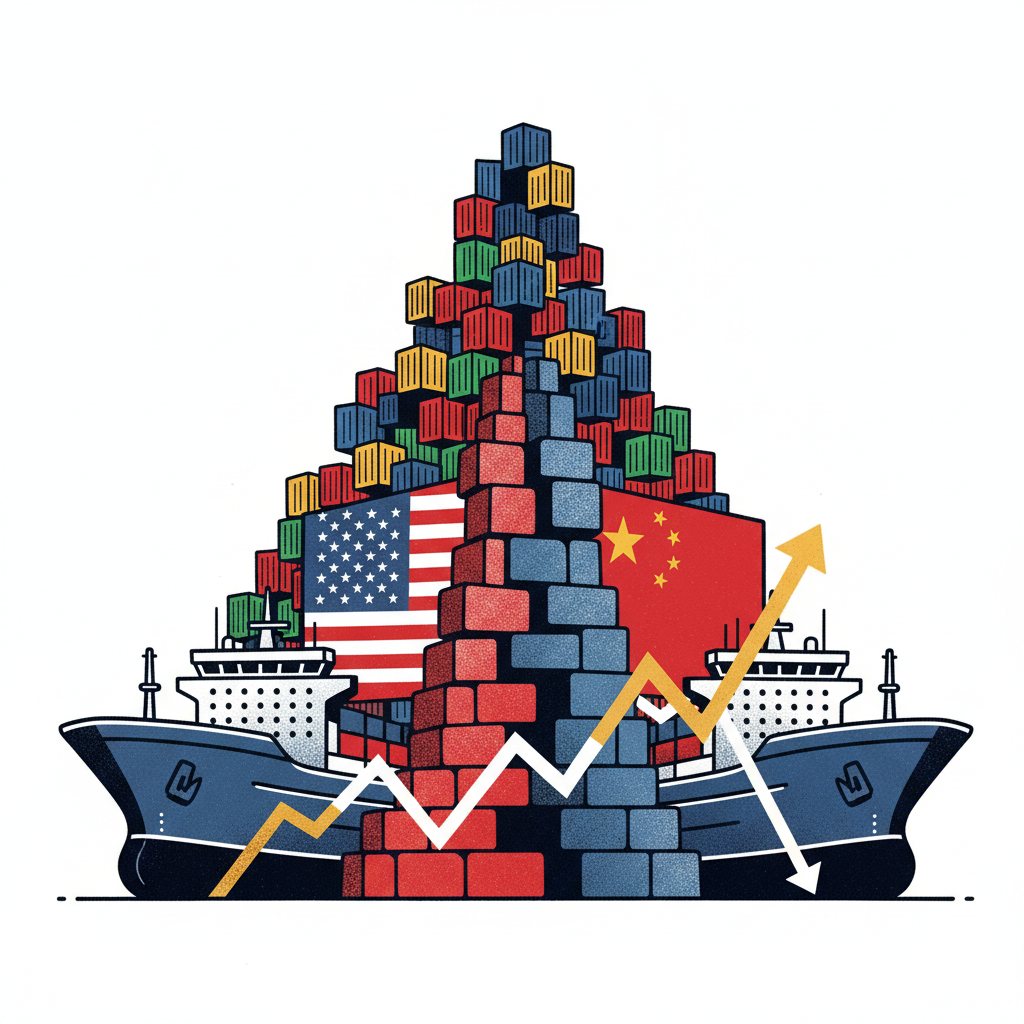
The conflict originated from US grievances regarding China's trade practices, including a significant trade deficit, alleged intellectual property theft, forced technology transfer for market access, and state subsidies providing unfair advantages to Chinese companies. In 2018, the US began imposing tariffs on billions of dollars worth of Chinese imports, citing Section 301 of the Trade Act of 1974. China promptly retaliated with its own tariffs on US goods, leading to a tit-for-tat escalation that significantly disrupted global supply chains and trade flows. This initial phase culminated in the "Phase One" trade deal in January 2020, which saw China commit to increased purchases of US goods and services, but many tariffs remained in place.
Current Geopolitical Context and Dynamics
The US China trade war remains an active, evolving geopolitical dynamic, as indicated by a current influence score of 17/100, reflecting its ongoing but fluctuating impact on global affairs. GeoGazet tracking reveals significant activity, with "Tariffs & Trade" being the top connection by signal volume (78 tracked signals), followed by "China" (38 tracked signals) and "United States" (13 tracked signals). This data highlights the persistent focus on these core elements of the conflict.
Recent signals indicate continued pressure points. For instance, GeoGazet tracked "Trump's New US Tariff Wall Shakes Up Winners, Losers Lineup" and "Trump’s ‘Forced Labor’ Tariffs: If At First You Don’t Succeed . . .", showing a renewed or continued emphasis on tariff mechanisms and specific import restrictions, particularly concerning human rights allegations and supply chain integrity. In response, "China Slaps Restrictions on Dozens of U.S. Companies" demonstrates reciprocal actions, indicating an escalating or maintained state of economic friction. The GeoGazet graph shows a total of 100 tracked events, underscoring the multitude of actions and reactions characterizing this conflict beyond just tariffs, including export controls, investment restrictions, and technology denial aimed at securing strategic advantages in critical sectors like semiconductors and artificial intelligence.
Historical Parallels
Trade disputes between major economic powers are not unprecedented. Historically, nations have employed protectionist measures to safeguard domestic industries or assert economic leverage. For example, the US Japan trade tensions of the 1980s, driven by US concerns over Japanese automobile and electronics imports, involved voluntary export restraints and targeted tariffs, illustrating similar dynamics of bilateral economic friction and strategic competition. The current US China conflict, however, is notable for its scale, duration, and its expansion into broader areas of technological and geopolitical competition.
Outlook: What to Watch For Next
The US China trade war is expected to continue evolving, with future developments influenced by domestic political cycles in both nations, global economic conditions, and emerging geopolitical flashpoints. Key areas to monitor include the potential for new tariff implementations or removals, the expansion of restrictions beyond goods to technology transfers and investment, and the impact of these policies on global supply chain restructuring. Observer attention should also be directed towards the frequency and nature of GeoGazet signals pertaining to "Tariffs & Trade," "China," and "United States" for early indications of escalation or de-escalation.