Origins and Escalation (2018-2019)
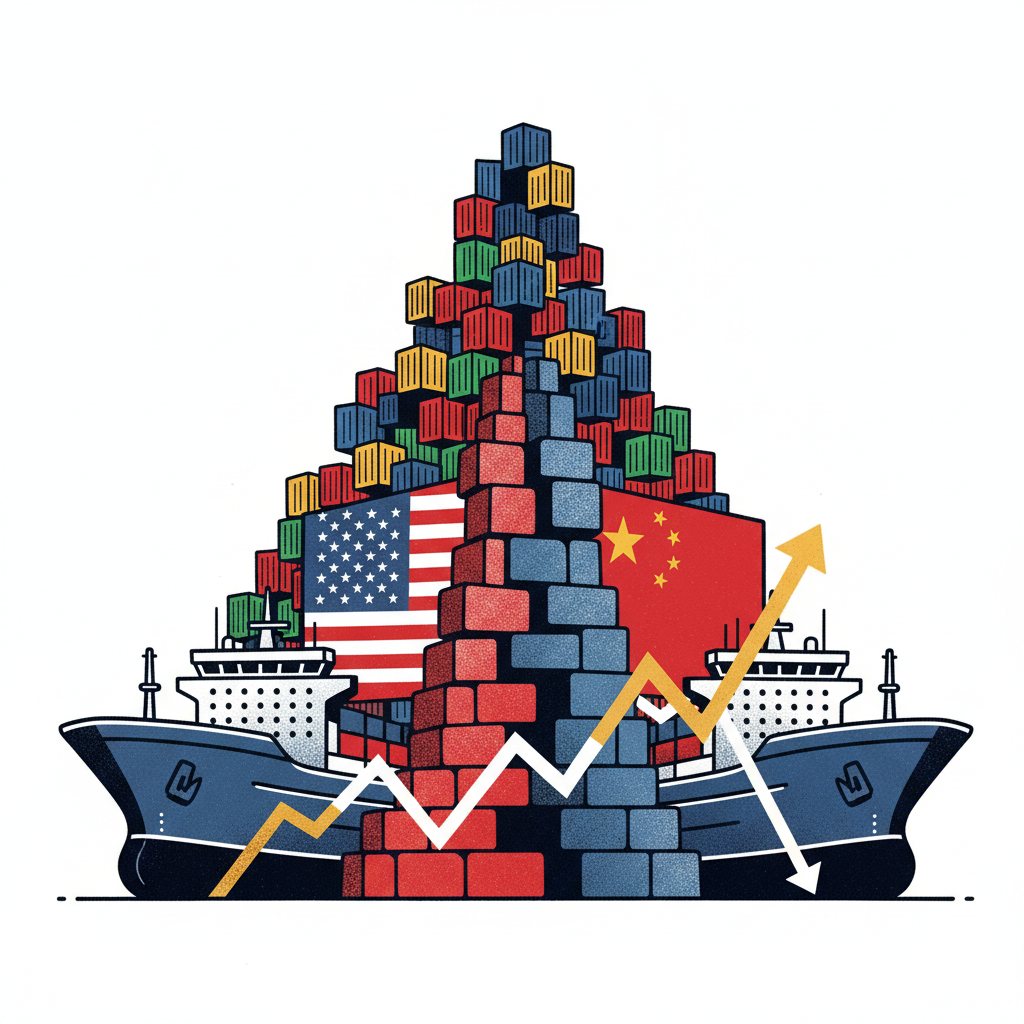
The trade war officially commenced in early 2018 when the United States imposed tariffs on steel and aluminum imports, citing national security concerns. This was swiftly followed by specific tariffs on Chinese goods, primarily targeting technology and industrial products, based on an investigation under Section 301 of the Trade Act of 1974 which alleged unfair trade practices, intellectual property theft, and forced technology transfers. China retaliated with tariffs on US agricultural products, automobiles, and other goods. This tit-for-tat dynamic led to multiple rounds of tariff increases throughout 2018 and 2019, impacting hundreds of billions of dollars worth of trade. The intensity of these measures is reflected in the top connections by signal volume, which identify China (35 tracked signals), Tariffs & Trade (27 tracked signals), and United States (11 tracked signals) as consistently significant areas of focus.
Economic Impact and Domestic Fallout
The escalating tariffs imposed substantial economic costs on both sides and globally. American consumers and businesses faced higher import costs, while US exporters, particularly in agriculture, lost significant market access in China. A recent GeoGazet signal, "Trump Tariff Fallout: Indiana Farmers Lost $607M from US-China Trade War," highlights a specific and substantial domestic economic consequence of these policies. Another identical GeoGazet signal reiterates the severity of these localized impacts, underscoring the direct financial losses incurred by specific sectors. The trade war also prompted a reevaluation of global supply chains, encouraging companies to diversify production outside of China. Overall, the GeoGazet graph tracks 48 events related to the US-China trade war, demonstrating its broad and multifaceted effects on the international landscape.
Phase One Agreement and Shifting Dynamics (2020-Present)
In January 2020, the US and China signed a "Phase One" trade agreement. Under this deal, China committed to purchasing an additional $200 billion worth of US goods and services over two years, while the US agreed to reduce some tariffs and cancel others. However, the majority of the original tariffs remained in place. The Biden administration, while maintaining many of the inherited tariffs, has shifted the focus from broad trade deficits to strategic competition, emphasizing technology restrictions, supply chain resilience, and human rights concerns. A GeoGazet signal, "US-China Relations in the Trump 2.0 Era: A Timeline," indicates ongoing consideration of how future US political shifts could further evolve this complex relationship. Historically, while trade disputes are common, the scale and duration of this "trade war" represented a significant departure from previous engagement-focused approaches, resembling more a strategic economic decoupling attempt than traditional market access negotiations.
What to Watch For Next
The future trajectory of the US-China trade dynamic remains fluid. Key factors to monitor include potential adjustments to existing tariffs by either administration, particularly concerning critical technologies and strategic industries. The upcoming US presidential election and the potential for a "Trump 2.0" era, as suggested by recent signals, could significantly alter policy approaches. Furthermore, China's economic stability, its efforts to bolster domestic consumption, and its responses to ongoing US technology restrictions will shape future trade relations. The broader geopolitical competition, encompassing security, human rights, and regional influence, will continue to intertwine with and dictate the direction of trade policy.