Origins and Escalation
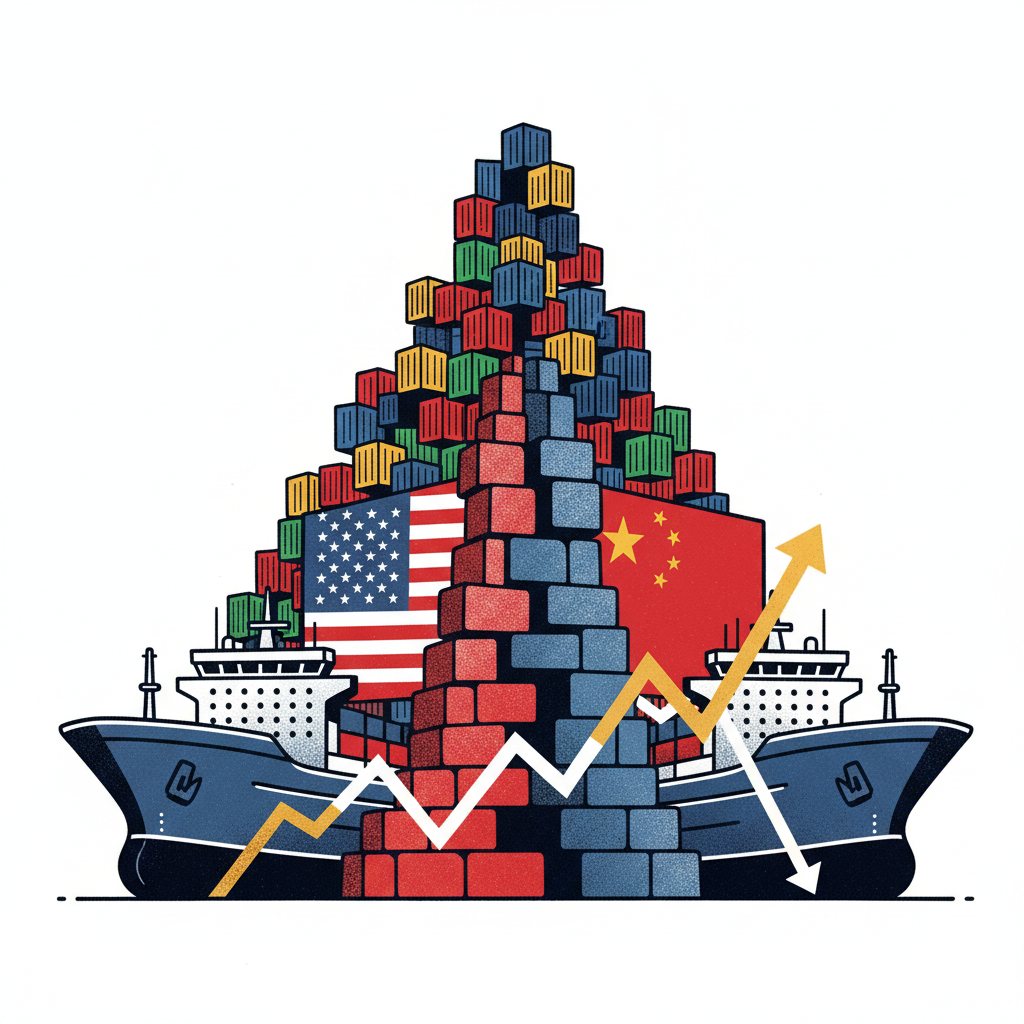
The trade war commenced with the Trump administration’s Section 301 investigation into China’s trade practices, leading to the imposition of tariffs on Chinese imports. Beijing retaliated with its own tariffs on American goods. Analysis of GeoGazet data indicates that "Tariffs & Trade" leads with 74 tracked signals, followed by "China" with 45 and "United States" with 16, underscoring the central role of these factors in the conflict. The initial phase saw a significant escalation, with both nations applying multiple rounds of duties across various sectors. The stated goal for Washington was to compel China to reform its trade policies and reduce its trade surplus with the US.
Economic Impact and Adaptation
The trade war created substantial disruptions for businesses and consumers worldwide. Early responses included companies exploring alternative supply chains or utilizing foreign trade zones to mitigate tariff impacts. However, as observed in GeoGazet tracking, "Foreign trade zones helped companies avoid tariffs. That's changed under Trump," indicating evolving US enforcement strategies. Despite these measures, China demonstrated resilience, with one GeoGazet signal, "How US Tariffs Weaponized China's Exports," suggesting that Beijing found ways to adapt or even leverage the new trade landscape. This adaptation is further evidenced by a GeoGazet report stating, "China's exports to the US are surging at a pre-Liberation Day pace, defying Trump's tariff goals," indicating that the tariffs did not uniformly achieve their intended reduction in Chinese exports to the US.
Geopolitical Context and Persistence
The trade war extends beyond mere economic considerations, intertwining with broader geopolitical rivalries, technological competition, and national security concerns. While the Biden administration has maintained many of the tariffs, the focus has shifted towards strategic competition in areas such as semiconductors and critical minerals. The current influence score of 28/100, alongside a total of 100 tracked events in the GeoGazet graph, suggests that while the trade war remains a significant ongoing factor, it now operates within an even more complex tapestry of US-China relations, encompassing human rights, regional security, and climate change. Historically, major powers have engaged in similar protectionist measures during periods of economic competition, yet the scale and integration of the modern global economy present unique challenges.
What to Watch For Next
Future developments will likely focus on targeted restrictions rather than broad tariffs, particularly in high-tech sectors. Watch for further US efforts to "de-risk" supply chains from China, China's continued development of indigenous technological capabilities to reduce reliance on foreign components, and potential shifts in global trade alliances. The evolving diplomatic engagement between Washington and Beijing will also be critical in determining whether the trade war’s intensity fluctuates or stabilizes.