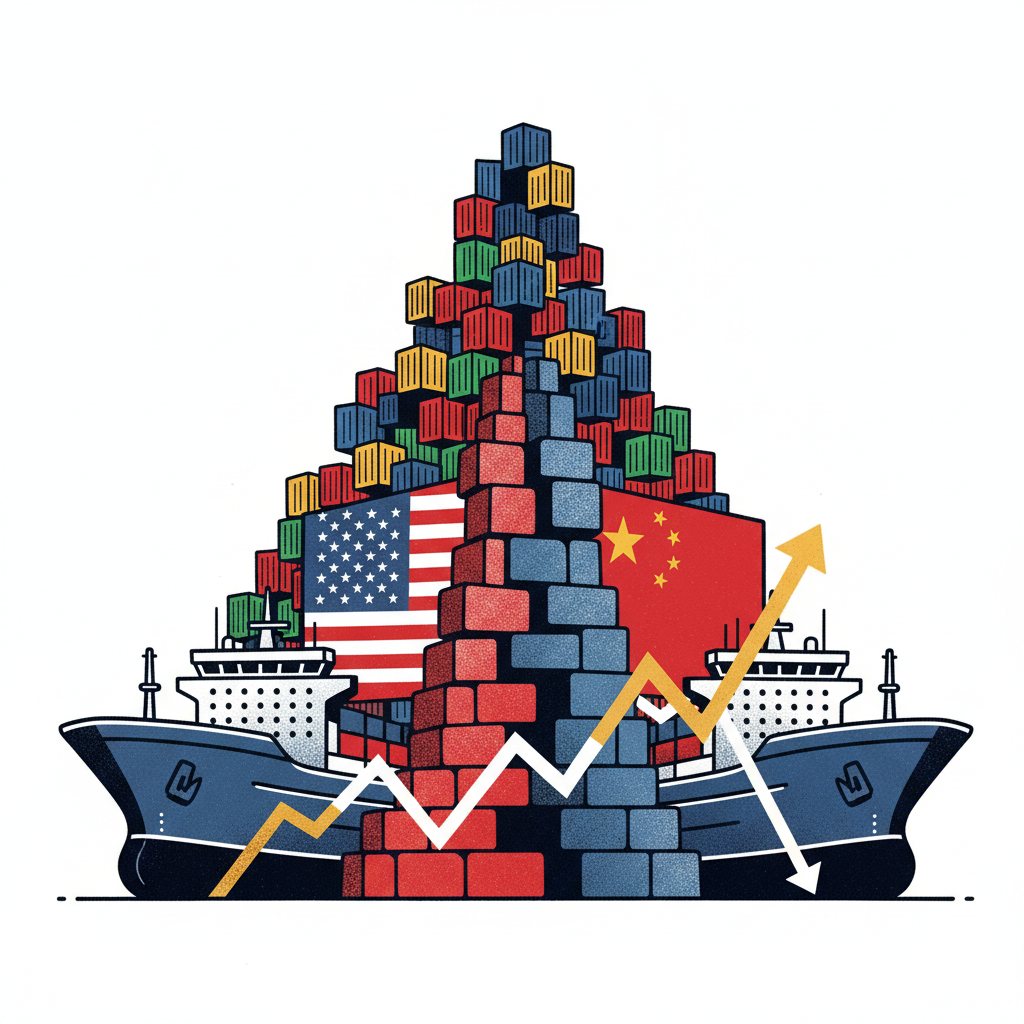
The US-China trade war, initiated in 2018, represents a fundamental shift from economic engagement towards strategic competition. It encompasses not only tariffs but also intellectual property disputes, technology export controls, and broader geopolitical anxieties. GeoGazet tracking shows top connections by signal volume centered on Tariffs & Trade (75 signals), China (42 signals), and the United States (11 signals), underscoring the ongoing focus on these critical areas amidst 100 total tracked events on the GeoGazet graph.
Tariff Outlook for 2026
The tariff landscape is projected to remain volatile through 2026, with a significant possibility of existing tariffs being maintained or even increased. Recent signals from GeoGazet tracking indicate this trajectory, with "US tariffs could return to previous levels if Section 301 probes succeed: Bessent" and "Bessent: Tariffs Will Snap Back to 'Exactly Where They Were' Before Supreme Court's IEEPA Ruling". These statements suggest that the foundational legal and policy mechanisms for imposing duties are robust and could be reactivated to their prior intensity. This implies that the US administration could restore tariffs to levels seen under the previous administration, particularly if Section 301 investigations conclude unfavorably for China. The rationale for tariffs extends beyond mere trade imbalance, now encompassing national security, human rights, and industrial policy objectives, making their removal less probable. Historically, significant trade disputes often escalate before resolutions, drawing parallels to the protectionist periods, although the deeply integrated nature of modern economies mitigates a full repeat of past eras.
Strategic Decoupling and Technology
By 2026, the trend of strategic decoupling is expected to deepen, driven by national security imperatives and resilience concerns. Both the US and China are pursuing policies to reduce critical supply chain dependencies, particularly in sensitive sectors such as semiconductors, artificial intelligence, and advanced manufacturing. US policy is likely to continue efforts to restrict China's access to advanced technology. The ongoing discourse, as reflected in signals like "Soumaya Keynes on the right way to fight a trade war," indicates a sophisticated and evolving strategic approach beyond simple tariff measures. China, in turn, will intensify its drive for technological self-sufficiency, potentially creating parallel technological ecosystems and increasing global fragmentation. This competition extends to control over global technological standards and supply chains, ensuring continued friction.
What to Watch For Next
Observers should monitor the outcomes of ongoing Section 301 reviews, which will provide a clear indication of the US administration's near-term tariff strategy. The pace of technological decoupling and the effectiveness of export controls on both sides will also be crucial indicators. Furthermore, the rhetoric and policy positions arising from the aftermath of the 2024 US presidential election will significantly shape the bilateral trade relationship beyond 2026. Any shifts in multilateral trade institutions' engagement, or lack thereof, regarding US-China disputes will also bear watching for their impact on global trade governance.