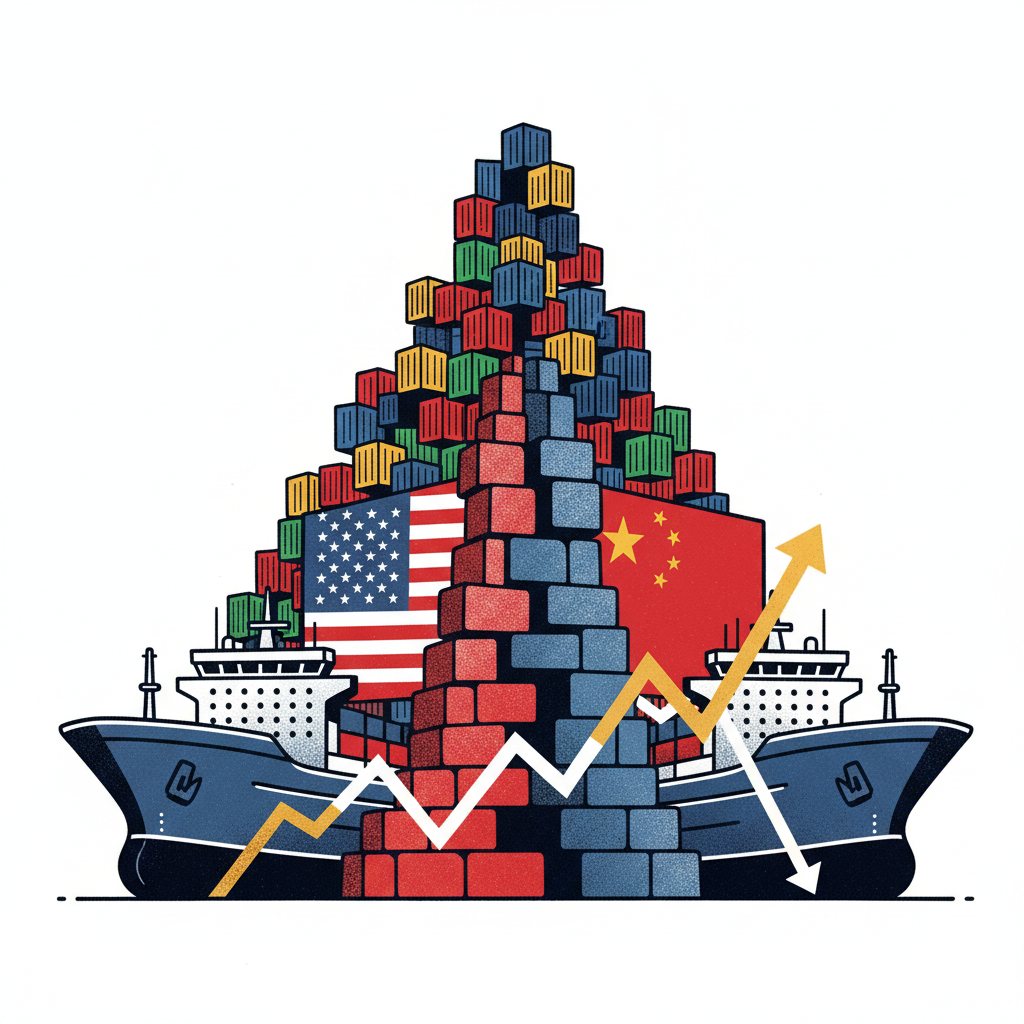
The Evolution of Economic Friction
The US-China trade war, initiated in 2018 with the imposition of Section 232 and Section 301 tariffs on Chinese goods, aimed to address perceived unfair trade practices, intellectual property theft, and forced technology transfers. While a "Phase One" trade agreement was signed in January 2020, significantly reducing some, but not all, tariffs and committing China to increased US imports, many structural issues remained unresolved. The agreement's import targets were largely unmet, particularly following the global economic disruptions of the pandemic. Today, the focus has shifted from overt tariff escalation to a broader strategic competition encompassing technology dominance, critical minerals, and supply chain resilience.
Persistent Tariff Threats
Despite the passage of the Phase One agreement, the threat of renewed or reimposed tariffs remains a live issue. GeoGazet tracking indicates an "influence score" of 12/100 for this topic, suggesting ongoing relevance within the geopolitical landscape, although not at its peak crisis intensity. This persistence is underscored by "Tariffs & Trade" registering 75 tracked signals, with "China" at 42 and "United States" at 11, indicating a sustained focus on these interconnected areas. Recent signals highlight this potential for re-escalation. For example, "US tariffs could return to previous levels if Section 301 probes succeed: Bessent" directly points to the prospect of existing duties being reinstated or increased. Furthermore, "Bessent: Tariffs Will Snap Back to 'Exactly Where They Were' Before Supreme Court's IEEPA Ruling" signals that underlying legal and policy mechanisms are poised to revert to more aggressive stances if legal interpretations permit. The analytical discussion surrounding such strategies, as exemplified by "Soumaya Keynes on the right way to fight a trade war," further confirms that the debate and implementation of trade war tactics are far from concluded. GeoGazet's total tracked events, numbering 100, illustrate the breadth of monitoring applied to this complex issue.
Broader Geopolitical Context
The US-China trade conflict is now inextricably linked to a wider geopolitical competition. Beyond tariffs, policies aimed at de-risking supply chains, restricting access to advanced semiconductors, and limiting investment in sensitive technological sectors illustrate a deeper struggle for economic and technological supremacy. This mirrors historical periods of great power rivalry where economic tools were deployed as instruments of statecraft, though the current era is characterized by globalized supply chains that make complete decoupling challenging. The persistent trade deficit between the US and China, alongside ongoing concerns about industrial subsidies and market access in China, ensures continued friction.
What to Watch For Next
Observers should monitor the outcomes of ongoing Section 301 investigations and any potential legal challenges that could pave the way for tariff reinstatements. Policy announcements from both the US and Chinese governments regarding strategic industries, technology export controls, and foreign investment restrictions will provide insight into the evolving nature of this economic competition. Additionally, the development of alternative supply chains and the pace of nearshoring or friendshoring initiatives will indicate the long-term impact of this sustained economic rivalry.