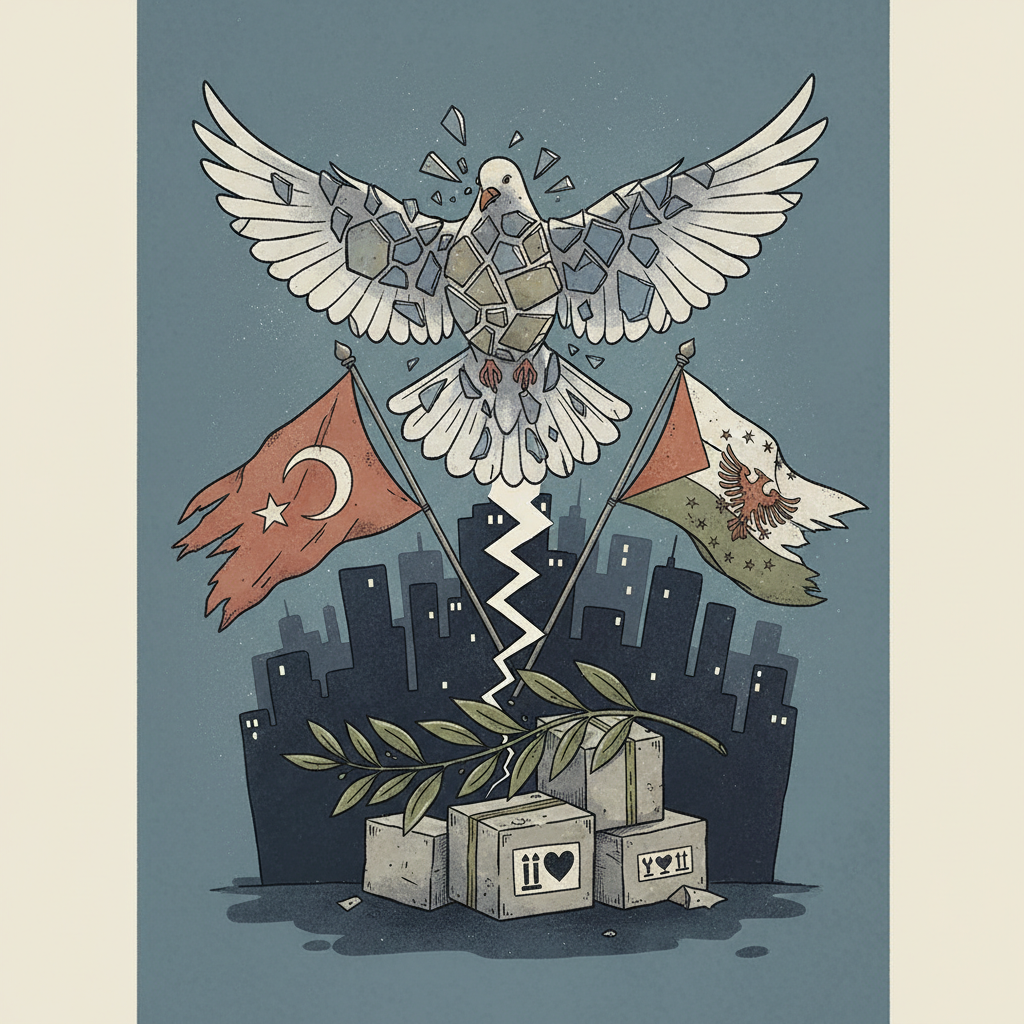
Current Status of the Conflict
The current situation surrounding Gaza remains highly volatile and unresolved. GeoGazet tracking indicates a Current influence score of 48/100, highlighting the ongoing instability and geopolitical relevance of the conflict. The persistent high signal volume further underscores this reality, with Gaza tracking 55 signals, Peace & Ceasefire tracking 51 signals, and Israel tracking 43 signals as top connections by signal volume. This intense focus on conflict, peace efforts, and the primary actors demonstrates that the situation is far from concluded. The total number of tracked events in the GeoGazet graph stands at 100, reflecting a complex and dynamic environment of ongoing developments, military actions, and diplomatic efforts.
Persistent Violence Despite Ceasefire Claims
Despite reports and international calls for ceasefires, significant violence continues, directly contradicting any notion that the war has ended. Recent signals from GeoGazet tracking reveal this stark reality: "Israeli Attacks on Gaza Have Killed Over 1,000 Palestinians Since October 'Ceasefire'." This alarming statistic is corroborated by another signal stating, "Over 1,000 people killed during Gaza ceasefire, Palestinian authorities say." These reports unequivocally demonstrate that hostilities have not ceased, and civilian casualties continue to mount in a substantial manner during what is ostensibly a period of reduced conflict. The use of the term "ceasefire" in this context appears to denote a pause in specific large-scale operations rather than a comprehensive cessation of violence or a lasting end to the conflict.
Historical Context and Path Ahead
The pattern of ongoing violence amidst ceasefire declarations is not unprecedented in the Gaza conflict. Historically, numerous "ceasefires" have served as temporary pauses in hostilities, often failing to address the underlying causes of the conflict or lead to a lasting peace. Previous major escalations, such as those in 2014 and 2021, also saw periods of intense fighting followed by fragile truces that eventually broke down. This historical comparison suggests that the current situation is another phase in a protracted conflict rather than its conclusion. Diplomatic efforts continue, as evidenced by a recent signal stating, "Middle East crisis live: Vance says 60-day-period to reach final peace agreement starts today and US ‘isn’t giving up a." This indicates that a final peace agreement is still an aspiration requiring significant negotiation, further confirming the war is not over.
What to Watch For Next
Observers should closely monitor the 60-day negotiation period for any breakthroughs or escalations. The humanitarian situation within Gaza remains critical and will demand continued international attention. The potential for regional spillover, including interactions with other actors in the Middle East, also bears careful watching. Internal political developments within both Israel and Palestinian factions will significantly influence future trajectories.