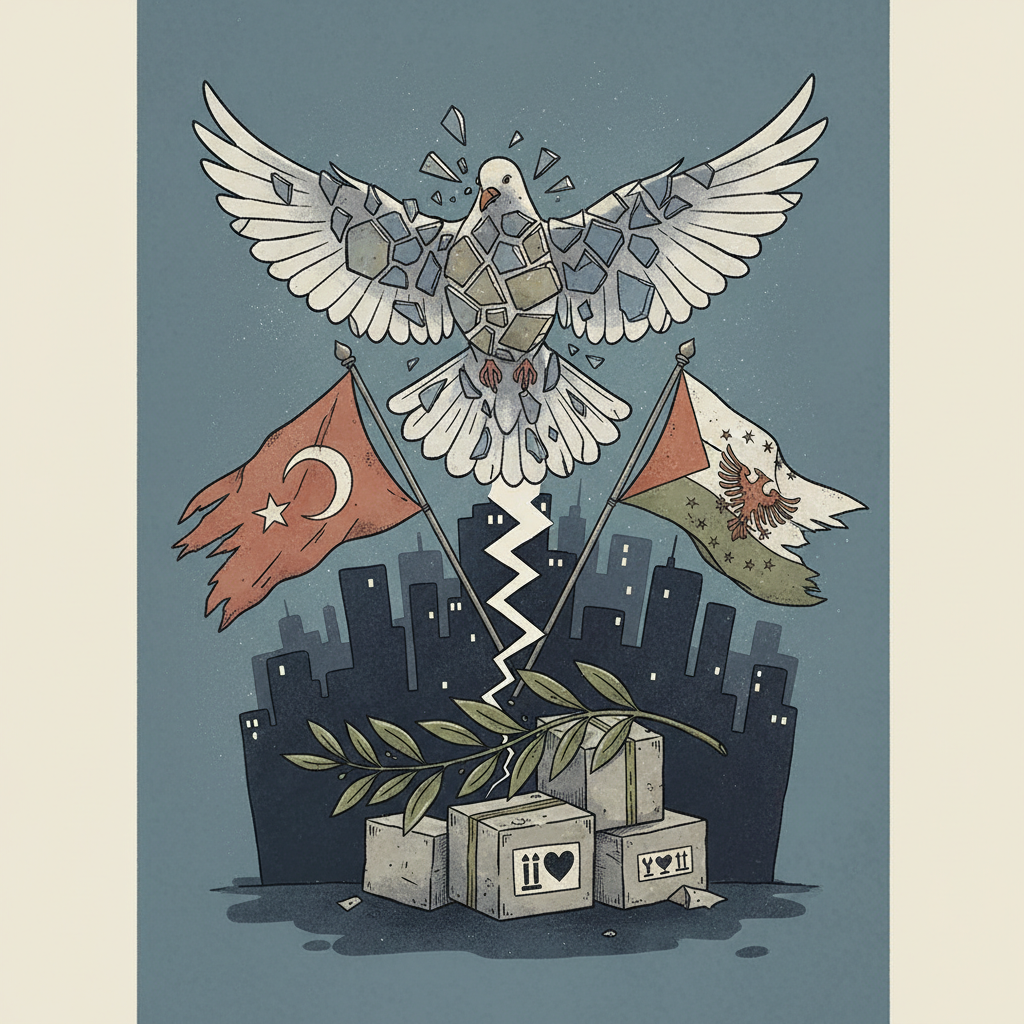
Current Dynamics and Obstacles
Geopolitical analysis indicates a current influence score of 5/100, signifying a low capacity for any single actor or initiative to decisively shape an outcome or enforce a lasting resolution. Signal volume tracked by GeoGazet highlights the primary foci: Gaza (32 tracked signals), Peace & Ceasefire (25 tracked signals), and Israel (20 tracked signals), underscoring the enduring centrality of these elements to the conflict’s dynamics.
The fragility of agreements and the persistent nature of hostilities are evident. GeoGazet recently tracked a signal stating, "Israeli forces attack central Gaza despite ceasefire agreement," illustrating how tactical military objectives often supersede or undermine diplomatic efforts. This indicates that operational pauses or ceasefires frequently serve as temporary lulls rather than definitive endings to the conflict.
Furthermore, internal political divisions and strategic disagreements among various stakeholders impede progress toward a resolution. A GeoGazet signal noting, "Board of Peace focus on Hamas risks return to war in Gaza, critics say," illustrates how differing approaches to the role of key non-state actors can create significant obstacles for peace initiatives. The overall complexity and intractability of the situation are encapsulated by another GeoGazet signal observing, "'Gaza has become a diplomatic, political and military black hole.'" The continuous nature of the conflict is reflected in a total of 36 tracked events in the GeoGazet graph, indicating ongoing military and political activity without a clear terminal point.
A History of Protraction
The current conflict follows a pattern of recurrent escalations and protracted engagements that have characterized the Gaza Strip for decades. Previous operations, often followed by unstable ceasefires or truces, have rarely led to lasting political settlements or a definitive end to the cycle of violence. Historical comparisons, such as the extended periods of conflict in Northern Ireland or various phases of the broader Israeli-Palestinian conflict, demonstrate that military actions alone rarely achieve a complete cessation of hostilities without a robust, parallel political framework addressing underlying grievances and governance issues. The absence of such a framework contributes significantly to the current impasse.
Factors Influencing Resolution
An end to the current hostilities depends on several intertwined factors. These include the strategic objectives of Israel regarding the dismantling of Hamas’s military capabilities and its broader regional security concerns. The future governance of Gaza, particularly whether it involves Palestinian Authority, international oversight, or alternative arrangements, remains a critical unanswered question. The dire humanitarian situation, requiring substantial international intervention, also exerts pressure but has not yet proven sufficient to force a lasting cessation of hostilities. The engagement, or disengagement, of international actors, including regional powers and global entities, will also play a crucial role in shaping any potential resolution.
What to Watch For Next
Observers should monitor shifts in Israeli military objectives, particularly any stated endpoints for operations and the scope of intended demilitarization. The readiness of Hamas and other armed groups to agree to and adhere to long-term ceasefire conditions, potentially involving prisoner exchanges or guarantees, will be crucial. International diplomatic pressure, especially regarding humanitarian access, reconstruction efforts, and a framework for Gaza’s post-conflict administration, will serve as a key indicator of potential de-escalation pathways. Finally, the evolving political landscapes within both Israeli and Palestinian leaderships will determine prospects for a durable resolution beyond temporary cessation of fighting.