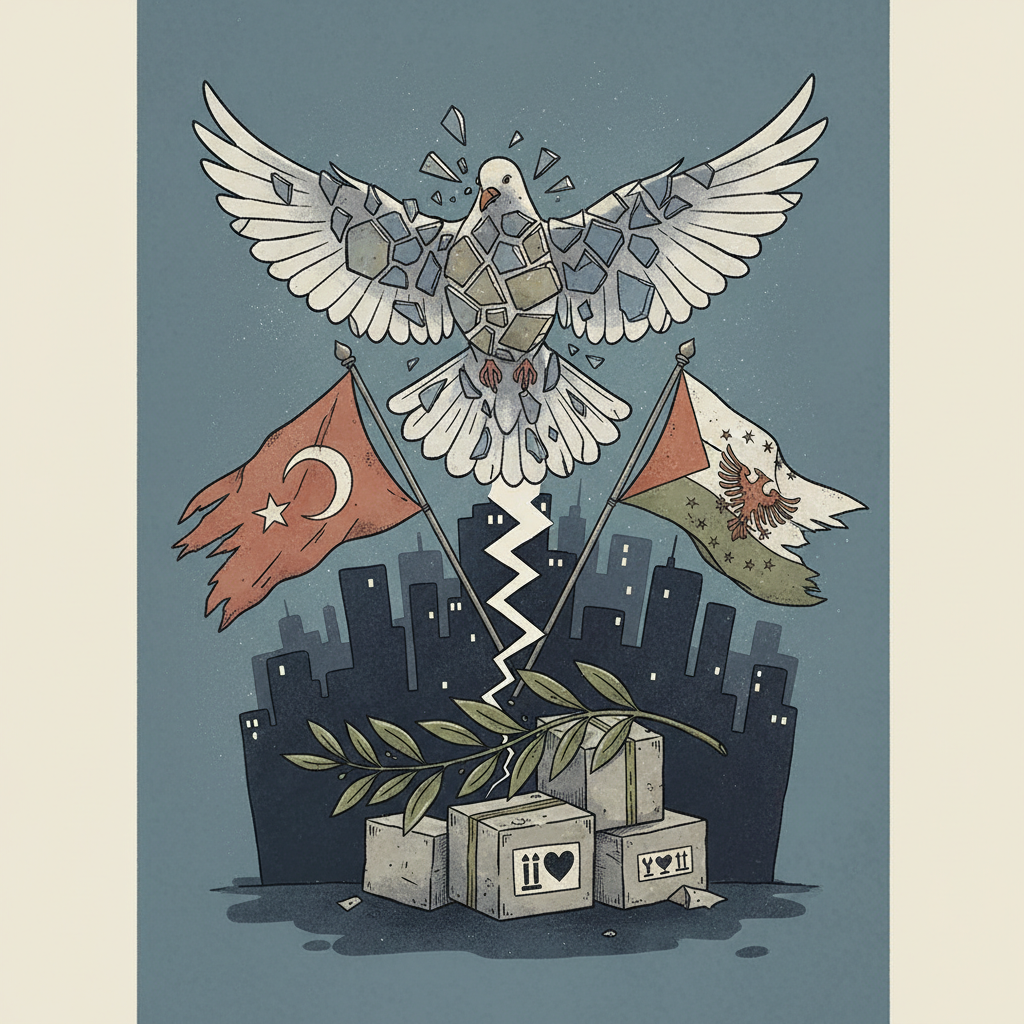
Context of the Gaza War
The current iteration of the conflict involves the State of Israel and Hamas, the governing authority in the Gaza Strip. It emerged following a large-scale attack by Hamas on Israeli territory, prompting a significant Israeli military response in Gaza. Geopolitical analysis indicates a persistent focus on the region, with Gaza registering 62 tracked signals, Peace & Ceasefire 51 signals, and Israel 47 signals as top connections by signal volume in GeoGazet tracking. The total tracked events in the GeoGazet graph stand at 100, underscoring the dynamic nature of the situation. The conflict's current influence score, at 37/100, suggests it holds a notable but not singularly dominating position in global attention, amidst other international events.
Current Geopolitical Situation and Diplomatic Standoffs
The geopolitical landscape surrounding the Gaza War is highly intricate, involving numerous state and non-state actors. Diplomatic efforts frequently stall over key issues. Recent signals from GeoGazet tracking reveal that "Gaza talks hosted by Egypt stall as Hamas disarmament ‘remains only point of contention’," highlighting a core obstacle to any lasting resolution. Furthermore, various international actors attempt to broker peace, as evidenced by a signal indicating "Trump's Gaza peace plan: What Hamas has agreed and what comes next." This suggests that multiple frameworks for de-escalation are being considered, though consensus remains elusive.
The pressures on key leaders are substantial. Israeli Prime Minister Benjamin Netanyahu, for example, is reportedly "caught between the US, Lebanon war, and Iran ceasefire," according to GeoGazet tracking. This illustrates the broader regional interconnectedness, where the Gaza conflict is not an isolated event but rather interwoven with potential escalation fronts with Lebanon, the influence of Iran, and the strategic interests of the United States. The humanitarian situation within Gaza remains dire, a constant point of international concern and a significant factor in diplomatic negotiations.
Historical Parallels and Enduring Challenges
The current Gaza War is part of a longer historical trajectory of conflict in the Israeli-Palestinian arena. Previous major escalations, such as Operation Cast Lead (2008-2009), Operation Protective Edge (2014), and Operation Guardian of the Walls (2021), share commonalities with the present conflict, including cycles of violence, humanitarian crises, and complex ceasefire negotiations. A recurring challenge has been the lack of a comprehensive political settlement addressing the root causes of the conflict, leading to intermittent outbreaks of intense fighting. The current emphasis on Hamas disarmament, as a point of contention in Egyptian-hosted talks, echoes past difficulties in achieving demilitarization in the strip.
What to Watch For Next
Observers should monitor the progress, or continued stagnation, of ceasefire talks, particularly regarding the issue of Hamas disarmament. The internal political dynamics within Israel, influenced by external pressures from allies and regional adversaries, will be crucial. The potential for escalation on other fronts, notably with Lebanon, and the broader role of Iran in the region, remains a significant concern. The impact of various international peace proposals and the humanitarian situation within Gaza will continue to shape the trajectory of this ongoing conflict.