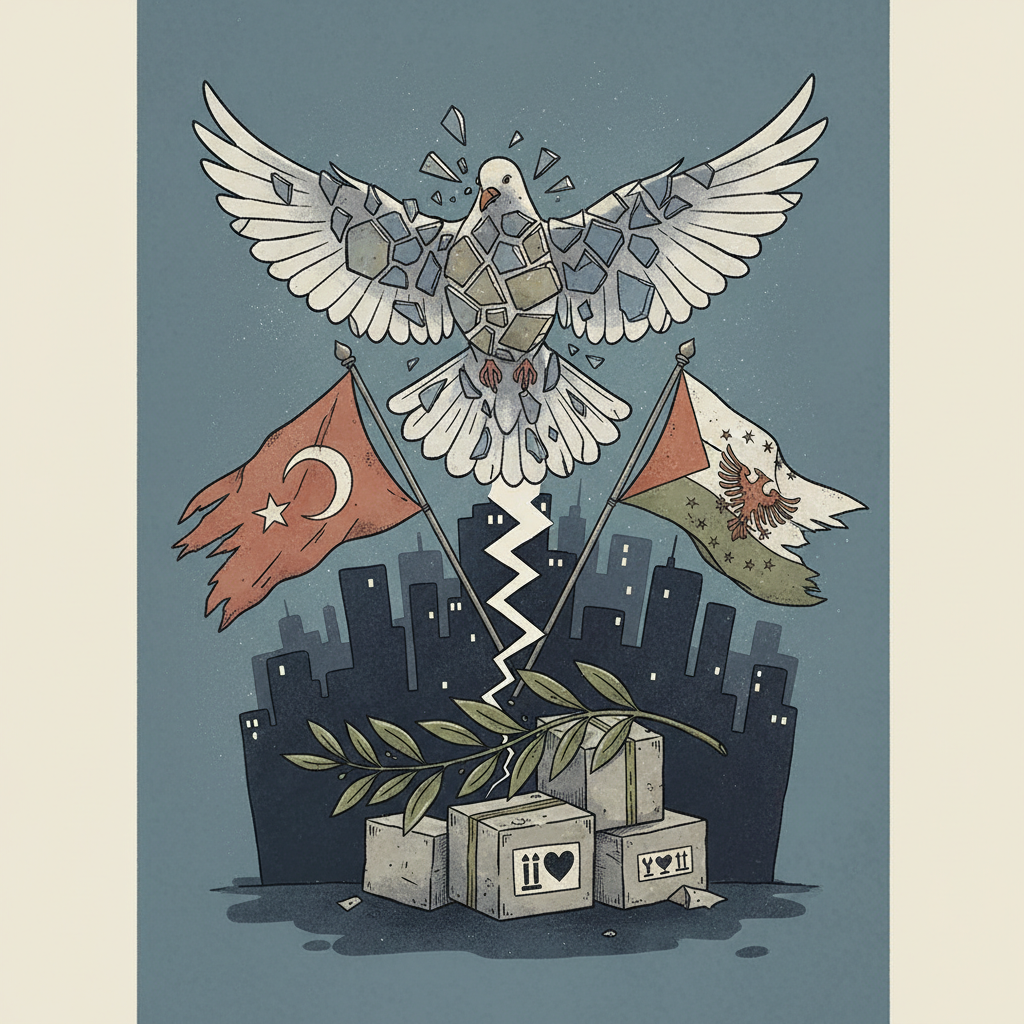
Initial Answer: Why the Gaza Conflict Starts
Historical Context and Underlying Tensions
The Gaza Strip, a densely populated coastal enclave, has been a central flashpoint in the broader Israeli-Palestinian conflict for decades. Following Israel's disengagement from Gaza in 2005, and Hamas's subsequent takeover in 2007, Israel and Egypt imposed a blockade, significantly restricting the movement of goods and people. This blockade, intended by Israel to prevent Hamas from importing weapons and resources for attacks, has been criticized internationally for exacerbating a severe humanitarian crisis within the Strip. This prolonged state of siege, coupled with unfulfilled Palestinian aspirations for statehood and the presence of armed groups like Hamas and Palestinian Islamic Jihad, ensures a volatile environment. The continuous high signal volume for "Gaza" (50 tracked signals) and "Israel" (44 tracked signals) underscores the enduring focus on these primary actors in the region, as observed in current intelligence tracking.
Triggers and Escalation Dynamics
While the underlying conditions are constant, specific conflict iterations are often triggered by a variety of events, including rocket fire from Gaza into Israel, Israeli airstrikes in response to perceived threats, clashes in Jerusalem or the West Bank, and internal Palestinian political dynamics. The influence of this conflict remains high, indicated by a current influence score of 55/100. Geopolitical intelligence tracking shows a persistent pattern of violence punctuated by fragile truces. For example, recent signals from GeoGazet include titles like "The Performative Ceasefire in Gaza," indicating the temporary and often symbolic nature of these agreements. This cyclical pattern is further evidenced by reports such as "Israel, Hezbollah agree to ceasefire after morning flareup" and "Israel and Hezbollah renew ceasefire after U.S. and Iran call off talks over fighting in Lebanon," illustrating how rapidly hostilities can erupt and subside, even involving adjacent actors. The sheer volume of incidents is notable, with a total of 100 tracked events in the GeoGazet graph representing numerous instances of conflict and de-escalation attempts.
The Role of Ceasefires and External Actors
The frequent calls for and breakdowns of ceasefires are a defining characteristic of the Gaza conflict. The high signal volume for "Peace & Ceasefire" (48 tracked signals) highlights the continuous international and regional efforts to mediate an end to hostilities. However, these ceasefires are often precarious, as seen in the GeoGazet signal "The Performative Ceasefire in Gaza," suggesting that agreements are sometimes more about short-term relief than long-term resolution. External actors, including the United States, Egypt, and Qatar, frequently play a mediating role. The mention of the U.S. and Iran in relation to Israel and Hezbollah's ceasefire signals the complex web of regional influences and proxy dynamics that complicate any lasting peace. Historically, similar cycles of violence and temporary truces have been observed in other protracted conflicts globally, such as the Northern Ireland Troubles or the Kashmir dispute, where deeply entrenched grievances lead to repeated flare-ups.
What to Watch For Next
Future developments in the Gaza conflict will hinge on several factors. Monitoring the effectiveness and longevity of any negotiated ceasefires, the internal political stability within both Gaza and Israel, and the humanitarian situation within the Strip will be crucial. Regional dynamics, particularly the involvement of external powers and any shifts in their diplomatic engagement, also warrant close observation. The persistence of core grievances means that even periods of calm are likely temporary, underscoring the need for a comprehensive political solution rather than merely managing escalations.