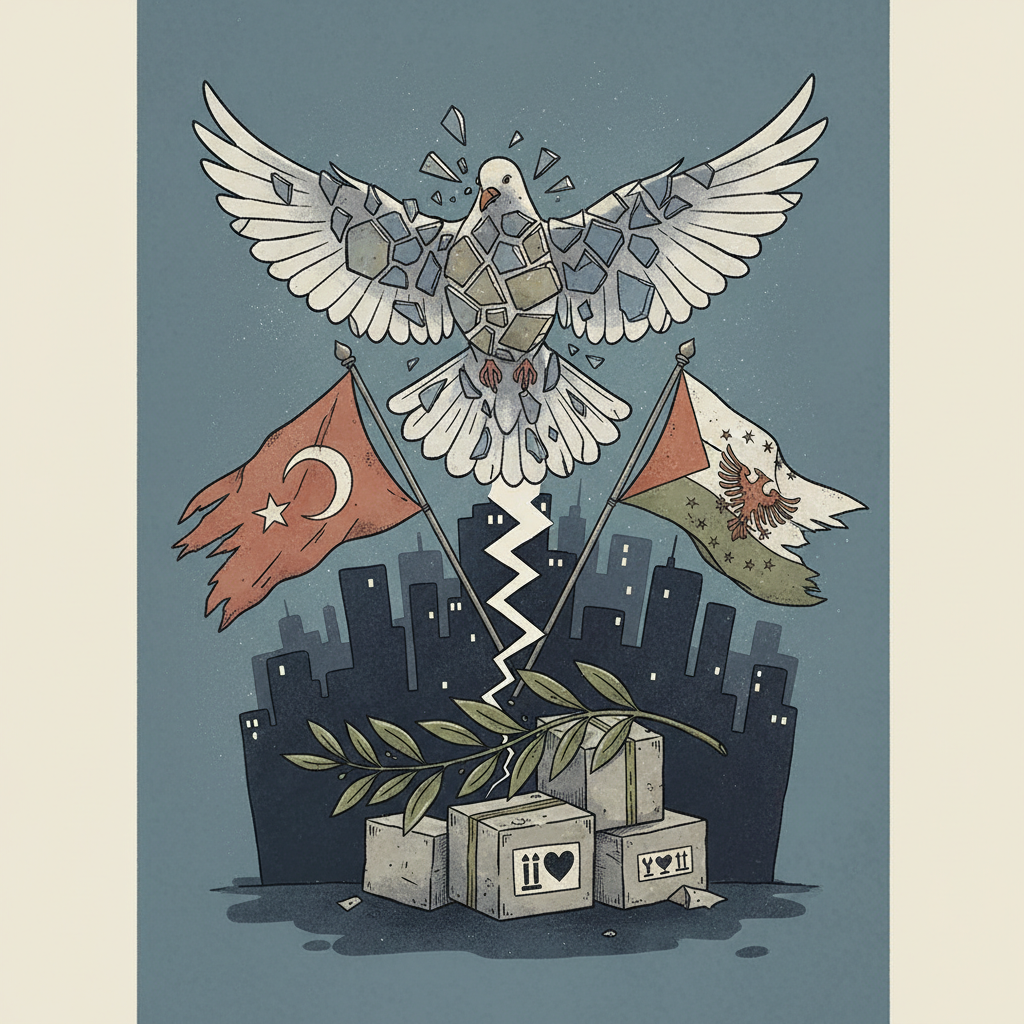
Current Geopolitical Context
The ongoing conflict in Gaza is characterized by persistent military operations and a severe humanitarian crisis. GeoGazet tracking indicates a grim reality, with a recent signal reporting "Nearly 1,000 dead in Gaza since start of ceasefire illusion," underscoring the fragility and short-lived nature of previous attempts at de-escalation. Analysis of top connections by signal volume reflects this dynamic: "Gaza" registers 60 tracked signals, "Peace & Ceasefire" records 50 tracked signals, and "Israel" shows 44 tracked signals. The higher volume for conflict-related terms compared to peace efforts highlights the prevailing focus on active hostilities and their consequences.
Regional Escalation and Influence Dynamics
The conflict is not isolated but is deeply interwoven with broader Middle Eastern tensions. GeoGazet signals point to a widening regional destabilization, as evidenced by a report stating, "Iran war live: Tehran targets Bahrain, Kuwait, Jordan after new US strikes." This expansion of military engagements suggests that the Israel-Gaza conflict is increasingly a component of a larger regional confrontation, making a localized cessation more complex. Furthermore, a "Middle East LIVE" signal warns that "Diplomacy in focus as escalation ‘reverberates across borders and continents’, warns UN chief," indicating a growing international recognition of the far-reaching implications. The current influence score for external actors in resolving the conflict stands at a low 33/100, suggesting limited leverage by international bodies or powers to enforce a lasting peace. The sheer volume of activity, with 100 total tracked events in the GeoGazet graph, further illustrates the multifaceted and entrenched nature of the crisis.
Historical Precedents and Challenges
Historically, conflicts involving Israel and Palestinian factions have been cyclical, characterized by periods of intense fighting followed by often temporary truces that fail to address core grievances. Past attempts at cessation have frequently been short-lived, with unresolved political objectives, security concerns, and humanitarian demands contributing to renewed hostilities. Similar to previous escalations in the Levant, the current situation demonstrates the difficulty of achieving a stable peace when deeply entrenched narratives and security imperatives clash, and when regional actors exploit or fuel the conflict for their own strategic gains.
What to Watch For Next
Observers should monitor several critical indicators. These include the efficacy of ongoing diplomatic efforts, particularly those involving international mediators and regional powers. The implementation and impact of humanitarian aid deliveries will be crucial in mitigating the crisis and potentially fostering conditions for de-escalation. Any shifts in the internal political landscapes of Israel or Palestinian factions could alter strategic objectives. Lastly, any further regional escalations or de-escalations, particularly involving Iran and its proxies, will significantly influence the trajectory and potential duration of the Israel-Gaza conflict.