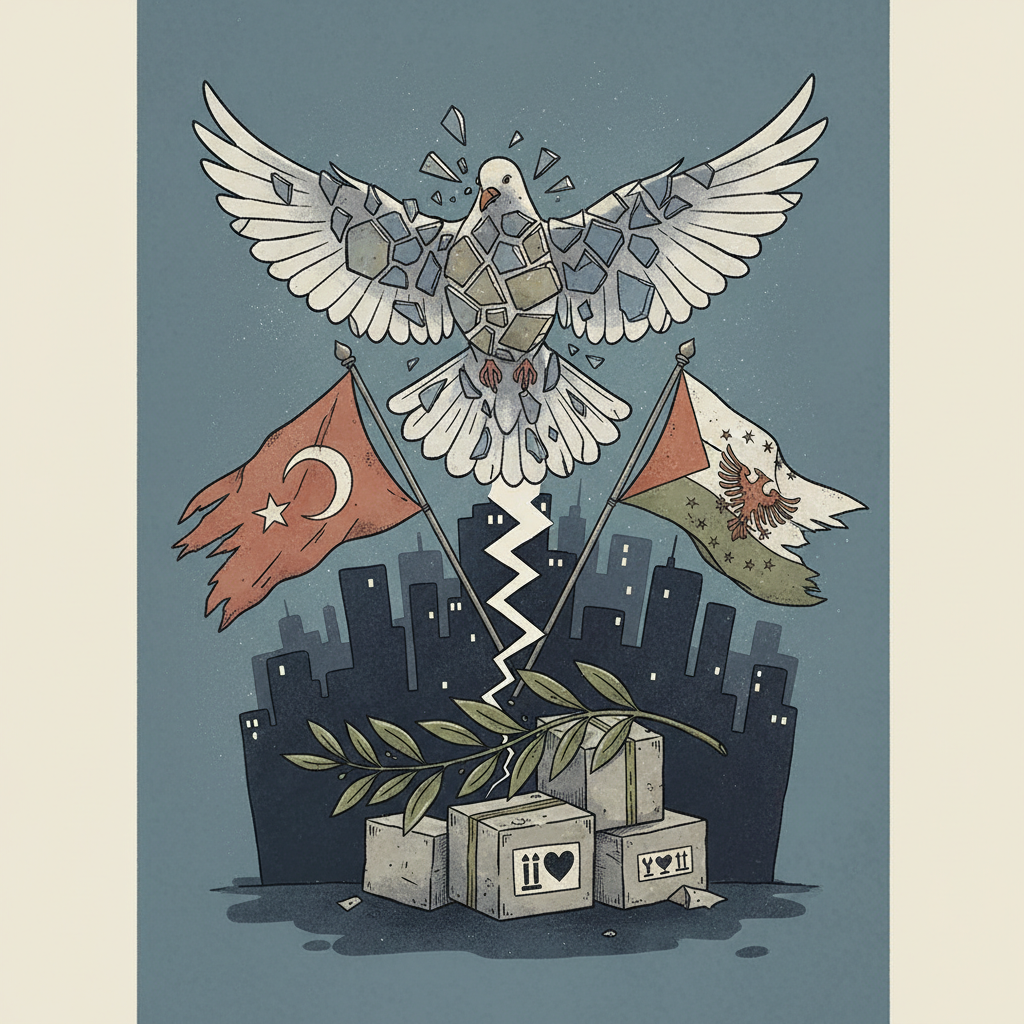
Context of the Gaza Conflict
The Gaza Strip, a densely populated Palestinian territory, has been under an Israeli and Egyptian blockade since 2007, following Hamas' takeover. This long-standing blockade, coupled with frequent past escalations, has created severe humanitarian challenges and entrenched the cycle of violence. The current situation marks a significant intensification of the Israeli-Palestinian conflict, drawing global attention. GeoGazet tracking indicates the conflict maintains a "Current influence score" of 39/100, reflecting its moderate but persistent global impact on geopolitical discourse.
The October 7 Trigger
The October 7, 2023, Hamas attack involved thousands of rockets fired into Israel, simultaneous breaches of the Gaza border fence, and ground incursions by militants into Israeli towns and military bases. The assault resulted in widespread casualties and the abduction of numerous Israeli civilians and soldiers, taken back into Gaza as hostages. Hamas stated its actions were in response to ongoing Israeli occupation, the blockade of Gaza, and perceived Israeli provocations at Al-Aqsa Mosque and in the West Bank. Israel responded by declaring war, launching Operation Iron Swords, which included extensive airstrikes and a subsequent ground invasion of Gaza, with stated objectives of eliminating Hamas, recovering hostages, and preventing future attacks. This immediate escalation quickly led to a high volume of related signals, with "Gaza" (57 tracked signals), "Peace & Ceasefire" (53 tracked signals), and "Israel" (44 tracked signals) emerging as top connections by signal volume on GeoGazet, underscoring the central actors and key themes.
Historical Precedents and Ongoing Challenges
The current conflict follows a pattern of repeated escalations in Gaza, seen in operations such as Cast Lead (2008-2009), Pillar of Defense (2012), Protective Edge (2014), and Guardian of the Walls (2021). However, the scale and ferocity of the October 7 attack, and the subsequent Israeli military response, represent a significant departure from previous cycles. Unlike prior engagements, Israel's stated goals are more expansive, aiming for a fundamental change in Gaza's security landscape. Despite intense international pressure and calls for de-escalation, sustained hostilities persist. GeoGazet tracking reveals the fragility of any cessation of violence, with recent signals including "Israeli Airstrikes Kill Palestinians across Gaza as Ceasefire Death Toll Nears 1,000" and "Israel continues to violate Gaza ceasefire, killing 13 people in a single day." Such reports illustrate the severe human cost and the difficulty in establishing and maintaining a lasting peace, further reinforced by signals like "Imaginary Peace Treaties and the Ceasefire Illusion." The total tracked events in the GeoGazet graph, numbering 100, highlight the continuous flux of developments in the conflict zone.
What to Watch For Next
Key developments to monitor include the progress of negotiations for a more comprehensive ceasefire and hostage release, the future governance and reconstruction of Gaza, and the potential for regional escalation, particularly with actors like Hezbollah and Houthi rebels. The humanitarian crisis within Gaza, including the provision of aid and efforts to prevent famine, remains a critical concern.