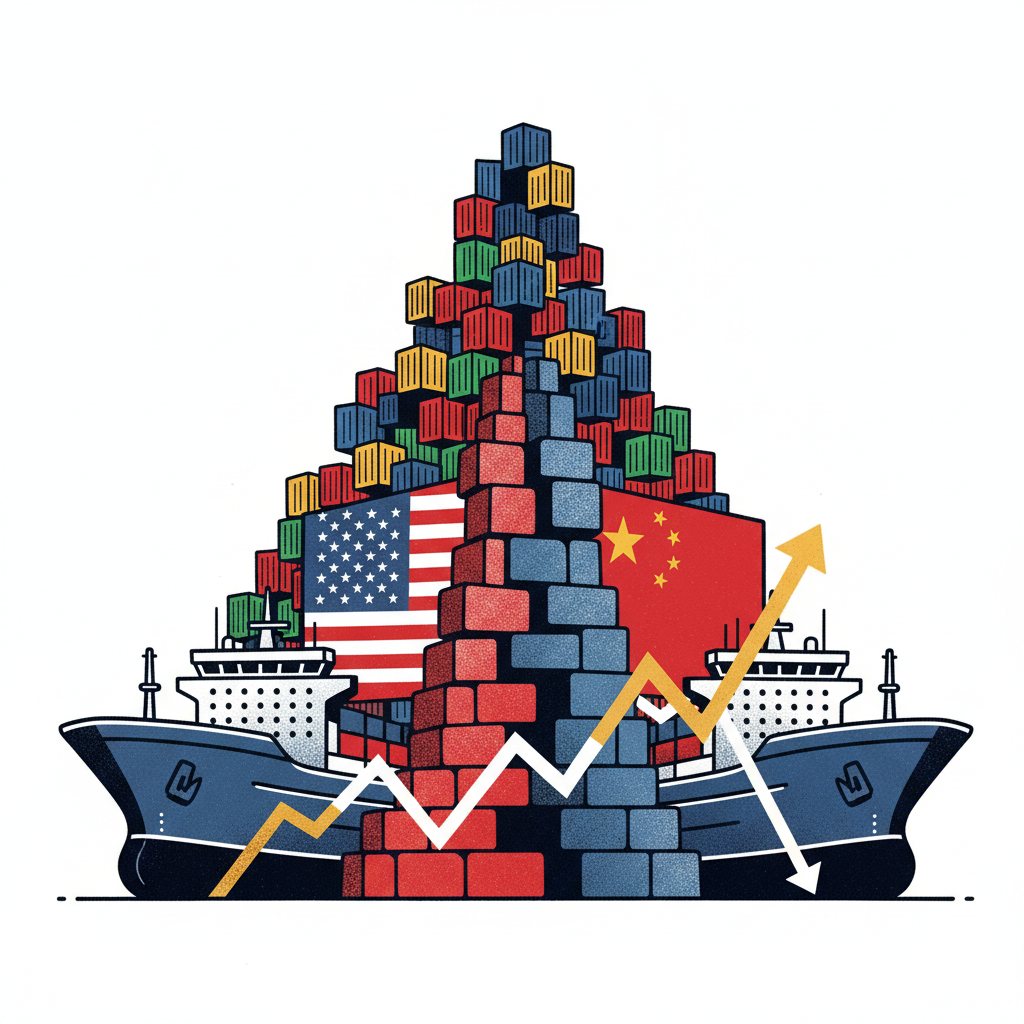
Escalation and Economic Impact
The year 2019 marked a peak in the trade war initiated in 2018. The United States, under the Trump administration, escalated tariffs on $200 billion worth of Chinese goods from 10 percent to 25 percent in May, and later announced plans to impose duties on virtually all remaining Chinese imports. China responded with its own tariffs on American products, including agricultural goods, thereby intensifying the tit-for-tat exchanges. These actions led to a measurable slowdown in global trade and manufacturing output. For instance, American importers faced higher costs, which were often passed on to consumers or absorbed by businesses. GeoGazet tracking indicates the continued economic consequences, with a recent signal noting, "Trump’s 'forever' tariffs are kicking in for the long haul – and US consumers are footing the bill," illustrating the lasting impact of these 2019 policies.
Geopolitical Context and Enduring Tensions
Beyond immediate trade imbalances, the 2019 trade war was a manifestation of a broader geopolitical and technological rivalry between the two global powers. The United States sought to address what it perceived as unfair trade practices and an unbalanced economic relationship, viewing these measures as essential for national security and economic competitiveness. This period saw increased discussions about supply chain diversification and "decoupling" from China. GeoGazet’s current influence score for the "US China Trade War" stands at 12/100, suggesting that while the overt "war" phase may have subsided from its 2019 intensity, the underlying issues and their ramifications remain influential. Top connections by signal volume confirm this, with "Tariffs & Trade" registering 82 tracked signals, "China" 44, and "United States" 16, affirming the persistent relevance of these topics and actors. The total tracked events in the GeoGazet graph are 100, indicating the multifaceted nature of this complex relationship.
Challenges and Evasion
The implementation of tariffs also created new challenges, including efforts to circumvent them. Recent signals highlight this persistent issue: "Peter Navarro rips into China in White House report that is more about other countries aiding tariff avoidance," underscores the ongoing focus on China’s trade practices and the intricate mechanisms of tariff evasion. This concern is further corroborated by the signal stating, "US claims billions lost to tariff evasion through third countries," demonstrating a significant and complex problem stemming directly from the 2019 tariff regime. Historically, trade disputes often generate such evasion tactics, though the scale and sophistication in the US-China context present unique difficulties.
What to Watch For Next
Moving forward, observers should monitor the long-term economic effects of the tariffs, including their impact on inflation and supply chain resilience. The ongoing debate regarding the efficacy of tariffs as a geopolitical tool will continue, particularly as both nations seek to navigate a complex global economic environment. Attention should also be paid to the role of third countries in mediating or exacerbating trade tensions, especially in light of tariff evasion claims. The broader strategic competition between the United States and China, encompassing technology, regional influence, and global governance, will continue to shape future trade policies.