Origins and Escalation
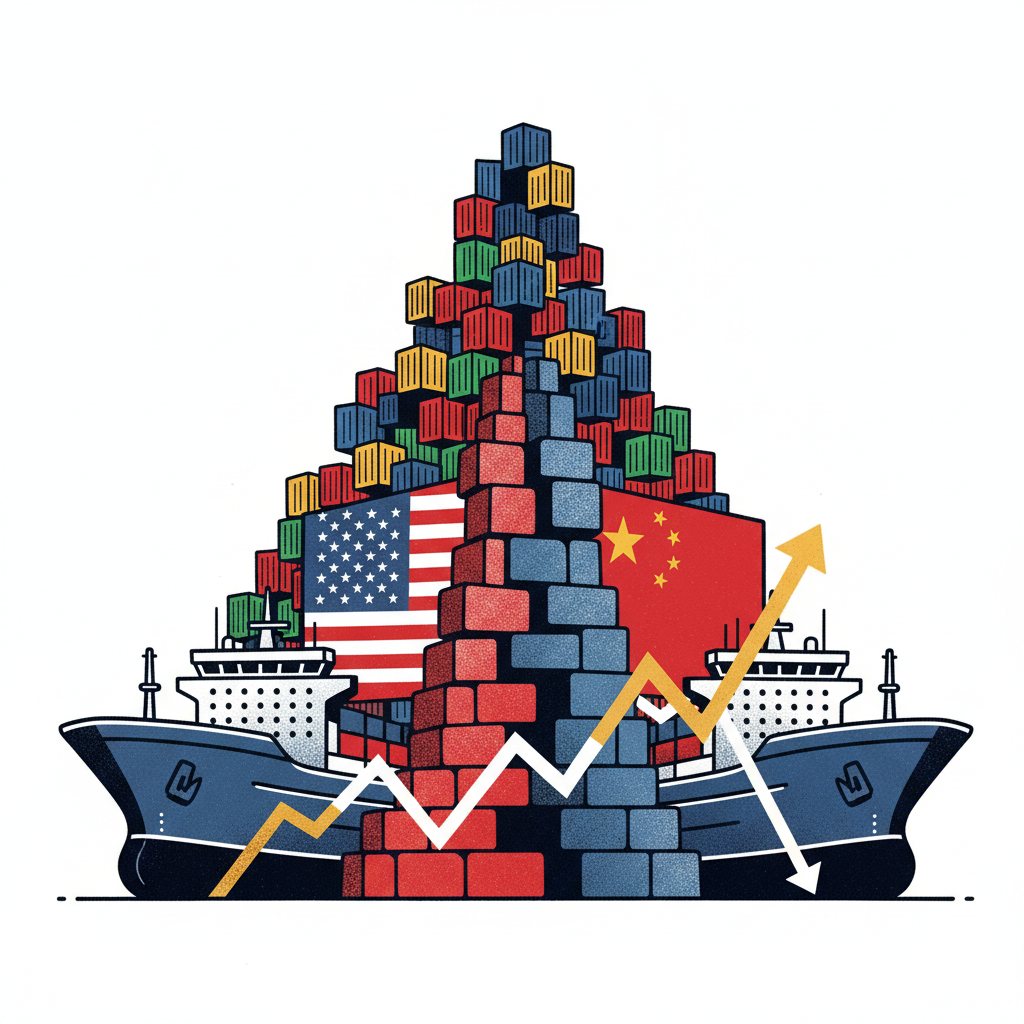
The genesis of the trade war predates the specific July 2018 date, rooted in long-standing grievances from the United States regarding China's trade practices. Concerns included intellectual property theft, forced technology transfers, state subsidies for Chinese industries, and a persistent trade imbalance. The Trump administration initiated the Section 301 investigation in 2017, culminating in the tariff imposition aimed at compelling China to alter its policies. GeoGazet tracking highlights the significant attention on these dynamics, with "Tariffs & Trade" registering 74 tracked signals, "China" 45 signals, and "United States" 16 signals, indicating a sustained focus on this core bilateral relationship.
Economic Impacts and Adaptations
Following the initial US tariffs, China promptly retaliated with its own tariffs on American goods. This cycle of escalation broadened the scope of goods affected, impacting various sectors from agriculture to technology. The declared aim of US tariffs was to reduce the trade deficit and encourage domestic production; however, the actual outcomes have been complex. GeoGazet tracking has observed, for instance, how "US Tariffs Weaponized China's Exports," suggesting unintended consequences where Chinese exports might have adapted or diversified. Another signal, "Foreign trade zones helped companies avoid tariffs. That's changed under Trump," illustrates how policy shifts tightened avenues for tariff circumvention. Despite these measures, GeoGazet also noted, "China's exports to the US are surging at a pre-Liberation Day pace, defying Trump's tariff goals," indicating the resilience of trade flows and the difficulty of completely decoupling economies. The current influence score for this ongoing dynamic is 28/100, reflecting its moderate but persistent impact, alongside a comprehensive record of 100 total tracked events in the GeoGazet graph since its inception.
Broader Geopolitical Context
The US-China trade war is not isolated but is an economic facet of a broader strategic competition encompassing technology, national security, and geopolitical influence. Historical parallels can be drawn to past protectionist eras, such as the Smoot-Hawley Tariff Act of 1930, which exacerbated the Great Depression, though the global economic architecture is vastly different today. The current situation reflects a strategic shift in US foreign policy, moving from engagement to competition, particularly as both nations vie for technological supremacy in areas like artificial intelligence, 5G, and semiconductors.
What to Watch For Next
The future trajectory of the US-China trade relationship remains a critical area of geopolitical intelligence. Observers should monitor policy adjustments from both Washington and Beijing, especially concerning targeted tariffs, export controls, and investment restrictions. The ongoing efforts by companies to diversify supply chains away from China, potentially to Southeast Asia or Mexico, will also be indicative of long-term structural changes. Furthermore, the interplay between economic competition and technological rivalry will define the next phase, as both nations seek to secure advantages in critical emerging technologies, potentially leading to a more fragmented global economy.