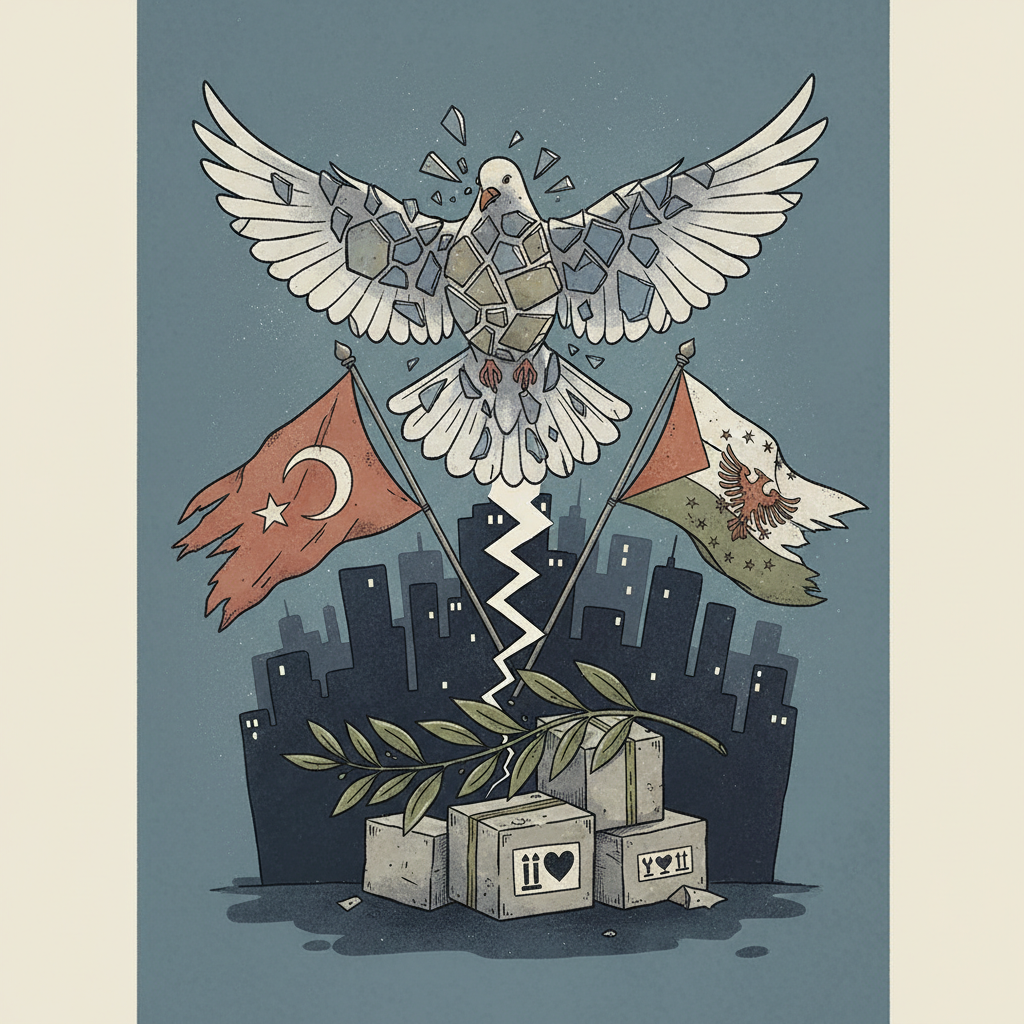
Roots of the Conflict
The historical origins trace back to the establishment of the State of Israel in 1948, leading to the displacement of Palestinians, an event known as the Nakba. Gaza, a small coastal strip, came under Egyptian administration until the 1967 Six-Day War, when Israel occupied it alongside the West Bank and East Jerusalem. Subsequent Israeli settlements and military control in these territories, coupled with Palestinian resistance, established an enduring cycle of violence. The withdrawal of Israeli settlers and military from Gaza in 2005 did not end the occupation, as Israel retained control over Gaza’s borders, airspace, and territorial waters, leading to a blockade after Hamas won elections and took control in 2007.
Current Geopolitical Standoff
The current geopolitical situation is marked by a deep lack of progress towards peace, as evidenced by a "Current influence score of 0/100" in regional stability metrics. Data from GeoGazet tracking indicates intense focus on the dispute, with "Gaza (70 tracked signals)" and "Israel (55 tracked signals)" leading in signal volume, significantly overshadowing "Peace & Ceasefire (37 tracked signals)." This disparity highlights the predominant attention on conflict dynamics over resolution attempts. The GeoGazet graph records "100 total tracked events," underscoring the persistent volatility. Recent diplomatic setbacks further illustrate this entrenched conflict. GeoGazet tracking specifically noted "Netanyahu rejects US-led 15-point Gaza peace plan in rare public break with Trump" and "Israel rejects Trump’s 15-point plan for Gaza, stoking tensions with US." These signals confirm high-level disagreements even with key international allies, demonstrating Israel's perceived security imperatives or objections to specific peace proposals.
Failed Peace Initiatives
The rejection of proposed peace plans is a recurring theme, historically paralleled by the failure of various Oslo-era agreements to fully resolve core issues such as borders, settlements, and the status of Jerusalem. The unraveling of ceasefires is also a consistent pattern. GeoGazet tracking reported "Gaza Ceasefire Unravels: Inside the Israel-Hamas Conflict Breakdown," indicating the fragile nature of any temporary halt in hostilities. This breakdown often occurs due to perceived breaches from either side, whether rocket fire from Gaza or Israeli military incursions, escalating tensions rapidly. The underlying causes of conflict remain unaddressed by short-term truces.
What to Watch For Next
Future developments will likely hinge on several critical factors: the internal political stability of both Israel and the Palestinian Authority, the evolving role of regional and international mediators, and any shifts in the operational capabilities or strategic objectives of Hamas. Continued US diplomatic engagement, especially given past rejections of peace plans, will also be closely observed. The humanitarian situation in Gaza, often exacerbated by conflict, remains a critical indicator for potential escalation or international pressure.