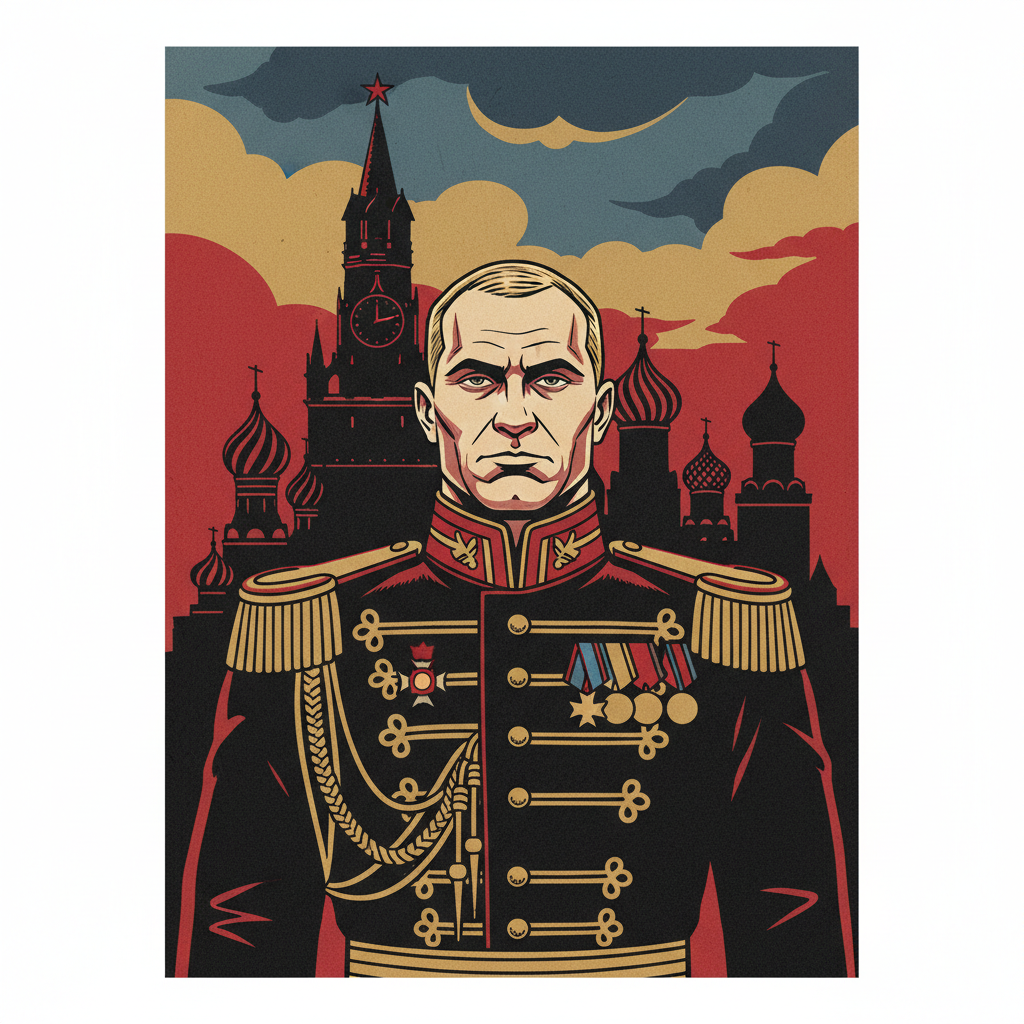
Consolidation of Power and Domestic Control
Putin’s extended tenure is rooted in constitutional amendments and a consistent strategy to centralize authority. Through reforms passed in 2020, term limits were reset, theoretically allowing him to remain in office until 2036. This institutional reshaping has been complemented by the systematic marginalization of political opposition, control over state media, and the enforcement of laws that restrict public protest and speech. The comprehensive monitoring of political dynamics, indicated by a total of 100 tracked events in the GeoGazet graph, suggests a tightly managed internal environment where challenges to the established order are swiftly addressed. This consolidation echoes historical periods where leaders have modified legal frameworks to extend their mandates, transforming democratic veneers into long-term authoritarian rule.
Geopolitical Leverage and National Narratives
The ongoing conflict in Ukraine and heightened tensions with Western powers, particularly the United States, serve as a significant factor in Putin's political longevity. GeoGazet data shows top connections by signal volume are Russia (71 tracked signals), Ukraine (22 tracked signals), and the United States (6 tracked signals), highlighting the pervasive influence of these geopolitical relationships on Russian policy. Putin effectively frames these external pressures as existential threats, rallying nationalistic sentiment and presenting himself as the sole guarantor of Russia’s sovereignty and security.
Recent events, such as the GeoGazet signal "Moment Russia desperately tries to shoot blitz that struck Putin's warships," reinforce a narrative of external aggression requiring a strong hand. Similarly, the signal "Ukraine targets Russian air defence system close to Putin’s Black Sea residence" further solidifies the perception of a nation under siege, necessitating unified leadership. Concurrently, Putin projects an image of Russia as a resilient global player actively seeking new strategic partnerships, exemplified by the signal "'India showing interest': Putin on Northern Sea Route; why it matters." This dual approach—defending against perceived threats while forging new economic and geopolitical alliances—bolsters his domestic standing.
Institutional Resilience and Lack of Viable Alternatives
The Russian political system under Putin has been engineered to be highly centralized, with power emanating from the presidency. Key institutions, including the judiciary, legislature, and security services, operate in alignment with the executive’s directives. This institutional resilience, coupled with the effective suppression or co-option of potential successors and opposition figures, has created a political vacuum where no credible alternative leader or party has been allowed to emerge. The absence of a robust, independent civil society or a free press further limits avenues for popular discontent to coalesce into a significant political challenge.
What to Watch For Next
Observers should monitor the long-term impact of the conflict in Ukraine on Russia’s economy and social fabric. Potential internal dissent, particularly among elites or within the armed forces, could surface if the costs of the conflict become unsustainable. Additionally, the evolution of Russia’s strategic partnerships, such as the Northern Sea Route initiative, will be crucial indicators of its capacity to circumvent Western sanctions and maintain global influence, thereby supporting Putin’s narrative of strategic success. The interplay between external pressures and Russia’s internal dynamics will be key to understanding future political stability.