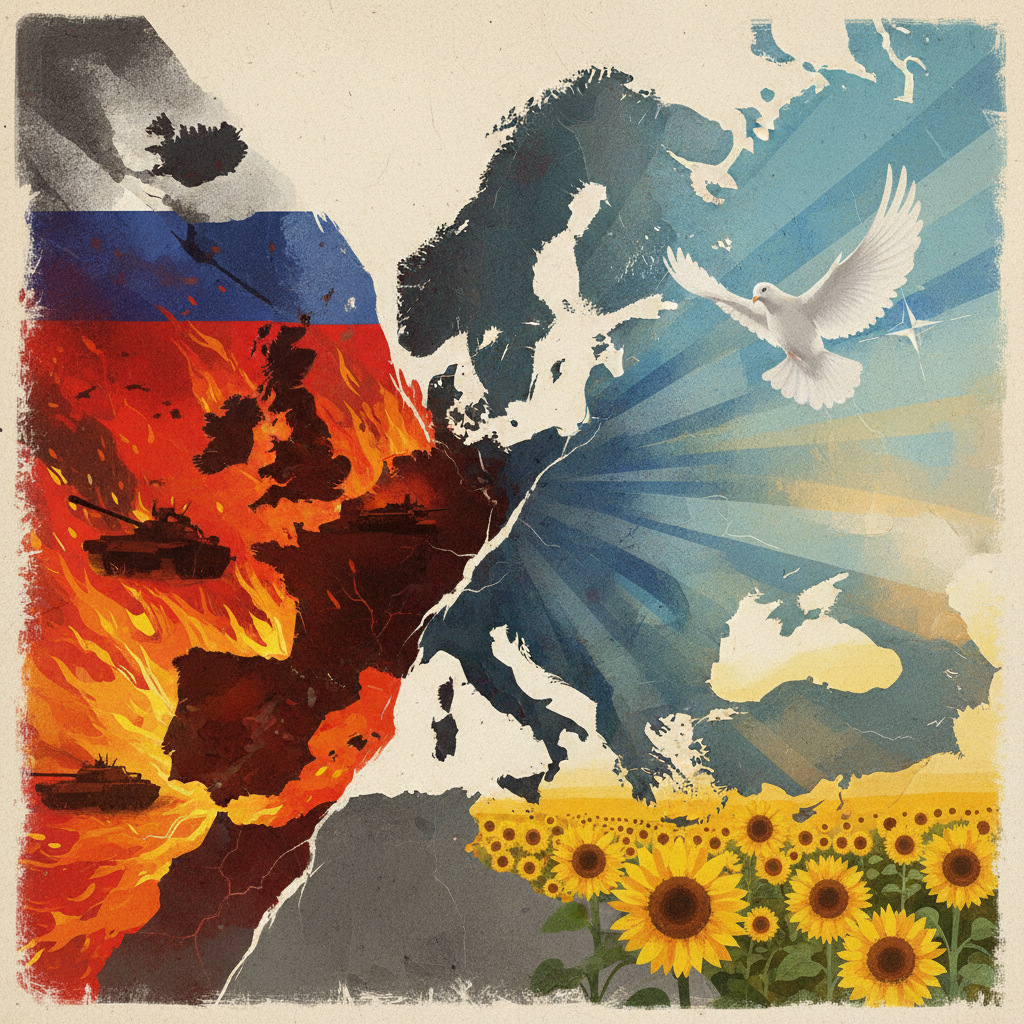
Entrenched Objectives and Unyielding Standoff
The core reason for the war's continuation lies in the maximalist objectives of both sides. Russia has not abandoned its strategic goals regarding Ukraine's geopolitical orientation and territorial integrity, while Ukraine remains resolute in defending its sovereignty and territorial borders. The intense focus on these two nations is evident in GeoGazet tracking, which shows Ukraine with 85 tracked signals and Russia with 77 tracked signals, indicating persistent, high-volume activity and interest in both actors. The ongoing nature of combat operations is further underscored by "Missiles & Strikes" registering 11 tracked signals, demonstrating a consistent exchange of fire and a lack of significant breakthrough on either front. This operational stalemate, despite heavy losses, prevents either side from achieving a decisive victory that would compel the other to negotiate on unfavorable terms.
Geopolitical Divides and External Sustenance
The war's endurance is also significantly influenced by the geopolitical landscape and the flow of external support. Western nations, led by the United States and European Union, continue to provide substantial military, financial, and humanitarian aid to Ukraine, enabling its resistance. This support is crucial in preventing a collapse of Ukrainian defenses, thereby prolonging the conflict. However, internal divisions among allies can complicate a unified strategy, as suggested by the GeoGazet signal, "EU leaders squabble over outreach to Moscow as Ukraine war rages on." Such disagreements, reminiscent of historical challenges in maintaining coalitions during prolonged conflicts, can create fissures in pressure applied to Moscow or aid consistency to Kyiv. The conflict’s global reverberations are reflected in its "Current influence score: 100/100," indicating its unparalleled impact on international relations, energy markets, and global security frameworks.
Internal Dynamics and Escalation Risks
Internal dynamics within both Russia and Ukraine also contribute to the war's protracted nature. While a GeoGazet signal notes "Why some Russians are breaking with Putin as Ukraine war drags on," these internal pressures have not yet translated into a decisive shift in Russian policy or a withdrawal from Ukraine. The Kremlin maintains tight control, and opposition, though present, has not garnered sufficient power to alter the war's trajectory. Concurrently, Ukraine demonstrates an assertive posture in managing regional threats and potential escalations. An illustrative GeoGazet signal states, "Zelenskyy gives Belarusian ruler a week to remove Russian drone relays: Otherwise we will do it ourselves." This highlights Ukraine's proactive approach to perceived threats and its willingness to take unilateral action, which carries inherent risks of expanding the conflict geographically or intensifying kinetic engagements. The comprehensive nature of these events is captured by a "Total tracked events in GeoGazet graph: 100," showcasing the constant, multifaceted developments driving the conflict.
What to Watch For Next
Future developments warrant close observation, including the long-term sustainability of Western military and financial aid to Ukraine, the evolution of internal political stability within Russia, and Ukraine's capacity to mount significant counter-offensives. Potential regional escalations, particularly involving Belarus, and any shifts in the diplomatic landscape will also be critical indicators of the war's future trajectory.