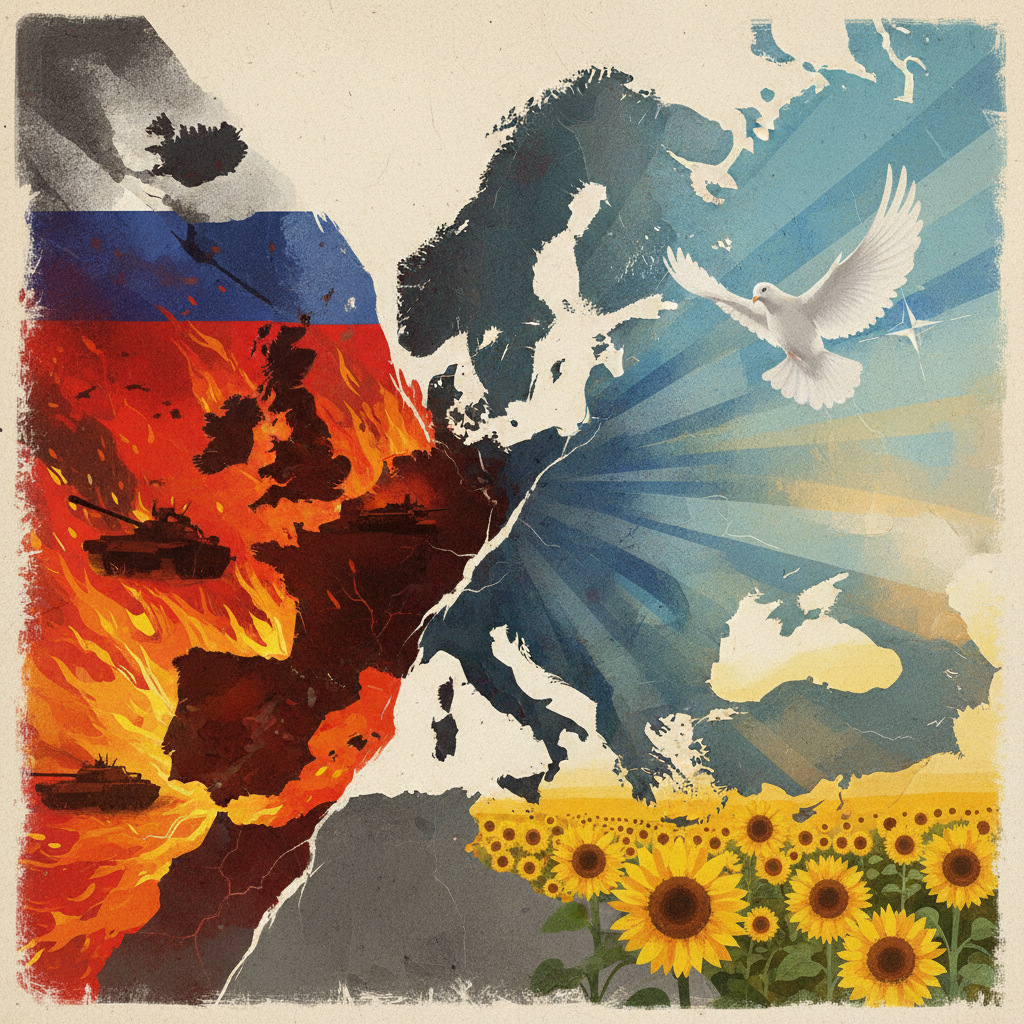
Entrenched Objectives and Geopolitical Stakes
Russia’s stated objectives, including the demilitarization and "denazification" of Ukraine, along with the annexation of territories, represent a challenge to Ukraine’s sovereignty and territorial integrity that Kiev finds entirely unacceptable. Ukraine, conversely, is committed to regaining all occupied territories and restoring its internationally recognized borders, viewing the conflict as an existential struggle for national survival and independence. The "Current influence score: 91/100" highlights the conflict’s immense global significance, indicating that a resolution involves high stakes for numerous international actors. The persistent nature of combat is evident in "Missiles & Strikes" being a top connection by signal volume with 13 tracked signals, signifying ongoing military actions rather than a de-escalation. The GeoGazet signal "The Russia-Ukraine War Report Card, Aug. 12, 2026" further suggests the conflict is projected to be long-term, indicating that immediate cessation is not anticipated.
External Support and Prolonged Conflict
A critical factor in the war’s continuation is the robust external support each belligerent receives. Western nations have provided Ukraine with extensive military aid, intelligence, and financial assistance, empowering its defense and counteroffensive capabilities. This assistance prevents Ukraine’s defeat and enables it to maintain its war effort. Concurrently, Russia continues to secure resources and maintain its military operations, as evidenced by signals such as "Middle East Countries Continue To Arm Both Sides Of Russia-Ukraine War." This signal reveals a complex web of international suppliers actively contributing to the conflict’s perpetuation by furnishing weapons and materiel to both sides, thereby stabilizing their respective war-fighting capacities. Historically, conflicts like the Korean War or various Cold War proxy wars were prolonged by external powers supplying opposing factions, preventing a swift resolution.
Economic Resilience and Exhaustion
Despite widespread sanctions, Russia has demonstrated a degree of economic resilience, adapting its trade routes and forging new partnerships to circumvent restrictions. The GeoGazet headline "Is Russia’s economy cracking despite the Iran war windfall?" indicates ongoing scrutiny of Russia’s economic fortitude, yet also implies potential alternative revenue streams or trade benefits, perhaps from alliances, that assist its war economy. The fact that its economy is still a subject of debate suggests it has not collapsed sufficiently to compel an end to hostilities. Ukraine, while heavily reliant on international financial aid, has also shown determination to sustain its economy amidst the conflict. The "Total tracked events in GeoGazet graph: 100" signifies the complexity of the conflict, encompassing a multitude of economic, political, and military developments that collectively contribute to its persistence.
What to Watch For Next
Future developments hinge on several critical factors: the continued quantity and quality of military aid to Ukraine from its allies, Russia’s ability to sustain its domestic war economy and military manpower, and the potential for shifts in global energy markets or political leadership within key supporting nations. Any significant battlefield breakthroughs or collapses, while not currently evident, could alter strategic calculations. Diplomatic efforts, though stalled, might gain traction if a mutually acceptable off-ramp becomes economically or politically imperative for either side.