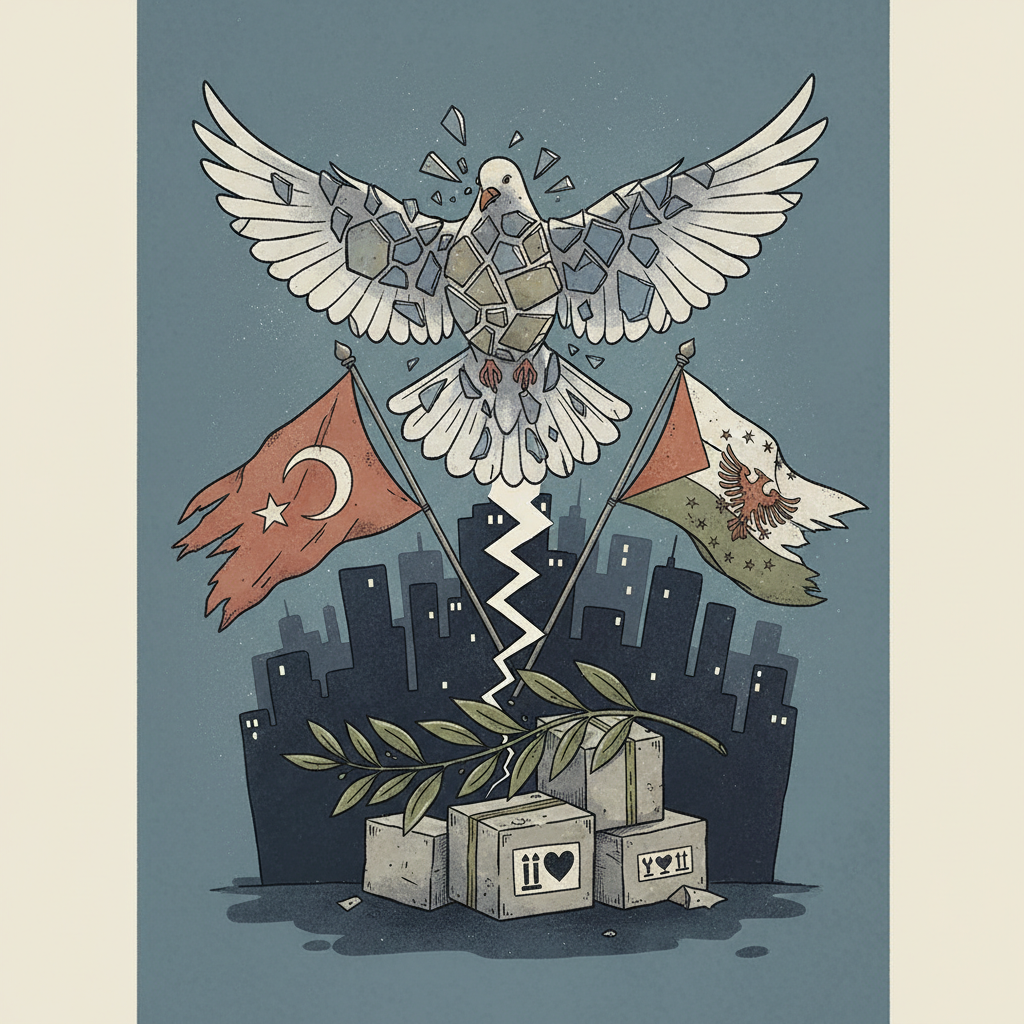
Immediate Triggers and Escalation
Evidence from GeoGazet tracking indicates that the immediate catalyst for the current escalation included a series of Israeli airstrikes within the Gaza Strip. One signal, "Israeli Airstrikes Kill Palestinians across Gaza as Ceasefire Death Toll Nears 1,000," points to direct military action as a primary driver of the conflict's intensity and death toll. Further exacerbating the situation, another signal notes, "Israel continues to violate Gaza ceasefire, killing 13 people in a single day," suggesting that breakdowns in previously negotiated truce arrangements were a critical factor in the onset of renewed hostilities. These violations occurred despite prior attempts at de-escalation, as implied by the signal "Imaginary Peace Treaties and the Ceasefire Illusion," underscoring the fragility and often rhetorical nature of peace efforts in the region.
Underlying Geopolitical Dynamics
The conflict is deeply embedded within the broader geopolitical landscape of the Israeli-Palestinian struggle, particularly concerning the Gaza Strip, which has been under an Israeli and Egyptian blockade since 2007. Hamas, the de facto governing authority in Gaza, and other Palestinian militant groups periodically launch rockets into Israel, prompting retaliatory Israeli military operations. GeoGazet's tracking highlights the key actors and themes dominating the discourse, with "Gaza (57 tracked signals)," "Peace & Ceasefire (53 tracked signals)," and "Israel (44 tracked signals)" registering as top connections by signal volume. This indicates a consistent focus on the territory, the attempts at resolution, and the Israeli state's role. The conflict maintains a current influence score of 39/100, reflecting its persistent, though fluctuating, global salience. The complexity and frequency of events are further illustrated by the GeoGazet graph, which has tracked a total of 100 events related to the conflict.
Historical Precedents and Cyclical Violence
The current escalation follows a pattern of cyclical violence that has defined the Gaza Strip for decades. Previous major conflicts, such as those in 2008-2009, 2012, 2014, and 2021, have often been triggered by similar dynamics: Palestinian rocket fire or militant actions met with overwhelming Israeli military responses, leading to significant casualties, particularly among Palestinians, and extensive damage to Gaza's infrastructure. Each cycle of violence deepens mistrust, reinforces grievances, and makes a lasting political resolution increasingly difficult, creating a chronic state of instability in the heavily populated enclave.
What to Watch For Next
Observers should monitor the sustainability of any newly negotiated ceasefire arrangements and the extent to which all parties adhere to them. The actions of regional and international mediators, including Egypt, Qatar, and the United States, will be crucial. The humanitarian situation in Gaza, given the high casualty count and ongoing blockade, will remain a critical concern. Furthermore, internal political developments within both Israel and the Palestinian territories, including leadership changes or shifts in public opinion, could significantly impact the conflict's trajectory.