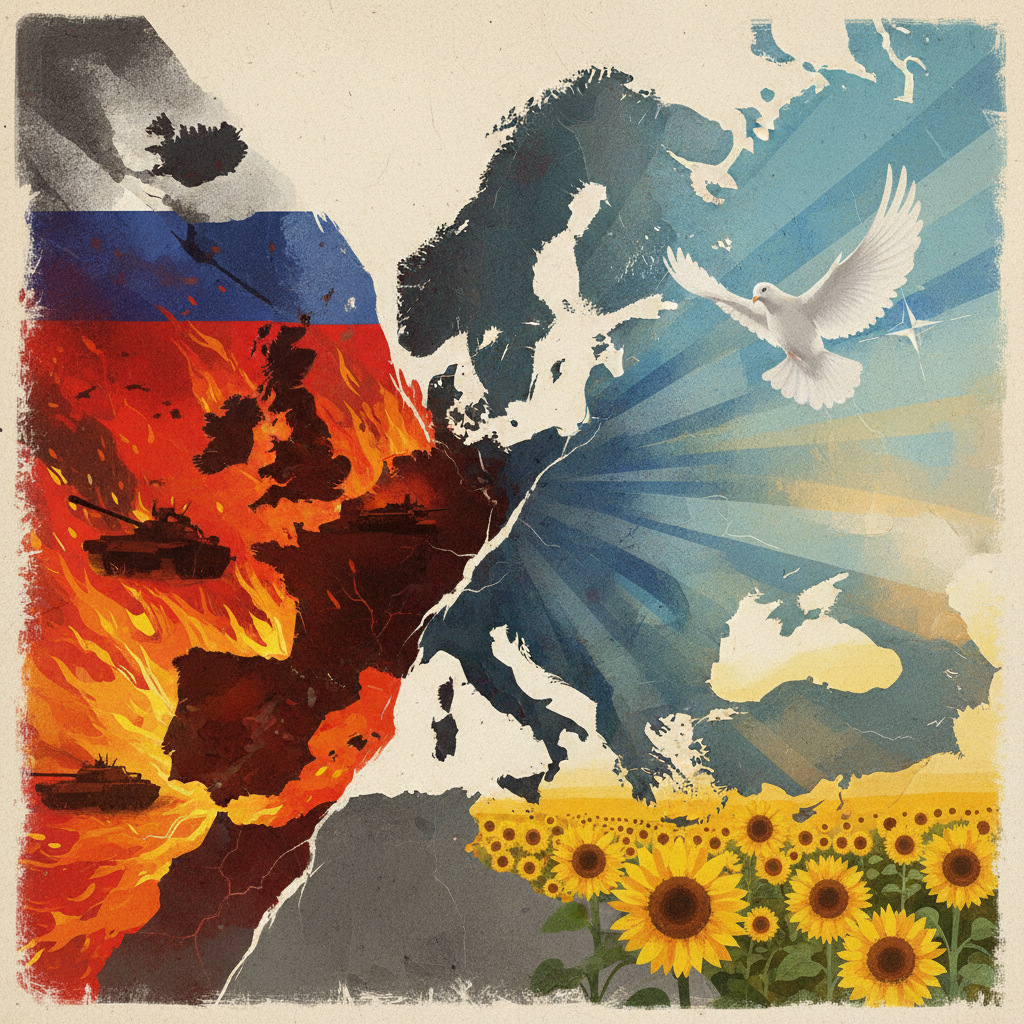
Understanding Geopolitical Conflict
Geopolitical conflict arises when nations perceive their security, prosperity, or influence to be challenged or enhanced by their physical location and the actions of others within that space. It involves the struggle for control over strategically vital regions, access to critical resources such as energy or rare earth minerals, or the expansion of political and economic ideologies. The interplay between geography, power, and statecraft defines these engagements. The current global environment, marked by a dynamic "influence score" of 67 out of 100, indicates a significant level of ongoing geopolitical tension and interaction across various flashpoints.
The Ukraine War: A Contemporary Case Study
The ongoing conflict in Ukraine serves as a stark contemporary example of geopolitical conflict. The "Russia Ukraine War," as tracked by GeoGazet, involves Russia’s military actions targeting Ukraine’s sovereignty and territorial integrity. Recent signals from GeoGazet tracking underscore the intensity of this conflict, including a "Deadly overnight Russian attack on Ukraine targets the capital" and reports of "Dozens of Russian missiles pound Kyiv in major attack." This highlights the direct application of military force to achieve geopolitical objectives.
The conflict's prominence in global analysis is evident in the tracking data, which shows "top connections by signal volume" for Ukraine with 83 tracked signals, Russia with 74 tracked signals, and "Missiles & Strikes" with 12 tracked signals. These metrics reflect the significant international attention and the persistent nature of military engagements. The GeoGazet graph shows a "Total tracked events" count of 100, further illustrating the sustained activity and analytical focus on this particular geopolitical flashpoint, which has profound implications for European security and global energy markets.
Historical Context and Broader Implications
Geopolitical conflicts are not new phenomena; they have historically defined eras, from ancient empires vying for control of trade routes to the Cold War’s ideological and proxy battles across continents. The current conflict in Ukraine echoes historical patterns where larger powers assert influence over neighboring states, often leading to a realignment of alliances and shifts in the global balance of power. Such conflicts frequently extend beyond direct combat, encompassing economic sanctions, cyber warfare, and information operations, impacting international law and humanitarian concerns.
What to Watch For Next
Future developments in geopolitical conflict will likely involve continued technological advancements in warfare, including precision long-range strike capabilities, as suggested by the "Missiles & Strikes" data. Analysts will monitor shifts in international alliances, the emergence of new economic blocs, and the potential for escalation or de-escalation in existing conflicts. The strategic responses of global powers to regional crises, particularly concerning resource competition and emerging technologies, will shape the trajectory of international relations and determine future geopolitical landscapes.