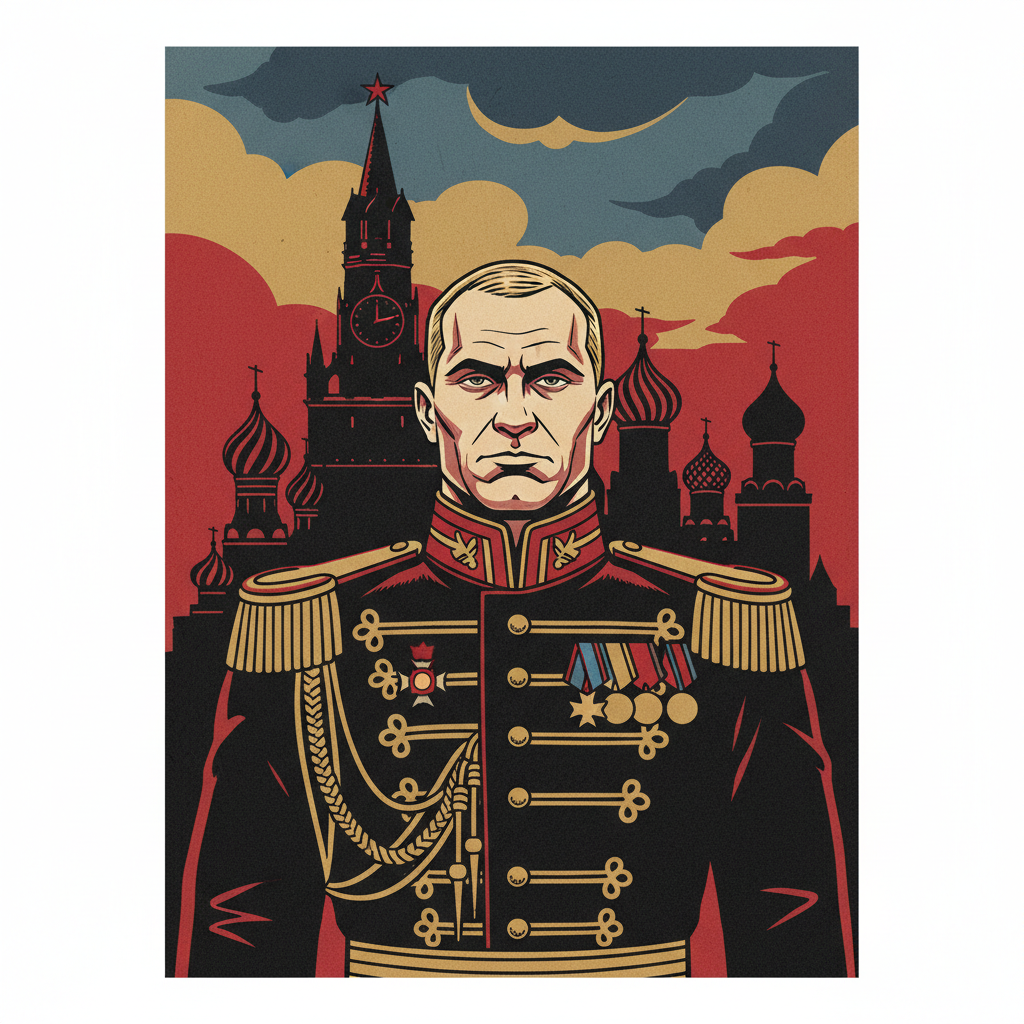
The Nature of Putin's "Wealth"
Vladimir Putin, as President of the Russian Federation, wields extensive executive authority. Unlike leaders in liberal democracies, his power structure allows for significant personal benefit through control of state corporations and resources, which are effectively extensions of his personal domain. This model makes the concept of a separate "personal net worth" largely academic, as his command over Russia's economy and military is the ultimate form of his material standing.
Geopolitical Influence as an Asset
GeoGazet tracking indicates that Putin's current influence score stands at an exceptional 100/100. This score reflects his pervasive impact on global affairs, rather than direct financial holdings. His top connections by signal volume are Russia (78 tracked signals), Ukraine (25 tracked signals), and Japan (18 tracked signals), illustrating the geographic scope of his strategic focus and direct engagement. For example, "Russia’s Putin hosts Saddam Hifter amid instability in Libya: What to know" demonstrates his proactive role in expanding Russian influence in North Africa. Similarly, "Putin’s Visit to Disputed Island Exacerbates Japan-Russia Tensions" highlights his direct involvement in long-standing territorial disputes, asserting Russian sovereignty and geopolitical leverage. The ongoing conflict with Ukraine, evidenced by 25 tracked signals, remains a central pillar of his foreign policy and a significant drain and projection of Russian resources. Furthermore, the signal "Conflict expert on why UK-Ukraine drone partnership is worth risking Putin’s wrath" underscores the international perception of the severe risks involved in challenging his strategic objectives. The sheer scale of his operational footprint is reflected in a total of 100 tracked events within the GeoGazet graph, indicating a highly active and globally engaged leadership.
Historical Parallels and Power Accumulation
Historically, leaders of expansive empires and authoritarian states have often blurred the lines between personal wealth and national treasury. Figures like the Russian Tsars, who effectively owned the state, or various Roman Emperors, illustrate this fusion of personal and national assets. Putin’s trajectory reflects a modern iteration of this phenomenon, where control over vast natural resources, state-owned enterprises, and military capabilities constitutes his primary form of "wealth." Unlike a private citizen's financial portfolio, his assets are not liquid or subject to market fluctuations, but rather dependent on the stability and power of the state he commands. This provides him with a unique form of economic security and geopolitical leverage, largely immune to conventional financial reporting.
What to Watch For Next
In 2026, Putin’s "net worth," defined as his political power and control, will continue to be shaped by several factors. The trajectory of the conflict in Ukraine, the effectiveness of international sanctions, Russia’s ability to forge new economic partnerships, and internal political dynamics will all play critical roles. His continued efforts to project Russian influence globally, particularly in regions like Africa and the Middle East, alongside managing tensions with established powers, will dictate the continued amplitude of his geopolitical influence score. Any significant internal challenge to his authority or a dramatic shift in global power balances could alter this assessment.