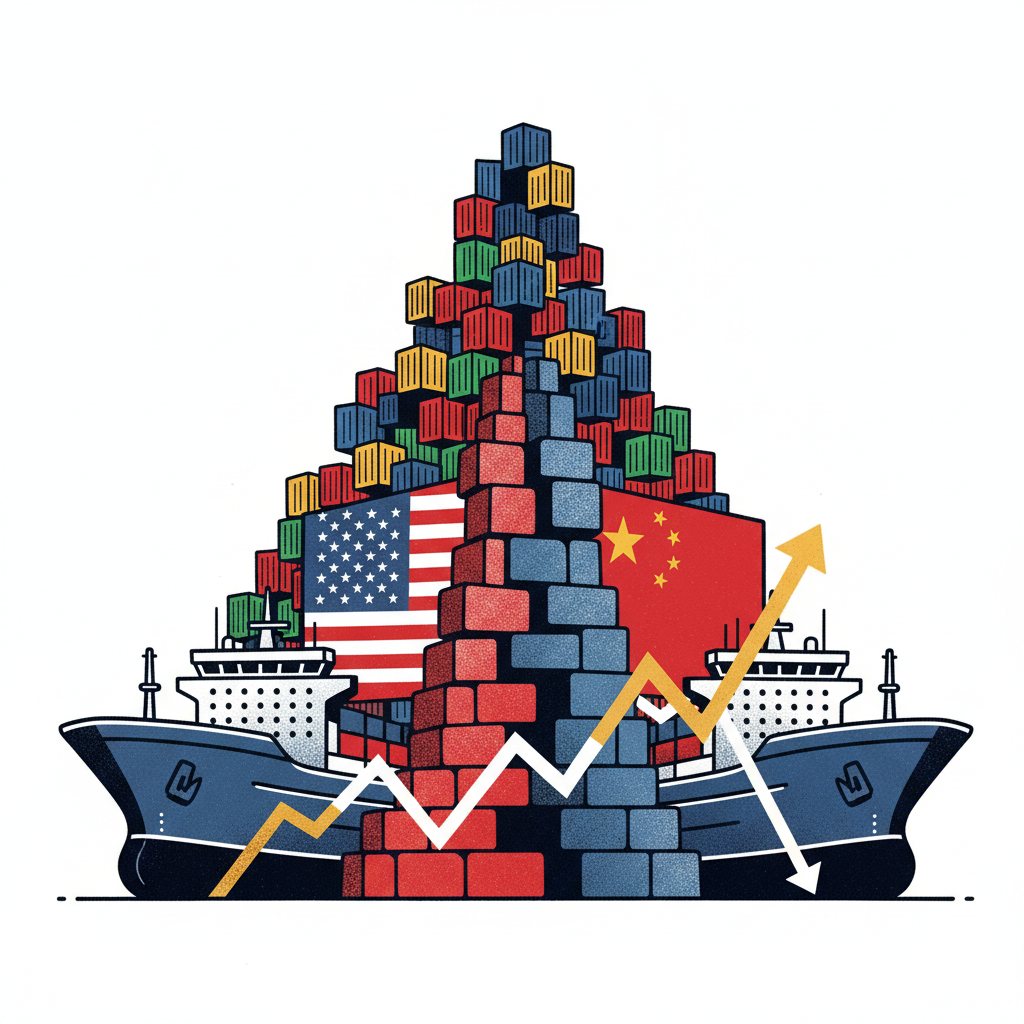
Genesis of the Trade War
The trade war began with President Trump implementing tariffs on steel and aluminum imports in March 2018, citing national security concerns. This was followed by more targeted tariffs on Chinese goods in July 2018, specifically addressing what the US described as unfair trade practices, intellectual property theft, and forced technology transfers. While the tariff escalation began in 2018, deeper economic tensions and competition between the two nations had been brewing for an extended period, as evidenced by a recent GeoGazet tracking signal noting "Eight Years of Escalating United States-China Trade War," suggesting a longer historical context of friction predating the overt tariff actions.
Key Characteristics and Geopolitical Context
The US-China trade war has been characterized by cycles of tariff imposition, negotiations, and further retaliations. The GeoGazet tracking signal "Trump’s "forever" tariffs are kicking in for the long haul – and US consumers are footing the bill" highlights the enduring nature of these tariffs and their economic impact on American consumers. Beyond tariffs, the trade conflict rapidly expanded to encompass technology restrictions, particularly concerning Chinese telecommunications giants, and broader strategic competition. This broader contest includes spheres such as regional security, human rights, and global influence.
Monitoring the evolving dynamics of this relationship remains critical, with GeoGazet tracking indicating high signal volumes for "Tariffs & Trade" (82 tracked signals), "China" (45 tracked signals), and "United States" (17 tracked signals) among a total of 100 tracked events in its graph. The political rhetoric surrounding the trade war continues, as shown by a GeoGazet signal stating, "Peter Navarro rips into China in White House report that is more about other countries aiding tariff avoidance," indicating ongoing scrutiny and efforts to counter perceived circumvention. Despite its long duration, the immediate global influence score for the trade war as a standalone event is currently assessed at 2/100, suggesting that while significant, other geopolitical flashpoints may presently command higher direct influence on the global stage.
Historical Precedent and Current Status
Historically, trade disputes have been a recurring feature of international relations, with examples such as the Smoot-Hawley Tariff Act of 1930 and numerous disputes within the World Trade Organization framework. The US-China trade war, however, is notable for its scale, duration, and the intertwining of economic issues with broader strategic competition between the world's two largest economies. While direct, new tariff escalations have slowed, many existing tariffs remain in place, contributing to a recalibration of global supply chains and influencing investment decisions worldwide.
Outlook
Looking ahead, observers should watch for continued efforts by both nations to diversify supply chains, potentially leading to a decoupling in certain strategic sectors. The political cycles in both countries will heavily influence future trade policy adjustments. Any shifts in technological restrictions, particularly regarding semiconductors and artificial intelligence, will be critical indicators of the trade war's evolution into a broader technological and economic rivalry. Furthermore, the roles of multilateral institutions and third-party nations in navigating or exacerbating these tensions will be important to monitor.