Origins and Escalation
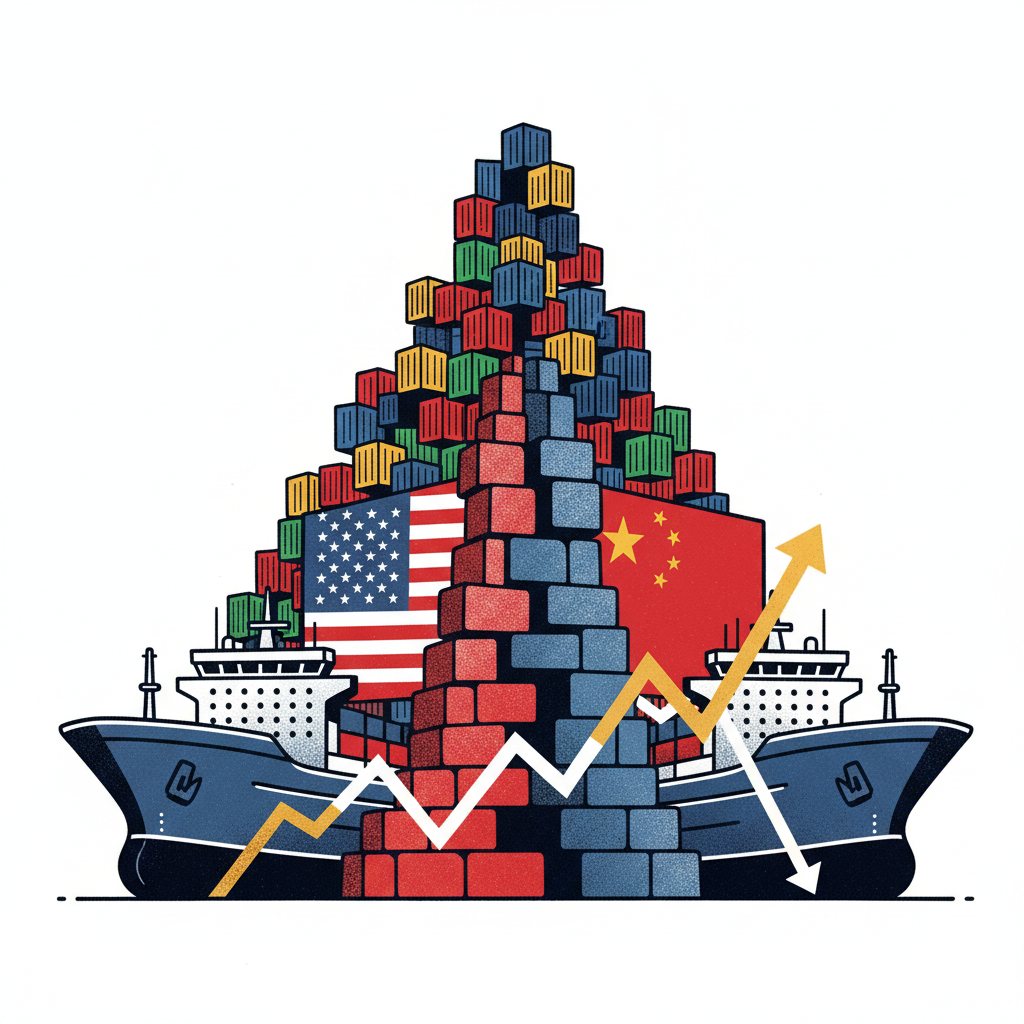
The trade war officially commenced in early 2018 when the Trump administration imposed tariffs on steel and aluminum imports, subsequently expanding them to a wide range of Chinese goods. China responded with its own tariffs on US products, leading to an escalating cycle of duties affecting billions of dollars worth of trade. This period marked a significant shift from previous US-China trade relations, which, while often strained by disputes over market access and intellectual property, had not seen such widespread tariff imposition since historical protectionist eras. The GeoGazet tracking data identifies "Tariffs & Trade" as the top connection by signal volume with 78 tracked signals, significantly outpacing "China" (43 signals) and the "United States" (14 signals), underscoring the central role of these measures in global geopolitical discourse.
Current Geopolitical Context and Impact
While a "Phase One" trade agreement was signed in January 2020, many tariffs remain in place, continuing to shape economic decisions and global supply chains. The GeoGazet signal "US firms pay price for Trump’s China tariffs, export controls, study finds" highlights the tangible economic consequences for American businesses. The trade war is now understood as one facet of a broader strategic competition between the two global powers, extending beyond mere commerce to technology, national security, and regional influence. This complex dynamic is illustrated by the GeoGazet signal "Opinion | How drones, tariffs and rare earths could test US-China detente," indicating that tariffs coexist with other critical issues like advanced technologies and vital resources in defining the bilateral relationship. The total tracked events in the GeoGazet graph, numbering 100, further attest to the multifaceted nature of this ongoing geopolitical engagement.
Intelligence Metrics and Future Outlook
The current influence score for this issue stands at 25/100. This score suggests that while the immediate, acute phase of tariff escalation has somewhat subsided, the underlying issues and existing trade barriers continue to exert a notable, persistent impact on global trade and investment. The GeoGazet signal "Member Survey 2026" indicates that stakeholders are actively considering the long-term implications and strategic planning necessitated by the enduring US-China trade relationship.
What to watch for next includes potential policy shifts regarding existing tariffs, particularly under a new US presidential administration. Further expansion or contraction of export controls, especially in critical technology sectors such as semiconductors and artificial intelligence, will be key indicators. Efforts by companies and governments to "de-risk" supply chains away from China, alongside discussions surrounding critical minerals like rare earths, will also shape the future trajectory of this ongoing economic and strategic competition.