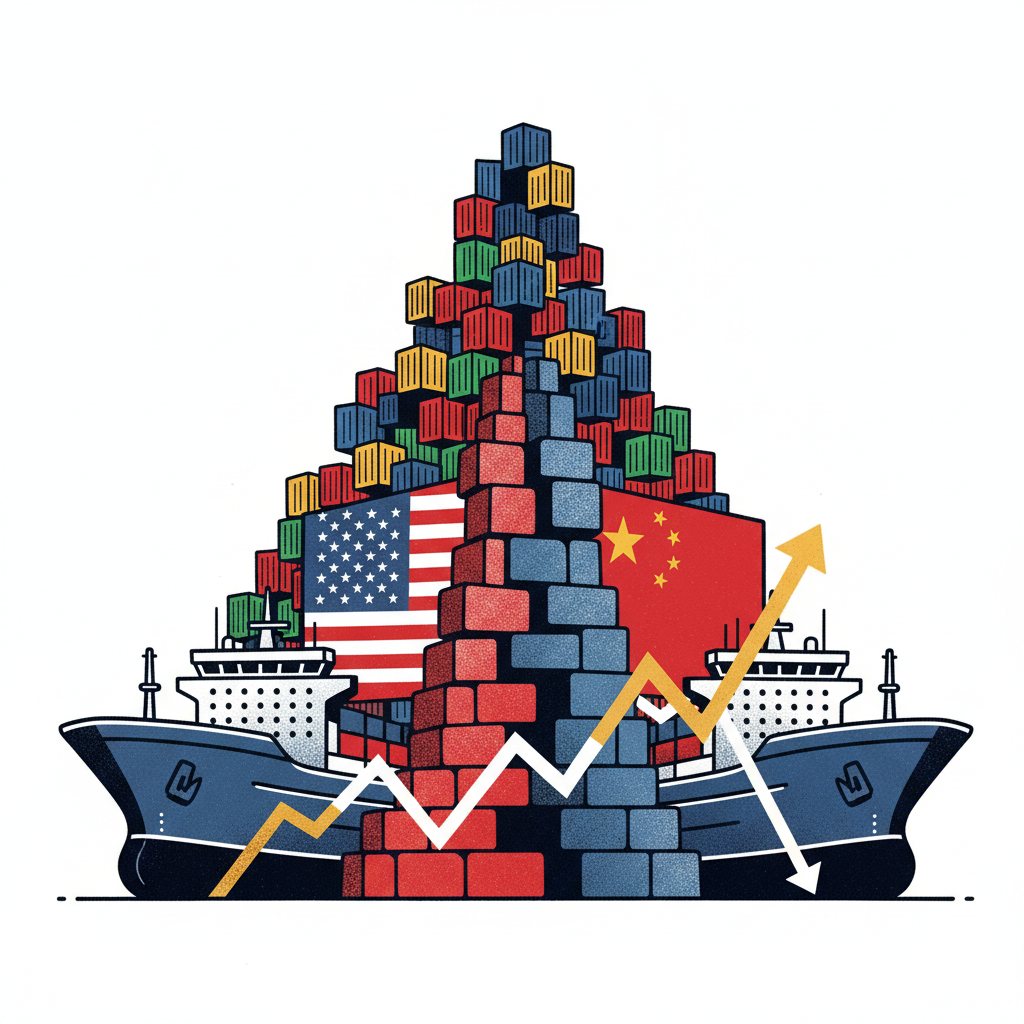
Context of the US-China Trade War
Initiated in 2018 under the premise of addressing trade imbalances, intellectual property theft, and forced technology transfer, the US-China trade war involved reciprocal tariffs on hundreds of billions of dollars worth of goods. Beyond mere trade figures, the conflict escalated to encompass technological competition, national security concerns, and broader geopolitical influence. This ongoing rivalry contributes to a complex global economic environment, characterized by efforts towards "de-risking" supply chains and reduced economic interdependence between major powers. GeoGazet tracking indicates the persistent nature of this issue, with Tariffs & Trade registering 81 tracked signals, China 38 signals, and the United States 13 signals, highlighting their central roles in the discourse. The total tracked events in the GeoGazet graph, numbering 100, demonstrate the extensive activity surrounding this topic.
Economic Impacts on the United States
The imposition of tariffs by the United States on Chinese imports has led to increased costs for American businesses and consumers in certain sectors. While some US companies have diversified their supply chains away from China, others have absorbed tariff costs or passed them on. Signals from GeoGazet, such as "Trump Poised to Roll Out New Tariffs as He Refunds the Old Ones," illustrate the fluctuating and often unpredictable nature of tariff policy, creating significant uncertainty for businesses. Furthermore, the signal "US trade official takes aim at Beijing, faults Washington on industry" points to an internal recognition within the US of industrial vulnerabilities and the broader strategic implications of trade policy beyond immediate economic gains. While some argue tariffs protect domestic industries, they can also hinder competitiveness by increasing input costs for manufacturers.
Economic Impacts on China
China has experienced a reduction in demand for its exports to the United States due to tariffs, prompting a strategic pivot towards strengthening domestic consumption and fostering technological self-reliance. This shift aims to insulate China from external economic pressures. The trade war has pressured China’s manufacturing sector, leading to efforts to diversify export markets and encourage domestic innovation. While initial impacts included slower GDP growth and some job displacement in export-oriented industries, China has leveraged its vast domestic market and robust industrial base to mitigate some of the adverse effects.
Global Economic Implications
The US-China trade war has far-reaching global implications, extending beyond the two primary combatants. It has accelerated supply chain fragmentation, with many multinational corporations re-evaluating their manufacturing and sourcing strategies. This has created opportunities for third countries to become alternative manufacturing hubs. However, it also introduces inefficiencies and increased costs across the global economy. The ripple effect is evident in signals like "EU leaders weigh tougher measures to combat China trade imbalance," indicating that trade tensions are broadening and influencing the policies of other major economic blocs. Historically, trade disputes have often led to shifts in global manufacturing, akin to the US-Japan trade frictions of the 1980s, but the current scale and intertwined technological rivalry present a distinct challenge. The current influence score of 22/100 suggests that while the trade war remains a significant ongoing factor, its immediate, direct economic impact is measured against a multitude of other global economic forces.
What to Watch For Next
Future economic impacts will largely depend on the evolution of tariff policies from both the United States and China, particularly following shifts in political administrations. Further diversification of global supply chains and the pace of technological decoupling efforts will also be critical indicators. Observers should monitor multilateral responses to trade imbalances, as well as the ongoing efforts by China to boost domestic demand and achieve technological independence, which will shape the global economic landscape for years to come.