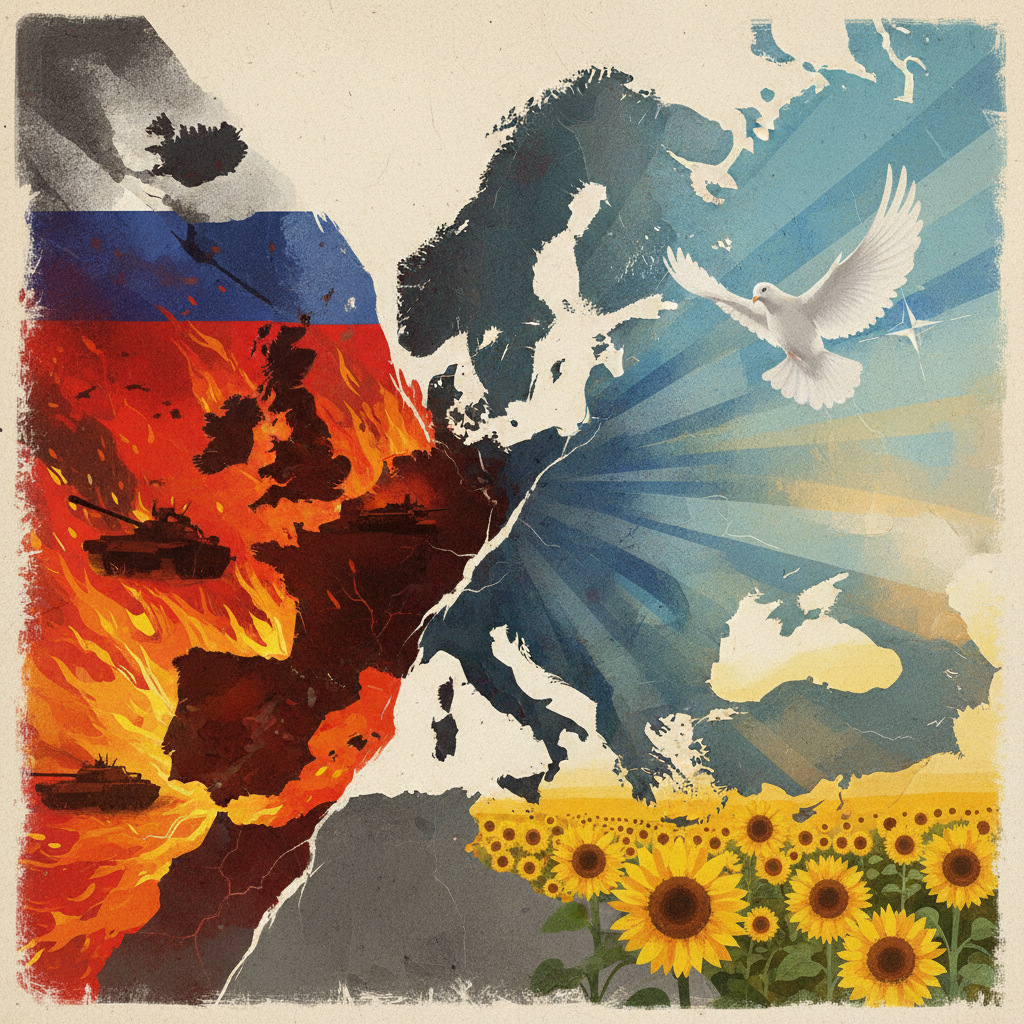
The conflict, which intensified with Russia's full-scale invasion in February 2022, quickly evolved from an attempted swift seizure of Kyiv into a prolonged war of maneuver and attrition, particularly in the eastern and southern regions. The current geopolitical situation sees Ukraine heavily supported by Western nations with military aid and intelligence, while Russia leverages its larger industrial base and manpower. The high "Current influence score: 100/100" for the conflict underscores its persistent global significance, yet its slow pace reflects a stalemate.
Fortified Defenses and Mutual Attrition
Both Ukrainian and Russian forces have invested heavily in constructing extensive defensive fortifications, including intricate trench networks, minefields, and anti-tank obstacles. These layered defenses significantly impede large-scale offensive operations, forcing advancing units to confront prepared positions at great cost. Advances are often measured in hundreds of meters rather than kilometers. This echoes the attritional warfare seen in World War I, where static front lines and technological parity made rapid breakthroughs exceedingly difficult. The "Total tracked events in GeoGazet graph: 100" indicates a consistent volume of engagements, most of which are localized and contribute to the overall attrition rather than major strategic shifts.
Modern Warfare and Technological Parity
The widespread deployment of advanced surveillance technologies, particularly drones, provides real-time battlefield intelligence, making large troop concentrations vulnerable to detection and targeting. Both sides possess significant artillery and missile capabilities, allowing for deep strikes and interdiction. For instance, "Ukraine says it struck Russian missile electronics plant" demonstrates Ukraine's capacity to target critical Russian military infrastructure. Conversely, the repeated signal "A Russian drone strike in Ukraine kills 3 from one family, including a 13-year-old boy" highlights Russia's persistent drone attacks, which contribute to the constant threat and defensive posture on the Ukrainian side. The "Missiles & Strikes (12 tracked signals)" confirms the prominence of such actions. The balance in these capabilities prevents either side from establishing air superiority or achieving decisive breakthroughs through overwhelming force without incurring unacceptable losses.
Logistical and Manpower Constraints
Despite their respective advantages, both Russia and Ukraine face significant logistical and manpower challenges. Russia's initial invasion suffered from overstretched supply lines and insufficient personnel for its ambitious objectives. Ukraine, while benefiting from Western aid, must continuously manage its own manpower reserves and integrate diverse weapon systems. The sheer volume of "Russia (81 tracked signals)" and "Ukraine (80 tracked signals)" as top connections by signal volume underscores the immense and ongoing operational demands on both nations. These constraints limit the scale and duration of offensive operations, contributing to the slow tempo of the war.
Strategic Objectives and Risk Aversion
The strategic objectives of both belligerents also play a role in the slow pace. Russia's revised goals post-2022 have focused on consolidating control over occupied territories and securing a land bridge to Crimea, requiring incremental advances rather than high-risk, large-scale assaults across vast distances. Ukraine's objective to liberate all occupied territories demands meticulous planning and resource management, prioritizing the preservation of its forces while seeking opportunities to exploit weaknesses. Neither side appears willing or able to commit to a decisive, all-out offensive that could risk catastrophic losses for potentially limited gains.
What to Watch For Next
Future developments will likely focus on the sustained supply of Western military aid to Ukraine, the evolution of drone warfare and electronic countermeasures, and the long-term impacts of personnel losses on both sides. The potential for further technological innovations to disrupt the current stalemate or any significant shifts in the strategic objectives of either Russia or its allies will also bear close monitoring.