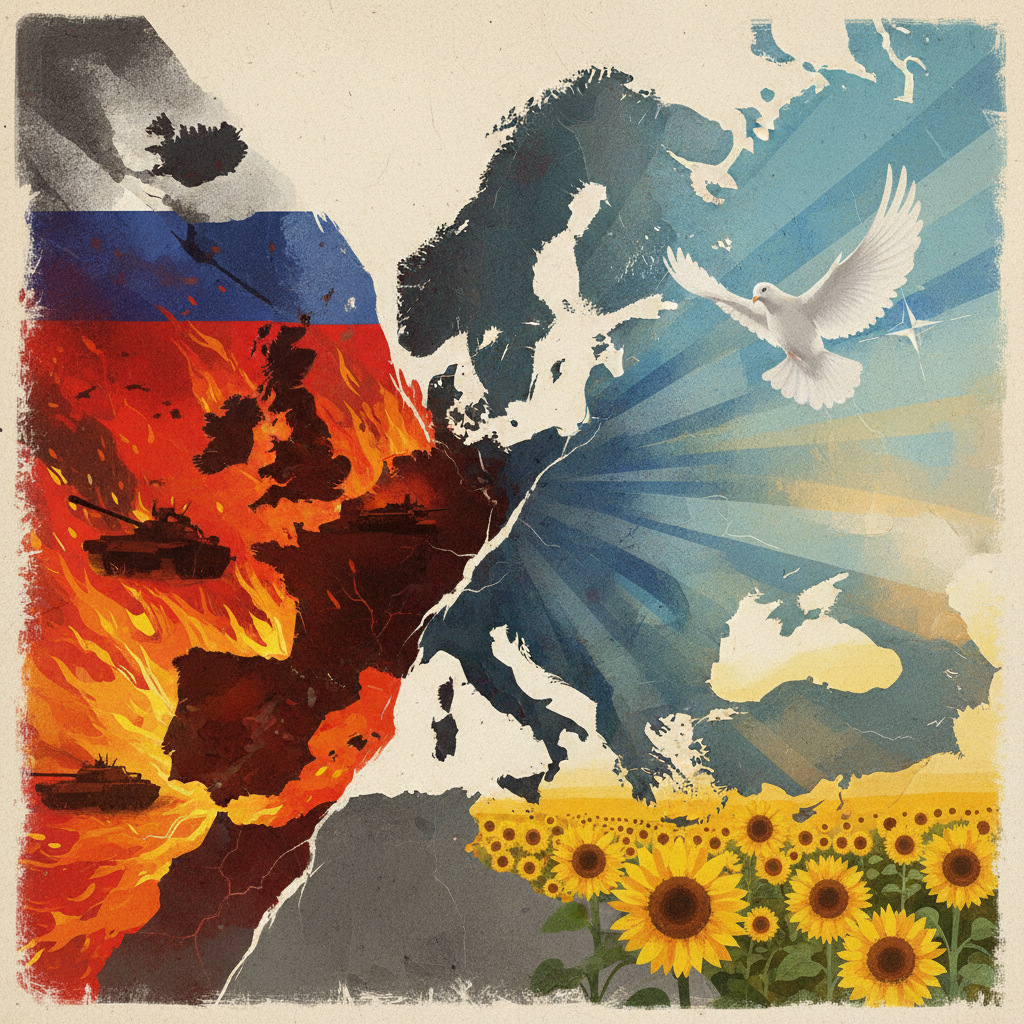
Current Dynamics of the Conflict
The conflict, initiated by Russia's full-scale invasion in February 2022, has settled into a grinding war of attrition across vast front lines. GeoGazet data indicates the profound global significance of the war, with a current influence score of 100 out of 100, underscoring its broad geopolitical ramifications. The most significant activity signals tracked by GeoGazet relate directly to the combatants: Ukraine with 84 tracked signals and Russia with 77 tracked signals, highlighting their central roles in the ongoing hostilities. Moreover, "Missiles & Strikes" accounts for 5 tracked signals, reflecting the continued intensity of direct military engagements, particularly regarding infrastructure and logistics. Ukraine's strategy has increasingly involved targeting Russian economic and military infrastructure, aiming to degrade Moscow's war-fighting capacity.
Escalation and Societal Impact
Recent operational patterns suggest an ongoing cycle of strikes and counter-strikes, extending the conflict beyond traditional front lines. GeoGazet tracking recorded "Ukraine Hits Tamanneftegaz, Key Russian Energy Terminal Fueling Kremlin War Effort," demonstrating Kyiv's capability and intent to disrupt Russia's economic lifeline and impede its ability to finance the war. Further evidence of this strategy appeared in the signal "Ukrainian drone strike kills 1 in southern Russia and triggers fire at sea terminal," indicating Ukraine's willingness to project force onto Russian territory to pressure the Kremlin and disrupt its logistics. On the other side, the signal "Russian families use AI to 'resurrect' loved ones killed in Ukraine" speaks to the severe human cost within Russia and points to potential long term societal coping mechanisms, or propaganda efforts designed to manage grief and sustain support for the conflict. The total of 100 tracked events in the GeoGazet graph indicates a persistently active and dynamic conflict environment with no clear signs of de-escalation.
Historical Precedents for Protracted Conflict
Historically, modern conflicts often extend for years or even decades, particularly when both sides perceive fundamental national interests to be at stake and possess external support. Comparisons can be drawn to conflicts such as the Korean War (1950-1953), which concluded in an armistice rather than a peace treaty and effectively froze the conflict for generations, or the Iran-Iraq War (1980-1988), which spanned eight years with immense human and material costs, ending largely in stalemate. The enduring nature of the Ukraine conflict, marked by shifting front lines, significant material support for Ukraine from Western nations, and a lack of willingness from either Russia or Ukraine to concede core strategic objectives, suggests a pattern consistent with protracted struggles rather than rapid resolutions.
What to Watch For Next
Future developments critical to predicting the conflict's trajectory include the sustainability of international military and financial aid to Ukraine, the resilience of Russia's economy under sanctions, and the outcomes of major electoral cycles in key supporting nations. Any significant breakthroughs in defensive or offensive technologies, or a dramatic shift in domestic public opinion within either Russia or Ukraine, could also alter the strategic calculus. Observers should also monitor diplomatic initiatives, though current signals suggest a lack of viable pathways for a negotiated settlement that satisfies both parties' maximalist demands in the immediate term.