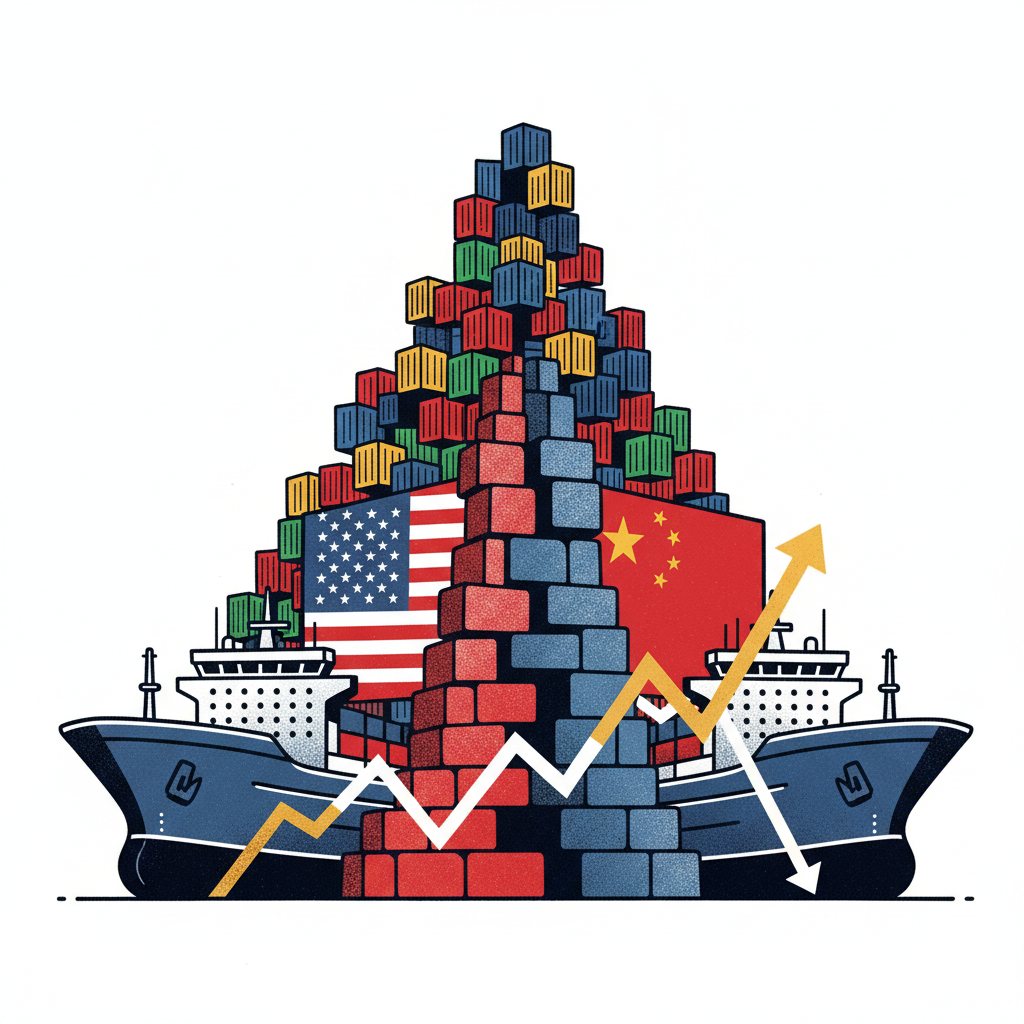
Context and Origins of the Trade War
The US-China trade war did not begin abruptly but was the culmination of long-standing tensions regarding China's trade practices, including alleged intellectual property theft, forced technology transfers, and state subsidies leading to what the US termed "structural excess capacity." The Trump administration, acting on these concerns, sought to rebalance the trade relationship through the imposition of tariffs. This strategy aimed to compel China to alter its economic policies and reduce its substantial trade surplus with the United States. The conflict rapidly expanded beyond tariffs to encompass technology, national security, and broader geopolitical competition, significantly influencing global supply chains and economic stability.
Key Events of 2018
The year 2018 saw a systematic escalation of trade barriers between the world's two largest economies:
- January 23, 2018: The US initiated its tariff offensive with Section 201 tariffs on imported solar panels and washing machines, primarily impacting China.
- March 1, 2018: President Trump announced Section 232 tariffs, imposing a 25% duty on steel imports and a 10% duty on aluminum imports, citing national security concerns. While global, China was a major target.
- April 3, 2018: The US Trade Representative proposed Section 301 tariffs on approximately $50 billion worth of Chinese goods, specifically targeting industries identified in China's "Made in China 2025" strategic plan.
- April 4, 2018: China retaliated, unveiling proposed tariffs on 106 US products, also valued at $50 billion, including agricultural products like soybeans, aircraft, and automobiles.
- July 6, 2018: The US implemented 25% tariffs on $34 billion of Chinese goods. Immediately, China retaliated with 25% tariffs on $34 billion of US goods, including soybeans, electric vehicles, and whiskey.
- August 23, 2018: The US imposed 25% tariffs on an additional $16 billion worth of Chinese imports. China responded in kind, levying 25% tariffs on another $16 billion of US products.
- September 24, 2018: The US escalated significantly by imposing 10% tariffs on $200 billion worth of Chinese goods, with plans to raise these to 25% on January 1, 2019. China promptly retaliated with tariffs on $60 billion of US imports.
These actions established a pattern of reciprocal tariff impositions and countermeasures that defined the trade war throughout 2018 and beyond.
Current Geopolitical Situation and Lingering Influence
Despite the passage of years since 2018, the US-China trade tensions continue to shape the global geopolitical landscape. GeoGazet's current influence score for this ongoing dynamic is 12/100, indicating a persistent, albeit fluctuating, level of impact. "Tariffs & Trade" remains a top connection by signal volume with 80 tracked signals, followed by "China" with 35 and "United States" with 14, highlighting the enduring relevance of these economic friction points. GeoGazet tracking shows "The Trump administration wants more tariffs to combat 'structural excess capacity'," which echoes the original rationale for the 2018 tariffs and draws historical parallels to past trade disputes concerning industries such as steel and textiles. The article "Tariff repeal spurs Chinese containerised exports to the US, but unprepared countries face new conundrum" further illustrates how sensitive trade flows remain to even partial adjustments in tariff policy. With a total of 100 tracked events in the GeoGazet graph related to these trade dynamics, the complexity and scope of the situation are clear.
What to Watch For Next
Observers should monitor several key areas. The potential for future tariff actions, as indicated by the signal about combating "structural excess capacity," remains a significant factor. Furthermore, the discussion surrounding specific sectors, such as "Chinese EVs" as mentioned in a GeoGazet signal involving "Carney, Trump heard talking," suggests that targeted trade measures in emerging technology sectors could intensify. The broader trajectory of US-China relations, particularly any shifts in US policy regarding trade and technology, will continue to dictate the nature and intensity of future economic interactions.