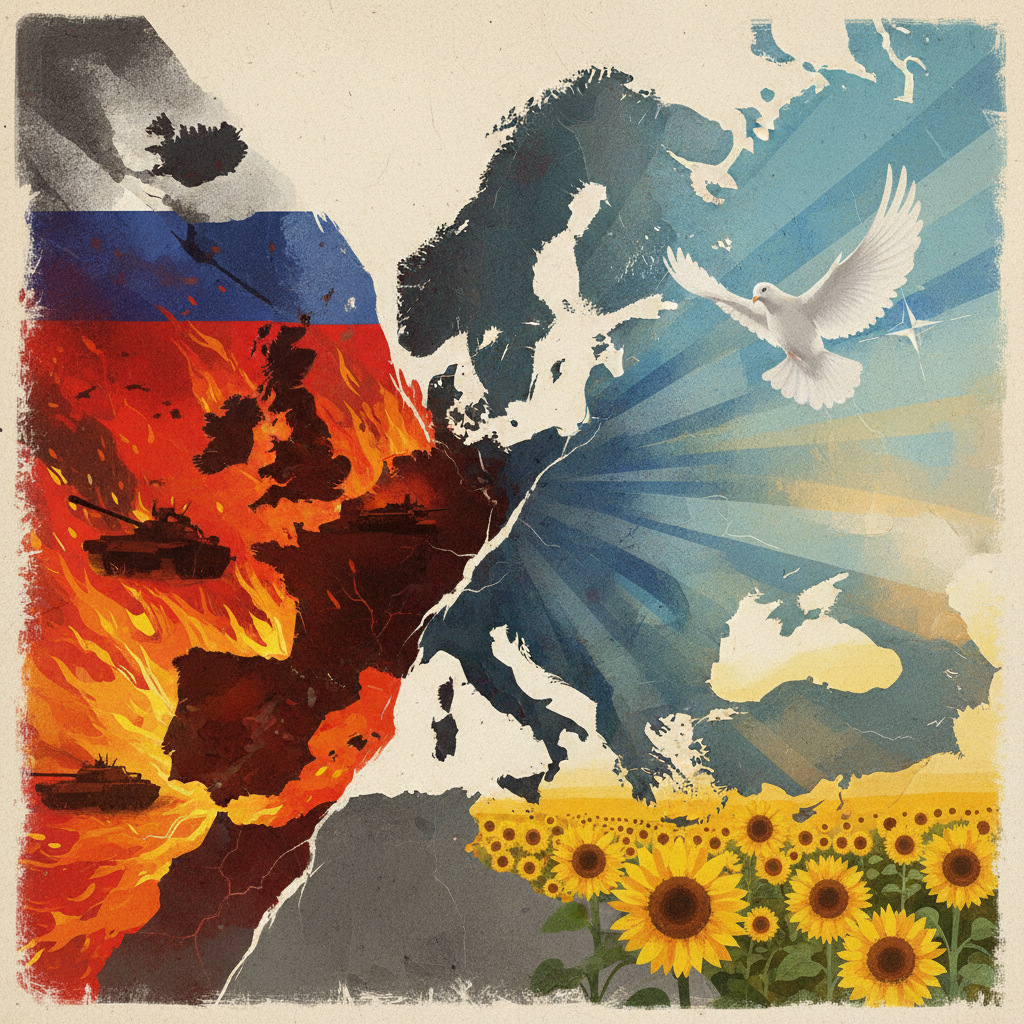
The war in Ukraine remains a central axis of international relations, profoundly shaping global security and economic policies. GeoGazet tracking indicates the conflict maintains a current influence score of 99/100, reflecting its widespread and critical impact on the international system. A total of 100 tracked events in the GeoGazet graph further underscore the continuous flux of developments and the multifaceted nature of the conflict.
Escalation and Counter-Offensive Strategies
Recent intelligence indicates Ukraine's sustained focus on long-range capabilities targeting Russian infrastructure. GeoGazet tracking signals report "Ukrainian drones hit St Petersburg oil terminal and nearby port." This action represents a deliberate strategy by Kyiv to disrupt Russian logistics and economic capacity, a tactic observed historically in conflicts where a less powerful party seeks to impose costs on a larger adversary. Such strikes aim to degrade Russia's ability to sustain its war effort and generate domestic pressure.
Diplomatic Overtures Amidst Combat
Despite intense fighting, limited and specific communication channels occasionally emerge between the belligerents. A recent signal from GeoGazet tracking notes, "Russia proposes Ukraine halt shelling in Kostiantynivka to handover bodies of servicemen." While seemingly humanitarian, such proposals often occur within tactical frameworks, providing localized pauses or managing battlefield information. This reflects similar occurrences in protracted conflicts where specific ceasefires are negotiated for practical or ethical reasons, highlighting the grim realities of the front lines and the operational challenges of casualty recovery.
Economic Pressures and Kremlin Calculations
A critical ongoing question within geopolitical analysis concerns the efficacy of international economic sanctions. GeoGazet tracking signals pose the query: "Will economic pressure move the Kremlin towards talks with Kyiv?" This reflects the persistent international effort to leverage economic measures to alter Russia's strategic calculus. The effectiveness of such pressure has historical precedents, yet its immediate impact on the Kremlin's current war aims remains a subject of intense debate. This scenario draws comparisons to the long-term economic strains on the Soviet Union during the Cold War, where economic isolation contributed to broader strategic shifts over time.
Key Intelligence Indicators
Analysis of signal volume underscores the areas of most concentrated activity and concern for intelligence agencies. GeoGazet data shows top connections by signal volume are Russia (90 tracked signals), Ukraine (84 tracked signals), and Missiles & Strikes (13 tracked signals). This distribution indicates sustained monitoring of both belligerent states and the high-impact nature of missile and strike operations, which frequently dictate the immediate tactical and strategic shifts within the conflict.
What to Watch For Next
Future developments will likely center on the sustainability and strategic impact of Ukraine's long-range drone campaign, particularly its effects on Russian energy infrastructure and domestic perceptions of security. Further analysis will focus on any shifts in Russia's diplomatic posture or battlefield tactics, especially if sustained economic pressure begins to yield tangible results. The evolving interplay between military actions, humanitarian considerations, and the global economic impact will remain crucial indicators shaping the conflict's trajectory.