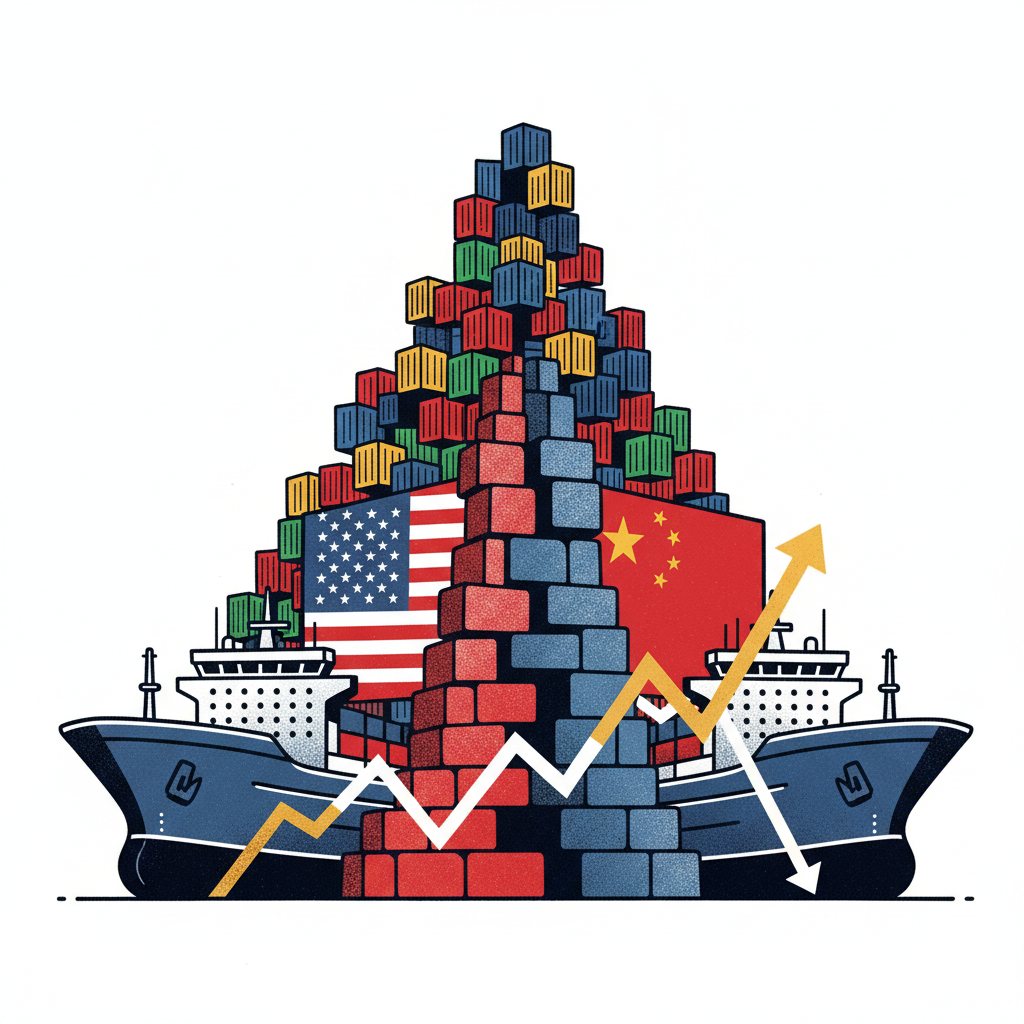
Supply Chain Diversion and Economic Reconfiguration
The imposition of tariffs by both the United States and China on each other's goods has been a primary mechanism affecting global supply chains. With "Tariffs & Trade" registering 81 tracked signals on GeoGazet, this indicates the central role of tariffs in the ongoing dispute. Companies seeking to avoid these tariffs are forced to diversify their manufacturing and sourcing away from the two economic giants. This dynamic can lead to trade diversion, where production shifts to other countries like Vietnam, Mexico, or India. These nations may experience an influx of foreign direct investment and job creation as manufacturers relocate. Conversely, countries deeply integrated into existing US-China supply chains might face disruption or reduced demand for intermediate goods. GeoGazet tracking signals such as "Footing the Bill for the U.S. Trade War" underscore that economic costs are often distributed beyond the directly warring parties, with consumers and businesses in third countries potentially bearing increased prices or facing competitive disadvantages.
Global Economic Uncertainty and Investment Shifts
The unpredictable nature of the US-China trade conflict generates considerable global economic uncertainty, dampening overall investment and growth prospects for all nations. Recent signals, including "How Trump is relaunching a tariff war citing ‘forced labour’ concerns," highlight the continued political will for protectionist measures, often driven by evolving justifications. This prolongs a climate of instability, making long-term business planning difficult and discouraging cross-border investments. For instance, a firm considering a new factory in a third country might delay investment due to fears of future tariffs or retaliatory measures that could indirectly impact their supply lines or export markets. This broader economic unease contributes to a slowdown in global trade volume and can depress commodity prices, affecting resource-exporting nations particularly hard.
Geopolitical Fragmentation and Multilateralism
Beyond economic direct impacts, the trade war has significant geopolitical ramifications, challenging established international trade norms and institutions. The dispute tests the efficacy of multilateral bodies like the World Trade Organization, as both countries frequently bypass its mechanisms. Furthermore, the conflict has created divisions among allied nations, exemplified by the GeoGazet signal "Trump, G7 split on China strategy." This fragmentation makes it harder for other countries to form unified responses to global economic challenges or to advocate for a stable, rules-based trading system. Historically, periods of intense protectionism, such as the interwar period of the 20th century, demonstrate how trade disputes can escalate into broader geopolitical instability, impacting a wide array of nations.
GeoGazet Data Insights
GeoGazet's tracking highlights the focused nature of this issue, with China (37 tracked signals) and the United States (14 tracked signals) being the primary actors. With a total of 100 tracked events in the GeoGazet graph related to these trade tensions, the continuous activity underscores the ongoing strategic importance and dynamic nature of this rivalry. This volume of signals indicates that global attention remains consistently directed towards the evolving strategies and impacts stemming from Washington and Beijing.
What to Watch For Next
Observers should monitor the frequency and justification of new tariff measures, the extent of supply chain diversification efforts by multinational corporations, and the ability of international bodies to mediate disputes. The degree of consensus or divergence among major economies regarding their China strategies will also be crucial for understanding the broader geopolitical landscape and its implications for global trade stability.