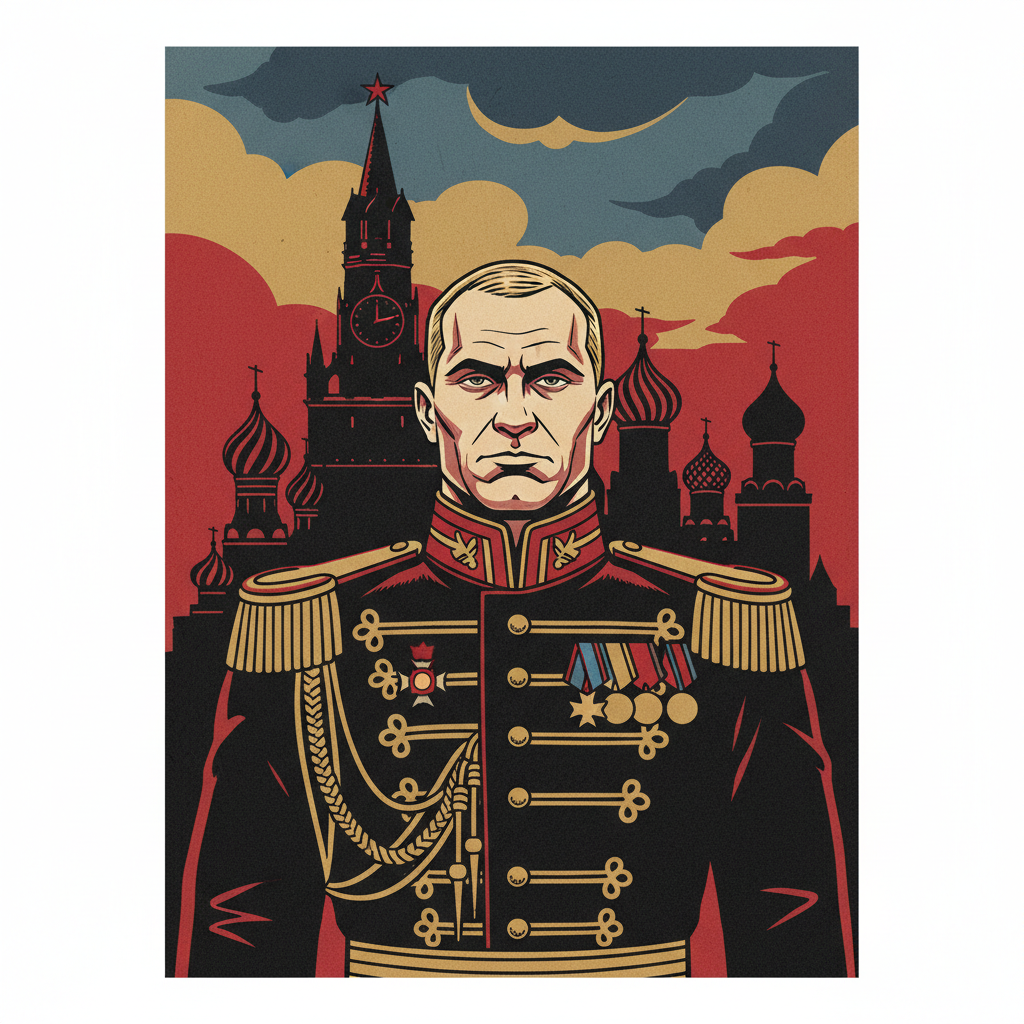
Putin's Consolidation of Power
Since assuming the presidency, Vladimir Putin has systematically centralized authority, transforming the Kremlin from a mere administrative complex into a representation of his personal command. This consolidation is underscored by his current influence score of 100/100, indicating an unparalleled degree of control over Russia's political landscape. His decisions directly shape the nation's trajectory, blurring the lines between the leader and the state. This singular focus of power allows for swift, decisive actions that are universally understood to originate from the highest office, directly from Putin himself.
Geopolitical Reach and Direct Involvement
Putin's identification with "the Kremlin" also highlights his direct involvement in Russia's extensive geopolitical engagements. GeoGazet tracking reveals his top connections by signal volume are Russia, with 66 tracked signals, and Ukraine, with 37 tracked signals. These figures illustrate the significant domestic and international attention on his actions, particularly concerning the ongoing conflict. His influence extends to broader strategic domains, as evidenced by 5 tracked signals related to Space, pointing to Russia's role in areas like satellite capabilities or anti-satellite weapon development. The scope of his engagement is further demonstrated by a total of 100 tracked events in the GeoGazet graph, confirming his centrality to a wide array of global developments.
Recent events clearly illustrate this direct linkage. For instance, GeoGazet reported, "Putin, Zelenskyy speak with Trump by phone as drone strikes kill 2 in Russia and U.K. detains tanker." Another signal from GeoGazet, "Kyiv Comes Under Russian Attack Hours After Putin-Trump Call," directly connects a high-level diplomatic engagement involving Putin to immediate military actions. These instances underscore that international actors and observers often attribute Russia's foreign policy and military actions directly to Putin's command.
Historical Parallels
The phenomenon of a leader becoming synonymous with the state is not unprecedented in history. Such instances often occur in systems where power is highly concentrated, resembling the absolute monarchies of the past, such as Louis XIV's famous declaration, "L'état, c'est moi" (The state, it is I). In modern contexts, authoritarian leaders frequently cultivate this image to project an unchallengeable authority, portraying themselves as indispensable to the nation's stability and strength. This deliberate identification with the state apparatus reinforces domestic control and dictates how the nation is perceived on the global stage.
What to Watch For Next
The continued use of "the Kremlin" to refer to Vladimir Putin signifies that his personal leadership remains the paramount factor in understanding Russia's domestic and foreign policy. Observers should monitor future diplomatic interactions, military escalations, and internal policy shifts, as these will invariably be interpreted through the lens of Putin's direct directives. The degree to which any potential successor could inherit or replicate this singular embodiment of state power will be a critical indicator for Russia's future political trajectory.