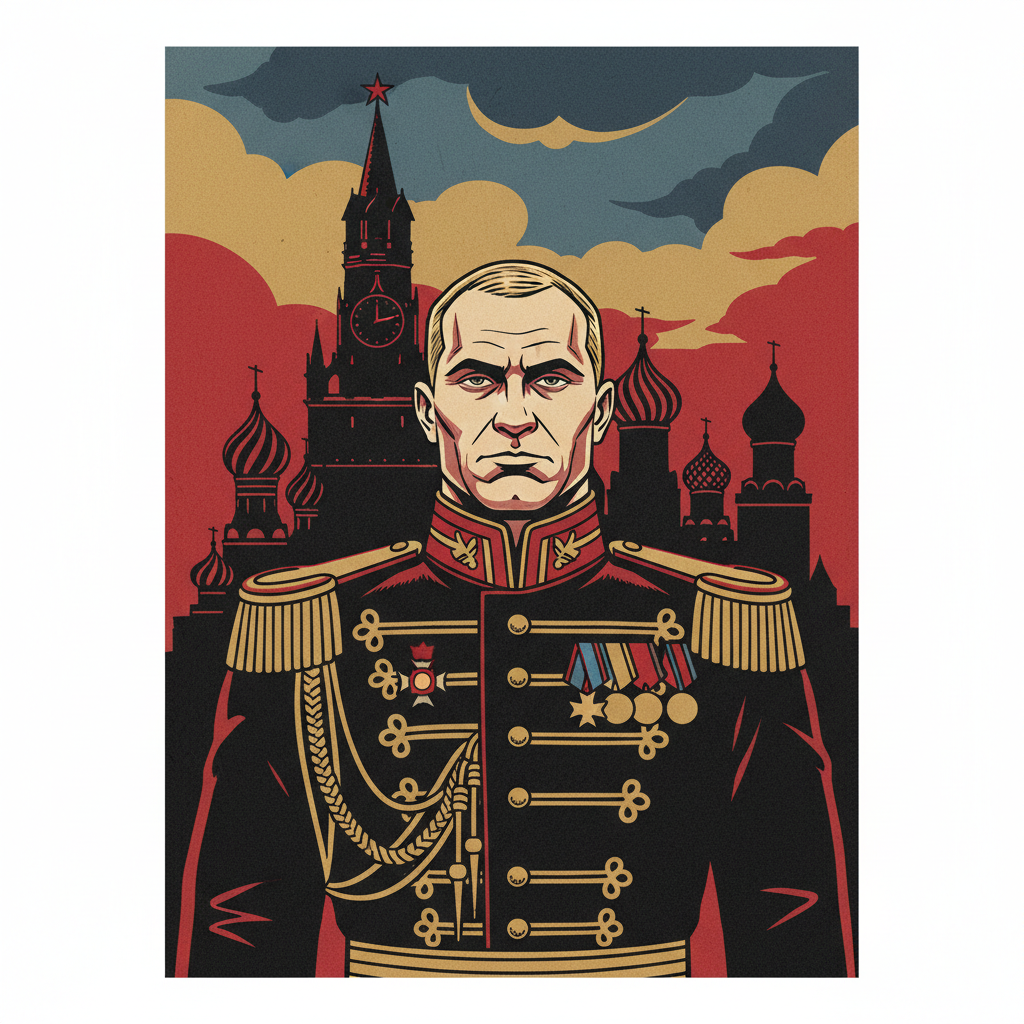
Putin's Current Term and Constitutional Changes
Vladimir Putin was re-elected for his fifth presidential term in March 2024, securing an overwhelming majority. This election followed significant constitutional amendments enacted in 2020, which notably reset his prior term count. Before these changes, Putin would have been constitutionally barred from seeking re-election after his 2024 term expired. The amendments effectively paved the way for his continued leadership, theoretically allowing him to remain in power until 2036 should he choose to run and win two more terms after 2030. This maneuver has been widely interpreted as a consolidation of power, ensuring long term political stability under his leadership.
Geopolitical Context and Putin's Influence
Putin's extended stay in power occurs amidst a highly charged geopolitical environment. His current influence score, according to intelligence assessments, stands at an exceptional 95/100, reflecting his commanding presence on the global stage. GeoGazet tracking further illuminates his strategic priorities through top connections by signal volume: Russia (66 tracked signals), Ukraine (30 tracked signals), and China (20 tracked signals). These figures underscore the dominance of domestic governance, the ongoing conflict in Ukraine, and the deepening strategic partnership with China as central pillars of his foreign policy. The high volume of signals relating to Russia itself indicates a strong focus on internal consolidation and control.
Recent Legislative Actions and Implications
Recent legislative actions signed by Putin further illustrate his approach to governance and international relations. GeoGazet tracking has identified several critical signals, including "Putin signs law authorizing use of military force to 'protect Russian citizens' abroad," and "Putin signed a law granting the right to deploy the Armed Forces to protect Russians arrested by foreign courts without." Another signal reports, "Putin signs law enabling him to deploy Russian troops abroad to 'protect' Russian citizens." These legislative moves provide a broad legal framework for potential Russian intervention in other sovereign states, predicated on the premise of safeguarding Russian nationals. This approach echoes historical patterns of great powers invoking the protection of compatriots to justify foreign policy actions. The total tracked events in the GeoGazet graph, numbering 97, signify a consistent pattern of policy output and engagement.
Historical Parallels and Leadership Trajectories
The constitutional reset and extended terms for President Putin draw historical comparisons to other long serving leaders, particularly those who have altered national legal frameworks to maintain power. Examples include leaders in post Soviet states and beyond who have modified constitutions to circumvent term limits, solidifying their rule for decades. This trajectory is characteristic of leaders seeking to ensure continuity and stability under their direct authority, often at the expense of established democratic norms and processes. The absence of a clear succession plan or robust opposition further reinforces the perception of indefinite presidential power.
What to Watch For Next
Observers should closely monitor several key indicators. These include any further constitutional adjustments or legislative initiatives that might solidify Putin's power or shape the succession process in the long term. The evolving situation in Ukraine and Russia's relationship with China will continue to be critical barometers of his foreign policy and geopolitical influence. Domestically, attention will be on any signs of internal dissent, economic performance, and the development of a potential successor, although such discussions remain largely speculative given the current political climate.