Historical Roots and Escalation
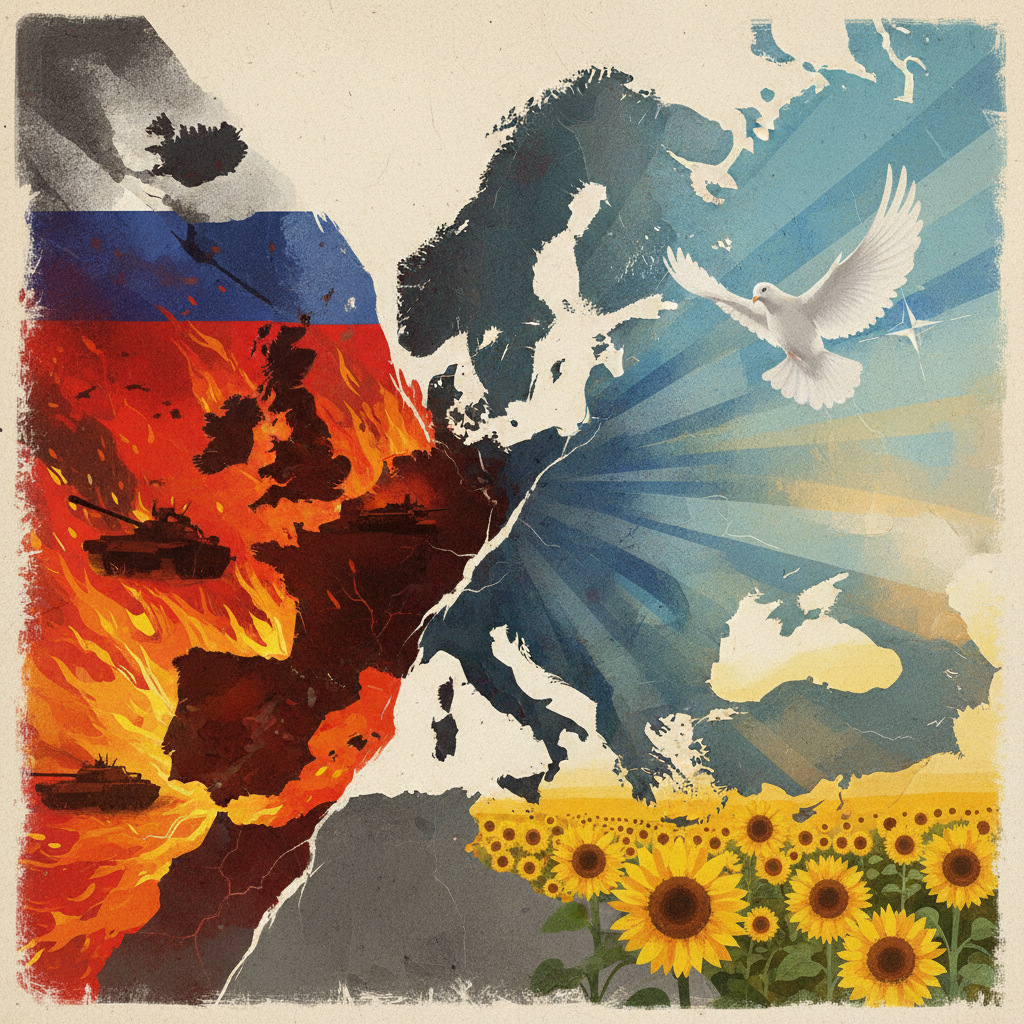
The origins of the current war trace back to the collapse of the Soviet Union in 1991, which granted Ukraine independence and fostered its eventual pivot towards the West. Russia, under President Vladimir Putin, views NATO expansion eastward as an existential threat, despite the defensive nature of the alliance. This perception fueled Moscow's increasingly aggressive foreign policy. Key precursors to the 2022 invasion include the 2014 annexation of Crimea and the support for separatists in Ukraine's Donbas region, sparking a protracted conflict. Russia's stated objectives for the full-scale invasion, such as "denazification" and "demilitarization" of Ukraine, were widely dismissed internationally as pretexts for territorial conquest and regime change, rather than legitimate security concerns.
The Full Scale Invasion
The 2022 invasion marked a significant escalation, involving a concerted military effort to overthrow the Ukrainian government and seize large swathes of its territory. Ukraine's robust resistance, supported by Western military aid, transformed the conflict into a protracted war of attrition. The global significance of this conflict is underscored by its current influence score of 100/100. Geopolitical intelligence tracking indicates top connections by signal volume are Ukraine (82 tracked signals), Russia (81 tracked signals), and Missiles & Strikes (13 tracked signals), highlighting the direct parties and the nature of the combat. The intensity of hostilities is further evidenced by the total tracked events in the GeoGazet graph, numbering 100. Recent events demonstrate the widespread impact: a "Russian drone strike in Ukraine kills 3 from one family, including 13-year-old boy," illustrating the severe civilian toll. Conversely, Ukrainian actions extend into Russian-held or border territories, as shown by reports that "Crimea suspends children's summer camps as Ukraine strikes squeeze fuel supplies," and that "Five dead after attack on Russia's Voronezh, governor says." These signals confirm the ongoing exchange of strikes and the severe consequences for both sides.
Geopolitical Fallout
The war has profoundly reshaped the global geopolitical landscape. It has strengthened the NATO alliance, led to unprecedented sanctions against Russia by Western nations, and spurred significant military and humanitarian aid to Ukraine. The conflict has also exacerbated global food and energy crises, disrupted supply chains, and forced a reassessment of international security arrangements. Nations worldwide have been compelled to choose sides, either actively supporting Ukraine, tacitly backing Russia, or attempting to maintain neutrality amidst intense pressure.
Historical Parallels
Historically, the conflict draws parallels to periods of Russian imperial expansion, where Moscow sought to control neighboring territories or establish buffer states to secure its borders and project power. It also echoes Cold War dynamics, positioning Ukraine as a focal point in a broader ideological and geopolitical struggle between a revisionist Russia and the Western democratic order. These historical comparisons underscore Russia's long-standing concerns about encirclement and its desire for a sphere of influence in Eastern Europe.
Outlook
The war remains highly dynamic, with no immediate resolution in sight. Key factors to watch include the effectiveness of Ukrainian counteroffensives, the sustained delivery of Western military and financial assistance, and the long-term impact of sanctions on Russia's economy and domestic stability. Any potential for diplomatic solutions hinges on a significant shift in either Russia's maximalist demands or Ukraine's commitment to territorial integrity. The future trajectory of the conflict will continue to shape international relations, global security paradigms, and the economic well being of numerous nations.