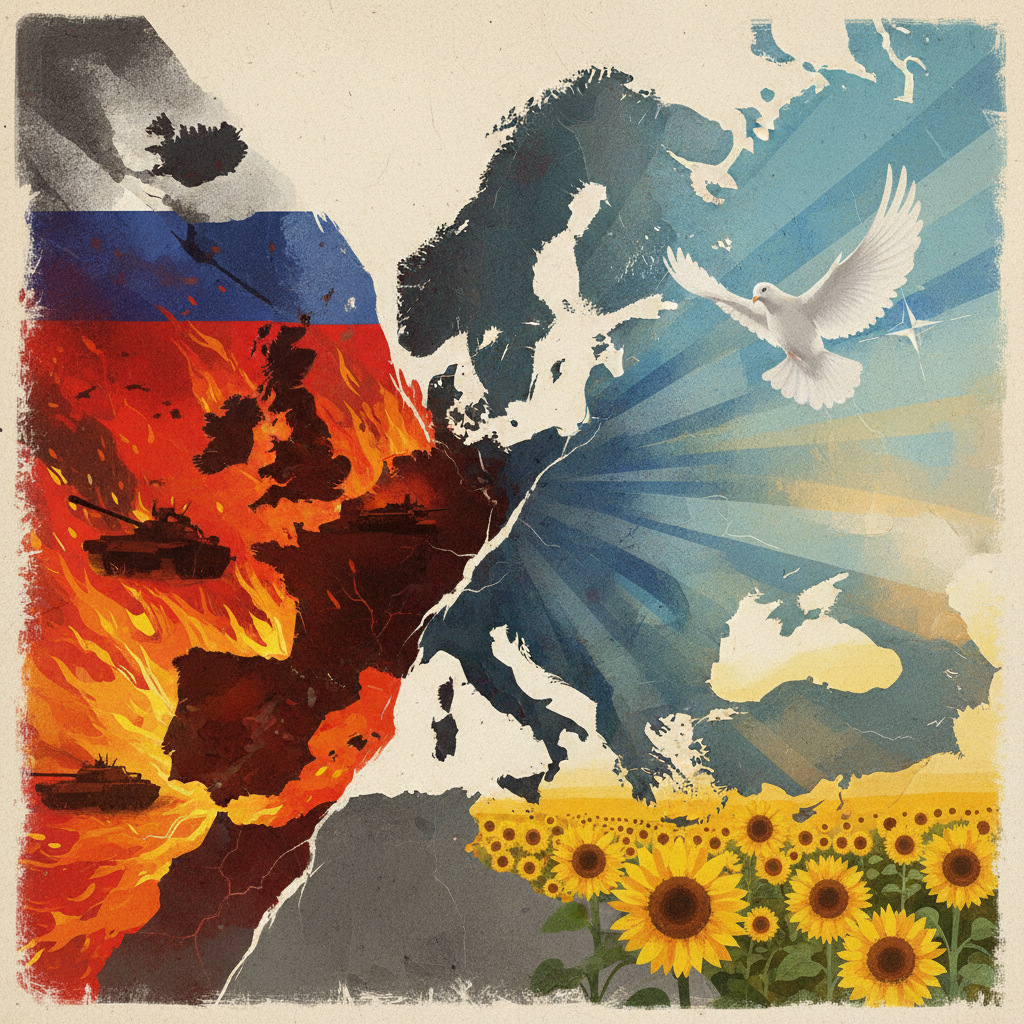
Context and Geopolitical Landscape
The full-scale invasion of Ukraine by Russia, which commenced in February 2022, represents the largest conventional conflict in Europe since World War II. This conflict has profoundly reshaped the global security landscape, leading to significant humanitarian crises, energy market disruptions, and heightened tensions between major world powers. The war's pervasive impact is reflected in its high "Current influence score" of 85 out of 100, according to GeoGazet tracking, indicating extensive global ramifications.
Analysis of signal volume further highlights the principal actors and themes defining the conflict. "Ukraine" generates 79 tracked signals, "Russia" 75 signals, and "Sanctions" 7 signals, underscoring the core adversarial relationship and the economic tools deployed in response to the aggression.
Current Dynamics and Evidence
Recent signals from GeoGazet tracking demonstrate the ongoing intensity and multifaceted nature of the conflict. For instance, GeoGazet reported the "EU proposes entry ban for Russian Ukraine combatants," illustrating continued international efforts to isolate Russia and its forces through legal and diplomatic means. Militarily, there are reports of Ukrainian advances; "Ukraine winning war with Russia, retired U.S. generals say, as top Ukrainian commander says 370 miles retaken." This signal suggests a degree of momentum for Ukraine but also implies significant territory remains contested, requiring continued military operations.
The war's reach extends beyond the battlefield, as evidenced by "Game, set, war – Ukraine’s battle on the court," a signal indicating how the conflict permeates cultural and sporting domains, reflecting a broader struggle for influence and legitimacy. The sheer complexity and volume of events associated with this conflict are captured by the "Total tracked events in GeoGazet graph," which stands at 100, indicating a highly dynamic and intricate situation requiring continuous monitoring.
Historical Precedents for Prolonged Conflict
Historically, conflicts of this scale, particularly those involving major powers or their proxies, often settle into protracted engagements rather than decisive, swift conclusions. Examples include the Korean War, which concluded with an armistice but no peace treaty, and various proxy conflicts during the Cold War era. These situations demonstrate how deeply entrenched geopolitical interests, domestic political pressures, and sustained international support can contribute to prolonged stalemates, where military gains are incremental and diplomatic breakthroughs are elusive. The current situation in Ukraine, characterized by significant external military aid to Ukraine and robust sanctions against Russia, mirrors conditions that have historically sustained conflicts over extended periods.
What to Watch For Next
Future developments that could influence the war's duration include shifts in international support for Ukraine, particularly regarding military aid and financial assistance. Internal political stability within both Russia and Ukraine, along with any significant breakthroughs or breakdowns in potential diplomatic channels, will be critical. The effectiveness and impact of Western sanctions on Russia's war economy, as well as Russia's ability to sustain its military operations, are also key indicators to monitor. Any major battlefield successes or failures, particularly regarding strategically important territories, could also alter the trajectory of the conflict.