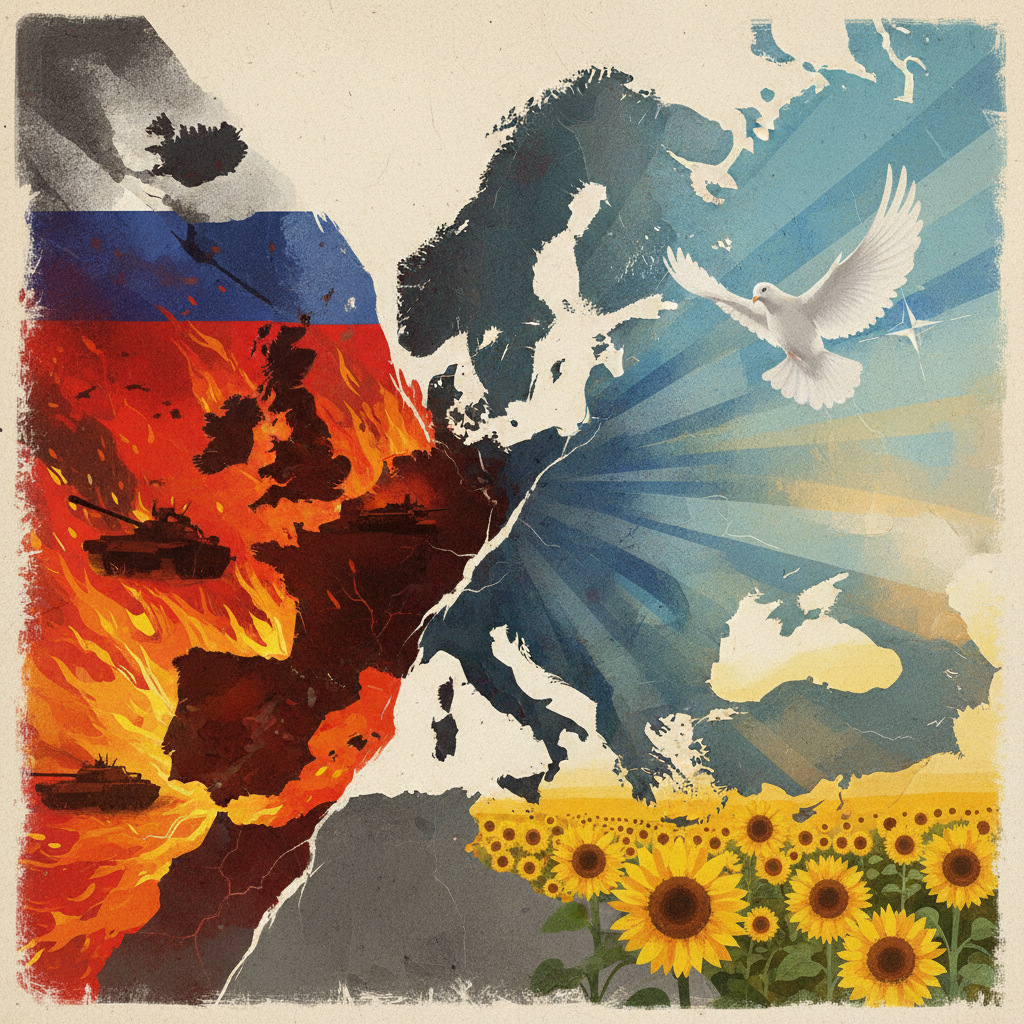
Current Geopolitical Stasis
The conflict maintains an exceptionally high Current Influence Score of 100/100, indicating its centrality in global affairs and the sustained attention it commands from intelligence agencies and policymakers. GeoGazet tracking shows robust engagement, with Ukraine registering 84 tracked signals and Russia 77 tracked signals, reflecting continuous, high-volume activity from both primary belligerents. This consistent signal volume underscores that neither side is close to a decisive military victory or political concession that would bring the conflict to a swift conclusion. The stalemate on much of the front line, combined with deep-seated national interests, suggests a prolonged engagement akin to historical "frozen conflicts" rather than an abrupt cessation of hostilities.
Escalation and Strategic Targeting
Despite the lack of significant territorial shifts in recent periods, military actions remain potent and strategic, as evidenced by a consistent signal volume of 5 tracked signals for "Missiles & Strikes." Recent intelligence confirms active targeting of critical infrastructure. GeoGazet tracking signals report "Ukraine Hits Tamanneftegaz, Key Russian Energy Terminal Fueling Kremlin War Effort," indicating Ukraine's strategy to degrade Russia's economic capacity to sustain the war. Similarly, "Ukrainian drone strike kills 1 in southern Russia and triggers fire at sea terminal" highlights Russia's vulnerability to deep strikes and Ukraine's capability to project power beyond its borders. These actions demonstrate continued offensive and defensive capabilities, precluding a quick end to hostilities through military collapse of either side. The total tracked events in the GeoGazet graph, numbering 100, further illustrate the relentless pace and scope of the conflict.
Societal Impact and Enduring Conflict
The human cost and societal adaptation to prolonged conflict are also evident. The GeoGazet signal "Russian families use AI to 'resurrect' loved ones killed in Ukraine" illustrates the profound and personal impact of the war, hinting at its deep psychological penetration into societies. Such reports suggest that the conflict has become deeply embedded, with populations adapting to its realities. Historically, wars with such profound societal resonance and high stakes do not end quickly. Like the Korean War, which transitioned from active combat to an armistice without a formal peace treaty, the Ukraine conflict could evolve into a prolonged state of tension or a de facto frozen conflict without a clear, definitive end to hostilities.
The Path Ahead
Predicting an end date for the Ukraine war remains highly speculative. The current trajectory points towards a protracted conflict driven by geopolitical objectives, sustained military capabilities, and deeply entrenched national narratives. Neither side appears willing or able to accept terms that would constitute a definitive end on the other's conditions.
What to Watch For Next
Key indicators to monitor include significant shifts in international support, particularly from Western allies for Ukraine or from China and Iran for Russia. Any major technological advancements in weaponry, substantial depletion of military resources, or unforeseen domestic political upheaval within either Ukraine or Russia could alter the conflict's dynamics. Diplomatic breakthroughs, while currently elusive, should also be watched, though they would likely follow, rather than precede, a change in military realities or a mutual exhaustion from prolonged fighting.