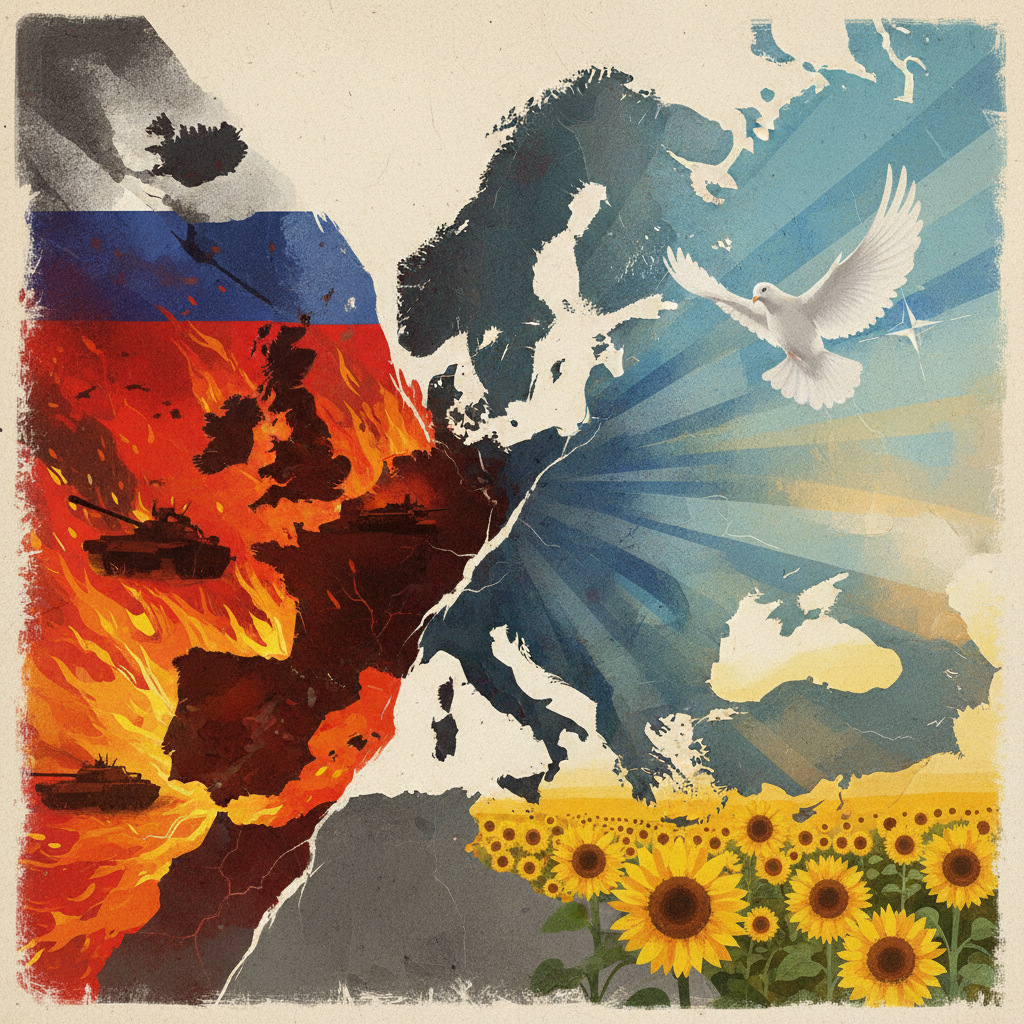
What Defines a Geopolitical War?
Geopolitical wars are characterized by their regional or global implications, often pitting great powers or blocs against each other directly or through proxies. The core objective is to reshape the geopolitical landscape in favor of one party's strategic ambitions, which can include securing critical trade routes, dominating resource-rich areas, or preventing rival powers from expanding their sphere of influence. These conflicts are inherently complex, involving a multifaceted approach where military actions are complemented by sanctions, alliances, propaganda, and cyber warfare. The ultimate goal is to alter the distribution of power and influence on an international scale.
The Ukraine War: A Contemporary Case Study
The ongoing conflict in Ukraine serves as a stark contemporary example of a geopolitical war, demonstrating how a regional conflict can escalate into a global geopolitical struggle. The global significance of this conflict is reflected in its current influence score of 76/100, indicating its pervasive impact on international relations. GeoGazet tracking shows Ukraine (83 tracked signals) and Russia (80 tracked signals) as top connections by signal volume, highlighting the intense focus on this confrontation.
Recent signals from GeoGazet tracking illustrate the strategic depth of this war. For instance, the report "Russia Strips Arctic Air Defenses As Ukraine War Strains Military" reveals Russia's strategic reallocation of resources, reflecting the significant demands placed on its military infrastructure by the conflict. Furthermore, the report "Bipartisan senators introduce Russia sanctions and tariff bill Lindsey Graham championed" underscores the economic front of this geopolitical war, where international sanctions aim to cripple Russia's ability to sustain its operations and alter its strategic calculus. The humanitarian cost is also a critical component, with "Devastating Russian attacks make June deadliest month for Ukraine’s civilians since 2022" highlighting the intense and destructive nature of the combat. The consistent tracking of "Missiles & Strikes (10 tracked signals)" further emphasizes the direct military component, while the "Total tracked events in GeoGazet graph: 100" demonstrates the sheer volume of incidents and data points informing analysis of the conflict's progression. This war is not simply about territorial control in Ukraine but about the future security architecture of Europe and the broader global power dynamic between Russia, the West, and emerging powers.
Historical Parallels and Enduring Principles
Historically, geopolitical wars have taken various forms, from the direct great power confrontations of the two World Wars to the proxy conflicts and ideological battles of the Cold War. The latter, for instance, involved an extensive geopolitical struggle between the United States and the Soviet Union, fought through economic competition, arms races, and interventions in states like Vietnam and Afghanistan. These historical instances demonstrate a consistent pattern: conflicts extend beyond immediate battlefields to encompass a struggle over fundamental principles, alliances, and the global order. The current situation echoes these historical precedents, albeit with new technological dimensions and interconnected global economies.
What to Watch For Next
Moving forward, observation will focus on how long the current stalemate in Ukraine persists and whether major powers escalate their involvement, either militarily or through more stringent economic measures. The impact of domestic political shifts within key actors and the evolving dynamics of global alliances, particularly regarding energy and trade routes, will be critical indicators. The ongoing reallocation of military assets and the introduction of new sanction regimes will also serve as vital signals for anticipating the next phases of this complex geopolitical conflict.