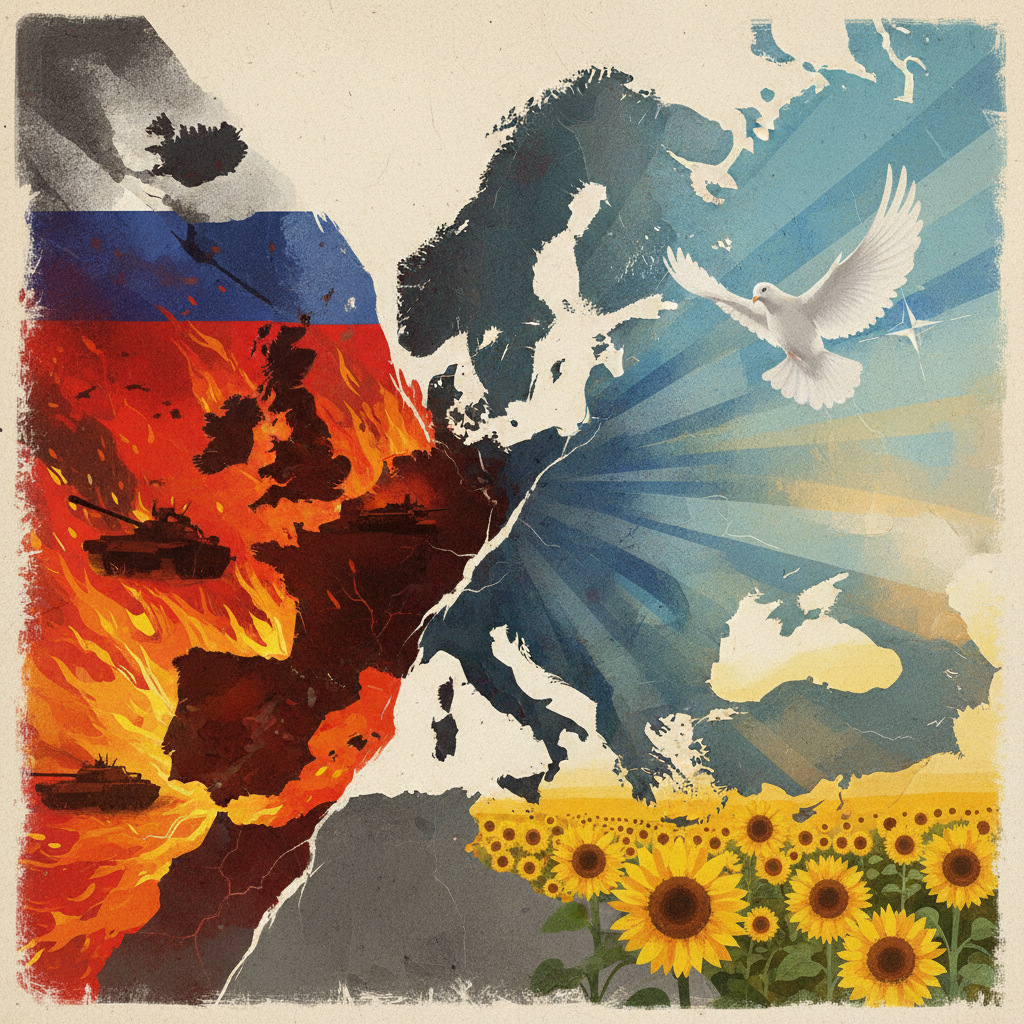
Projected Landscape in 2026
The overall geopolitical landscape remains highly volatile, registering a current influence score of 74/100 according to intelligence metrics, reflecting significant global impact and instability. By 2026, the conflict is expected to be characterized by sustained, albeit localized, ground engagements, complemented by persistent long-range strikes. GeoGazet signal volume underscores the centrality of the belligerents, with Ukraine tracking 90 signals and Russia 89 signals, indicating their continuous involvement as primary actors. The high volume of signals also suggests intense scrutiny and a complex informational environment surrounding the war.
Military Dynamics and External Support
Military operations will likely continue to revolve around attrition and localized offensives, rather than large-scale, sweeping maneuvers. Air defense remains critical for Ukraine, a challenge addressed by recent developments such as a "License to Make Patriot Missiles Could Help Ukraine Defend Against Russia." This shift towards domestic production or licensed manufacturing capabilities signals a longer-term strategic adaptation for Ukraine to bolster its defensive posture against Russian aerial threats. The enduring importance of missile strikes is highlighted by "Missiles & Strikes" registering 20 tracked signals, reflecting their persistent use by both sides to target military infrastructure and disrupt logistical chains. External military and financial support for Ukraine is projected to continue, evidenced by the GeoGazet signal "NATO pledges 70 billion euros for Ukraine." This substantial commitment ensures Ukraine's capacity to sustain its defense efforts, extending the conflict’s viability.
Geopolitical and Diplomatic Outlook
The geopolitical environment surrounding the war will remain complex, with a constant interplay between calls for peace and continued military support. The signal "NATO pledges 70 billion euros for Ukraine as Trump praises peace ‘progress’" illustrates this duality, where significant aid coexists with high-level discussions about diplomatic pathways. However, concrete breakthroughs toward a lasting peace agreement are improbable without substantial shifts in territorial control or political will from either side. The conflict's protracted nature draws historical comparisons to other long-term, stalemated conflicts of the 20th century, such as the Korean War, where a definitive military victory proved elusive and geopolitical factors cemented a division. The GeoGazet graph shows a total of 100 tracked events, signifying the ongoing complexity and multiple interconnected threads within the conflict's broader narrative.
What to Watch For
Key indicators for the remainder of 2026 include the sustainability of Western military aid, particularly ammunition and advanced air defense systems. Monitoring developments in Ukraine's domestic defense production capacity, shifts in Russian military strategy, and the outcomes of international mediation efforts will be crucial. Any significant change in leadership or policy in key supporting nations could also alter the conflict's trajectory.