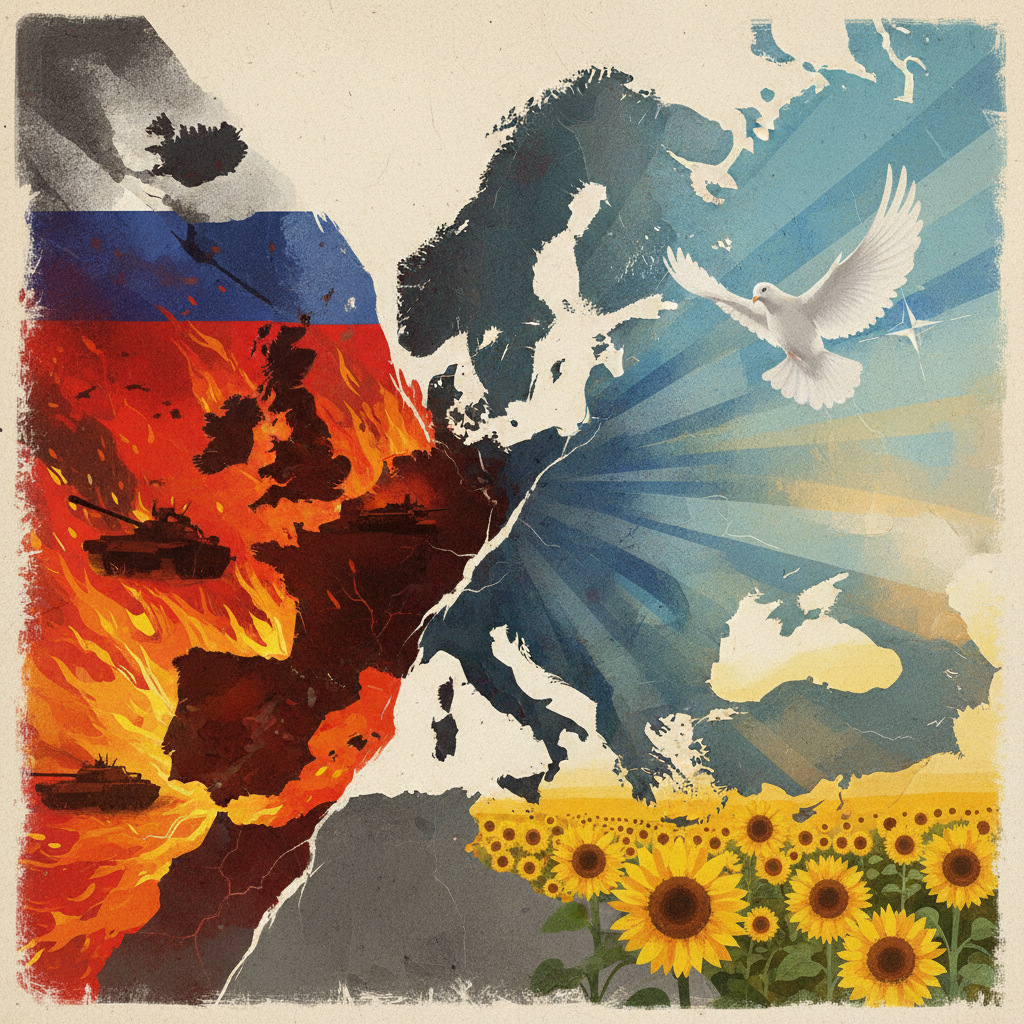
Current Geopolitical Landscape
The conflict in Ukraine continues to exert a profound global influence, evidenced by a current influence score of 98/100, indicating its significant impact on international relations and security frameworks. Intelligence analysis shows top connections by signal volume are dominated by Russia (90 tracked signals), Ukraine (83 tracked signals), and Missiles & Strikes (19 tracked signals), highlighting the direct belligerents and a primary mode of combat. Recent signals from GeoGazet tracking, specifically "Russian attack on Kyiv kills at least 27, injures scores" and "Recent Russian strikes on Kyiv highlight shifting nature of war," underscore the persistent threat to Ukrainian urban centers and the evolving operational tactics employed by Russian forces. The cumulative tracking of 100 total events in the GeoGazet graph further illustrates the sustained intensity and complexity of the war. These events point to a conflict characterized by attrition and targeted strikes, rather than widespread maneuver warfare across large swathes of land.
Projecting the 2026 Map
Forecasting the "map" of the Ukraine war by 2026 involves assessing several critical factors. A plausible scenario points to a continued protracted conflict, characterized by entrenched defensive lines rather than sweeping territorial gains by either side. The current battlefield realities, coupled with the resilience of Ukrainian defenses and sustained Western military aid, suggest that major shifts in control of the four annexed Ukrainian oblasts (Donetsk, Luhansk, Zaporizhzhia, and Kherson) or Crimea are unlikely without significant escalations or breakthroughs.
A "frozen conflict" along current or slightly modified lines remains a distinct possibility, similar to historical precedents such as the Korean War, where de facto control solidifies without a formal peace agreement. Such a scenario would entail heavily militarized zones and continued military pressure, albeit potentially at a lower intensity. The strategic importance of maritime access, particularly for Ukraine's Black Sea ports, will remain a key determinant of economic viability and international trade routes. While direct control of the entire Black Sea coast by either side beyond current lines appears challenging, the conflict's trajectory will impact naval operations and the security of shipping corridors. The humanitarian impact, including internal displacement and refugee flows, will also contribute to the human geography of the region, regardless of precise military lines.
What to Watch For Next
Key indicators for understanding the future territorial configuration include the sustained level of international military and financial support for Ukraine, the evolution of Russian military capabilities and strategic objectives, and internal political stability within both belligerent nations. Any significant breakthroughs in long-range precision strike capabilities, or a substantial shift in air superiority, could alter localized front lines. Diplomatic efforts, though currently stalled, also represent a potential, albeit uncertain, path towards influencing future borders and the eventual status of disputed territories. The pace and scale of reconstruction efforts in liberated areas, and the continued integration of Ukraine with Western institutions, will also shape the enduring geopolitical map of Eastern Europe.