Current State of Conflict
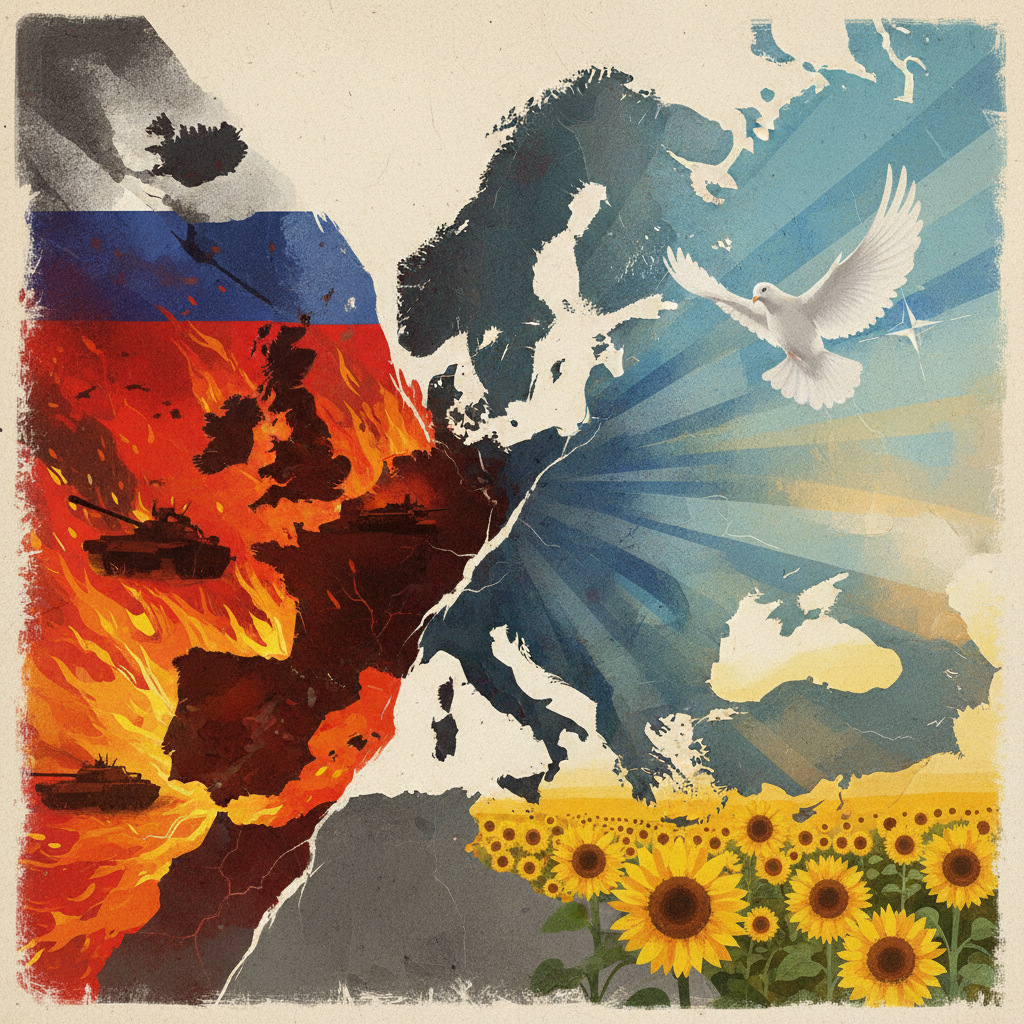
The war in Ukraine, having commenced with Russia's full scale invasion in February 2022, has evolved into a grinding war of attrition by mid-2026. Despite extensive international sanctions against Russia and substantial military aid to Ukraine, decisive breakthroughs have remained elusive for either side along the established front lines. Geopolitical intelligence signals show the conflict maintains an influence score of 100/100, indicating its pervasive global impact and continued intensity. Top connections by signal volume consistently track Ukraine (92 tracked signals) and Russia (89 tracked signals), with "Missiles & Strikes" also highly active (24 tracked signals), confirming the enduring kinetic nature of the engagement. A total of 100 events are tracked in the GeoGazet graph, reflecting comprehensive monitoring of the ongoing hostilities.
Factors Influencing 2026 Casualties
The primary driver for continued casualties in 2026 is the sustained offensive and defensive operations by both combatants. GeoGazet tracking on July 6, 2026, highlights that "Ukraine's Strike Campaigns Will Likely Continue to Hurt Russia's Economy and Military Operations in Ukraine." This suggests ongoing targeting of Russian assets and personnel, which inherently results in combat losses. Simultaneously, the report "Almost every Russian region hit by fuel crisis, as Ukraine escalates drone attacks" indicates a significant escalation of Ukrainian long range drone operations. These attacks, while targeting infrastructure, necessitate Russian defensive responses, which carry their own risks for military personnel and can lead to civilian casualties in affected areas.
Historically, extended conflicts of this type, characterized by widespread artillery duels, missile exchanges, and increasingly sophisticated drone warfare, inevitably produce high casualty figures. Similar to attritional phases in conflicts such as the Iran-Iraq War or the later stages of World War I, static lines combined with relentless strikes result in a steady, albeit often concealed, accumulation of losses. Both sides have demonstrated a willingness to sustain significant losses in pursuit of their objectives, contributing to the projection of continued high casualties. Civilian casualties remain a tragic constant, affected by indiscriminate shelling, missile strikes, and the secondary impacts of infrastructure damage.
Broader Geopolitical Implications
The ongoing conflict and its associated casualties profoundly impact the broader geopolitical landscape. Russia's capacity to sustain its war effort, despite economic strain from sanctions and continuous attacks, relies on its ability to replenish personnel and materiel. Ukraine's resilience is similarly tied to continued Western support and its ability to mobilize and train forces. The high casualty rates are a significant strain on both nations' demographics and long-term societal stability. The strategic use of long range strikes by Ukraine, as evidenced by the fuel crisis in Russia, represents an expansion of the conflict's geographical reach, increasing the potential for direct and indirect casualties beyond the immediate front lines.
What to Watch For Next
Observers should closely monitor several key indicators for their potential impact on future casualty rates. These include the pace and volume of Western military aid to Ukraine, particularly regarding advanced weaponry and air defense systems; Russia's ability to conduct further mobilization efforts and overcome logistical challenges highlighted by the fuel crisis; and any shifts in the diplomatic landscape that could suggest a path towards de-escalation. The evolution of drone warfare tactics and counter measures will also be critical, as these technologies continue to shape the nature of engagements and their associated human cost.