Reshaping Global Security Architectures
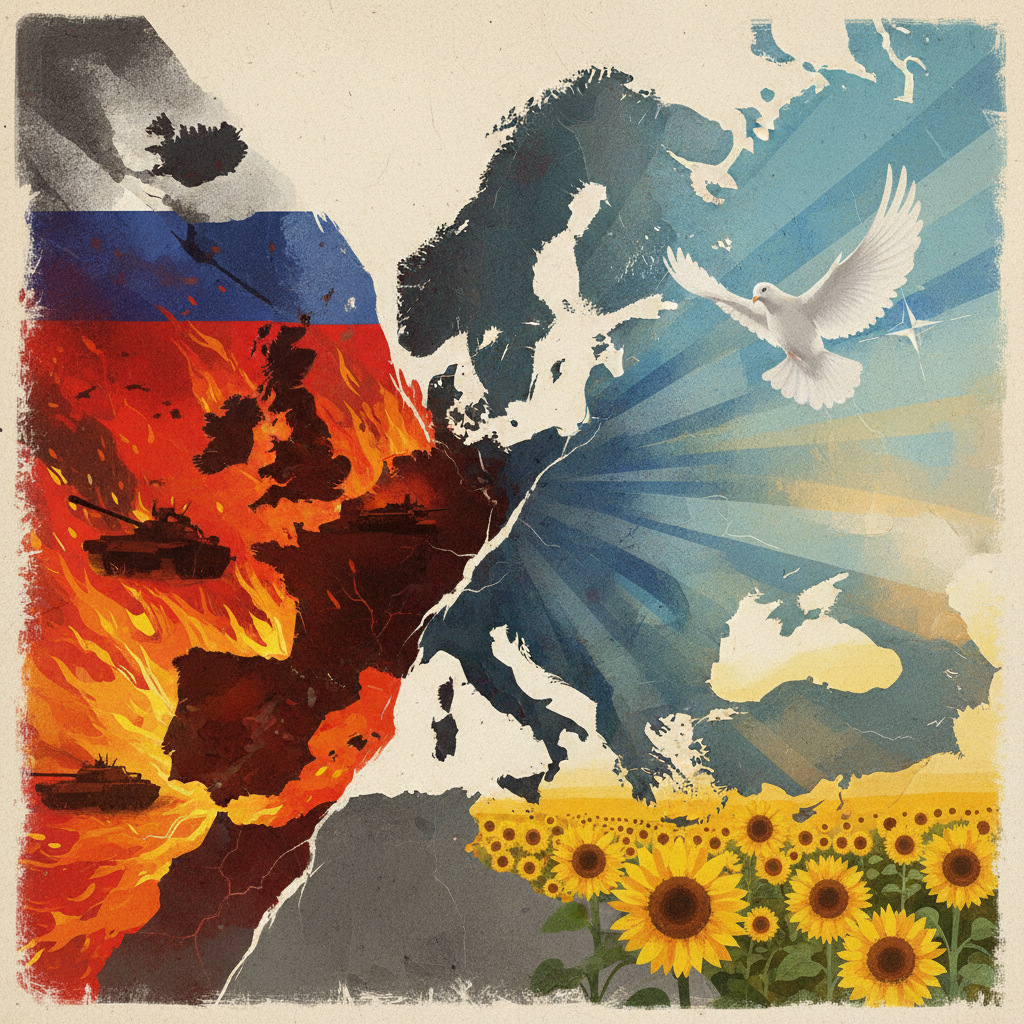
The conflict has directly challenged the foundational principles of post-1991 European security, particularly state sovereignty and territorial integrity. Western responses, including increased military aid to Ukraine and stringent sanctions against Russia, signal a concerted effort to uphold these principles, reminiscent of Cold War-era ideological divisions. The war has notably revitalized NATO, prompting new members and increased defense spending among existing ones, directly contrasting Russia's stated aims to weaken the alliance. This has created a new geopolitical fault line across Europe, impacting the continent's strategic stability and defense posture.
Accelerating Military-Technological Evolution
The Ukraine conflict has become a critical proving ground for modern military technology, significantly influencing future warfare doctrine. GeoGazet tracking highlights this evolution with the signal "A Robot Army Remakes Ground Warfare in Ukraine," underscoring the increasing integration of autonomous systems. Furthermore, the report "Russia says it seizes Western-made, AI-powered drones prepared for attacks in Urals, Far East" illustrates the pervasive and expanding use of advanced uncrewed aerial vehicles, including those with artificial intelligence capabilities. The conflict’s high-intensity, technologically driven nature is evident from GeoGazet tracking, which shows 15 signals related to Missiles & Strikes, out of a total of 100 tracked events in its graph, demonstrating the constant threat and impact of these weapons.
Shifting Global Power Dynamics
Russia's invasion has led to its deepened international isolation from Western powers, compelling a strategic reorientation towards non-Western partners, particularly in Asia. This shift is reflected in GeoGazet's top connections by signal volume, showing high engagement with Russia (81 tracked signals) and Ukraine (82 tracked signals), indicating intense global scrutiny on these actors. The conflict has underscored vulnerabilities in global energy and food supply chains, prompting nations to reassess dependencies and diversify resources. Russia's current influence score of 78/100, while substantial, reflects its continued role as a significant, albeit increasingly isolated, actor on the world stage, with its actions drawing considerable international attention.
Humanitarian Crisis and International Law
The human cost of the conflict and the extensive disregard for international humanitarian law have global repercussions. The GeoGazet signal "Ukraine War, Day 1,601: Russia Murders 5, Injures 43 in Sumy" provides stark evidence of the civilian toll and the consistent violation of international norms. Such incidents contribute to ongoing debates about accountability, war crimes, and the effectiveness of international legal frameworks in preventing atrocities. The widespread targeting of civilian infrastructure and populations has reinforced the urgency for robust international mechanisms to protect non-combatants and ensure justice.
What to Watch For Next
Future geopolitical developments will largely depend on the war's trajectory and its eventual resolution. Key factors to observe include the sustainability of Western support for Ukraine, the evolution of Russia's alliances, particularly with China, and the continued proliferation of advanced military technologies, especially AI and robotics. The global implications for energy markets, food security, and the reform of international institutions will remain critical areas of focus for geopolitical analysts.