Escalation and Civilian Impact
Recent intelligence signals from GeoGazet tracking underscore the direct impact on the civilian population. A signal indicates, "Israel bombs Gaza after displacement orders, kills two Palestinians," highlighting the precariousness for those attempting to relocate. Further illustrating the lack of safe zones, another GeoGazet signal states, "‘There is no safe place’: Israeli attack kills family of six in Gaza." These events contribute to a total of 100 tracked events within the GeoGazet graph, reflecting persistent and severe activity. The ongoing conflict exacts a heavy toll on non-combatants, with infrastructure damage and humanitarian access remaining critical challenges.
Geopolitical Dynamics and Annexation Concerns
The current geopolitical situation surrounding Gaza is complex, marked by continued Israeli military objectives and growing international concerns over the future of the territory. GeoGazet tracking shows "Gaza" as a top connection with 59 tracked signals, and "Israel" with 53, indicating intense focus on both entities. A particularly concerning signal from GeoGazet tracking reveals, "‘Creeping death’: Israel weaponises ‘Yellow Line’ to annex Gaza." This suggests potential Israeli strategies for territorial control or expansion, reminiscent of historical patterns of land disputes and occupation in the region following conflicts such as the 1967 Six Day War. The "Yellow Line" reference suggests a defined operational or demarcation zone that may be utilized for de facto annexation.
International Response and Peace Efforts
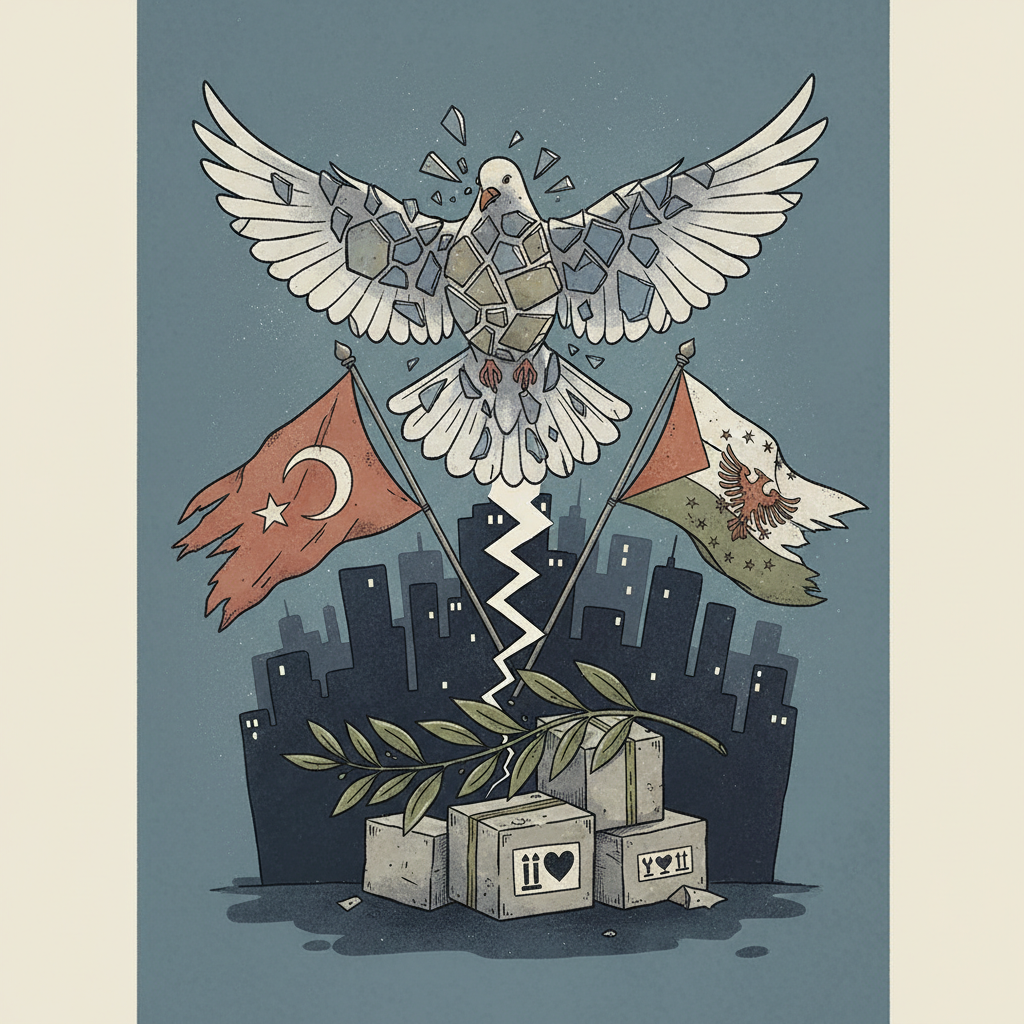
Despite the ongoing violence, international efforts to mediate a resolution persist, though with limited tangible success. "Peace & Ceasefire" registers 38 tracked signals, demonstrating a consistent, albeit frustrated, global interest in de-escalation. However, the current influence score of 2/100 indicates that these diplomatic signals have yet to translate into significant momentum for a lasting peace agreement or a halt to hostilities. This low score suggests either international fatigue or a constrained capacity for effective intervention, allowing the conflict to continue largely unchecked by external pressures.
What to Watch For Next
Observers should monitor several key indicators. The humanitarian situation in Gaza, particularly access to aid and the potential for famine, remains paramount. Diplomatic efforts, especially those involving regional powers and the United Nations, will be crucial in attempting to secure a lasting ceasefire. Any further Israeli moves concerning the "Yellow Line" or other territorial claims will require close scrutiny for their long term implications for the Palestinian population and regional stability. Additionally, internal Israeli political dynamics and their impact on military strategy in Gaza should be carefully tracked.