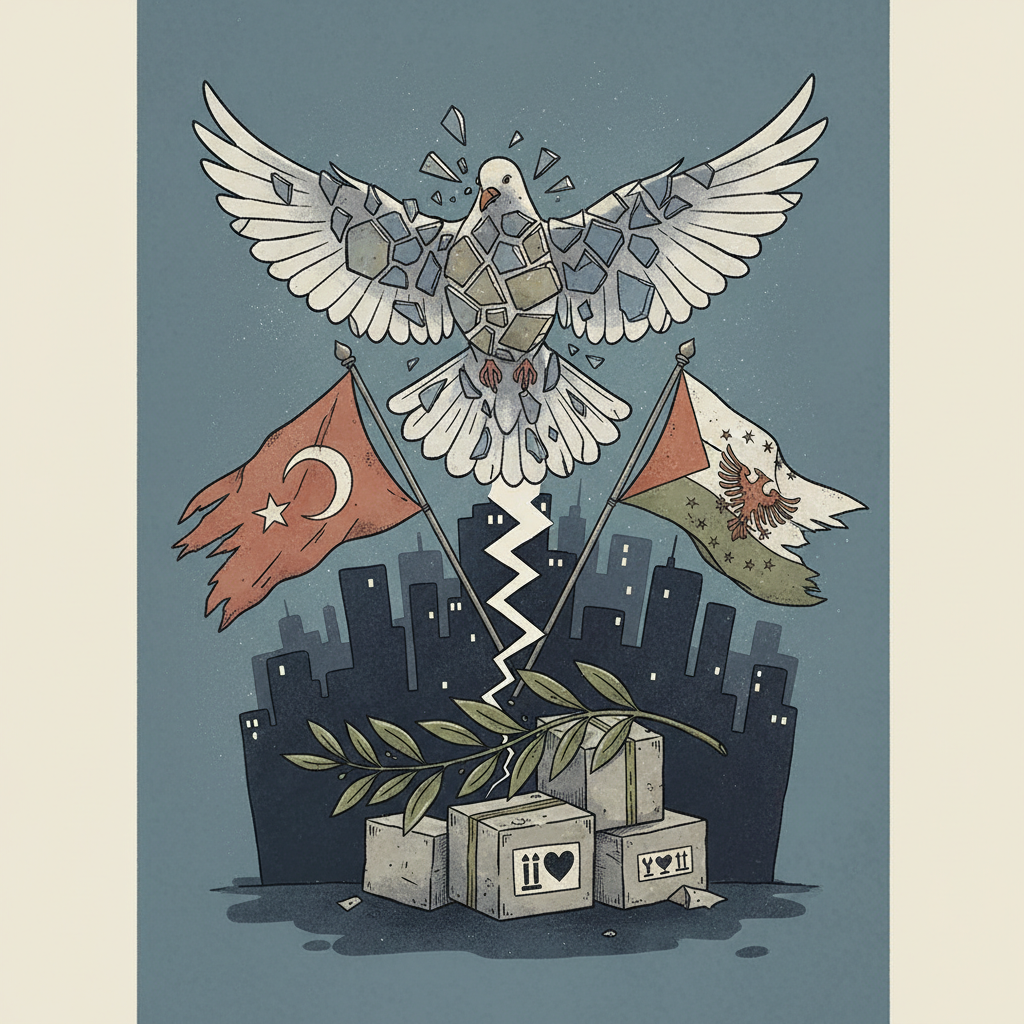
The October 7th Catalyst
On October 7, 2023, Hamas initiated a coordinated assault involving rocket barrages and incursions by ground forces into Israeli territory. This surprise attack resulted in significant casualties and the abduction of numerous individuals, prompting an immediate and robust military response from Israel. Israel declared war on Hamas, initiating extensive aerial bombardments and subsequent ground operations within the Gaza Strip with the stated objective of dismantling Hamas’s military and governance capabilities and securing the release of hostages.
Current Geopolitical Landscape and Diplomatic Efforts
The conflict in Gaza remains a dominant focus within international relations. GeoGazet tracking data underscores this, showing "Gaza" as the top connection by signal volume with 64 tracked signals, followed by "Peace & Ceasefire" (52 tracked signals) and "Israel" (49 tracked signals). This concentration of attention reflects the intensity of the situation and the ongoing efforts towards de-escalation. The overall influence score for the conflict stands at 39/100, indicating significant but not overwhelming global impact relative to all 100 total tracked events in the GeoGazet graph.
Recent intelligence signals highlight the complexities of current negotiations. GeoGazet tracking indicates: "Palestine weekly wrap: Israel presses deeper into Gaza as Cairo talks begin," pointing to simultaneous military operations and diplomatic initiatives. Furthermore, a signal stating "‘No Deal without Gaza’: Hamas Highlights Iran’s Position on Regional Ceasefire" reveals the broader regional implications and interconnectedness of potential agreements. Mediating parties are reportedly focused on critical components, as evidenced by the signal "Mediators for Gaza ’ceasefire’ focus on arms, governance," suggesting long-term stability requires addressing fundamental issues beyond a temporary truce.
Historical Context and Patterns of Conflict
While the October 7th event marked a new phase, the Israeli-Palestinian conflict, particularly concerning Gaza, has a long history of escalations and cycles of violence. Previous major confrontations include conflicts in 2008-2009, 2012, 2014, and 2021. Each successive conflict has contributed to the humanitarian crisis in Gaza, a densely populated enclave under blockade since 2007. The current conflict, however, is notable for its scale, the unprecedented nature of the initial Hamas attack, and the prolonged and intensive nature of Israel’s military response, drawing comparisons to the duration and devastation of prior regional wars.
What to Watch For Next
Future developments will likely hinge on the progression of ceasefire negotiations, particularly regarding hostage releases and the terms for a cessation of hostilities. Attention will also be on the humanitarian situation within Gaza, the potential for regional spillover, and the long-term governance arrangements proposed for the territory post-conflict. The involvement of international mediators and regional powers will remain crucial in shaping the trajectory of this ongoing crisis.