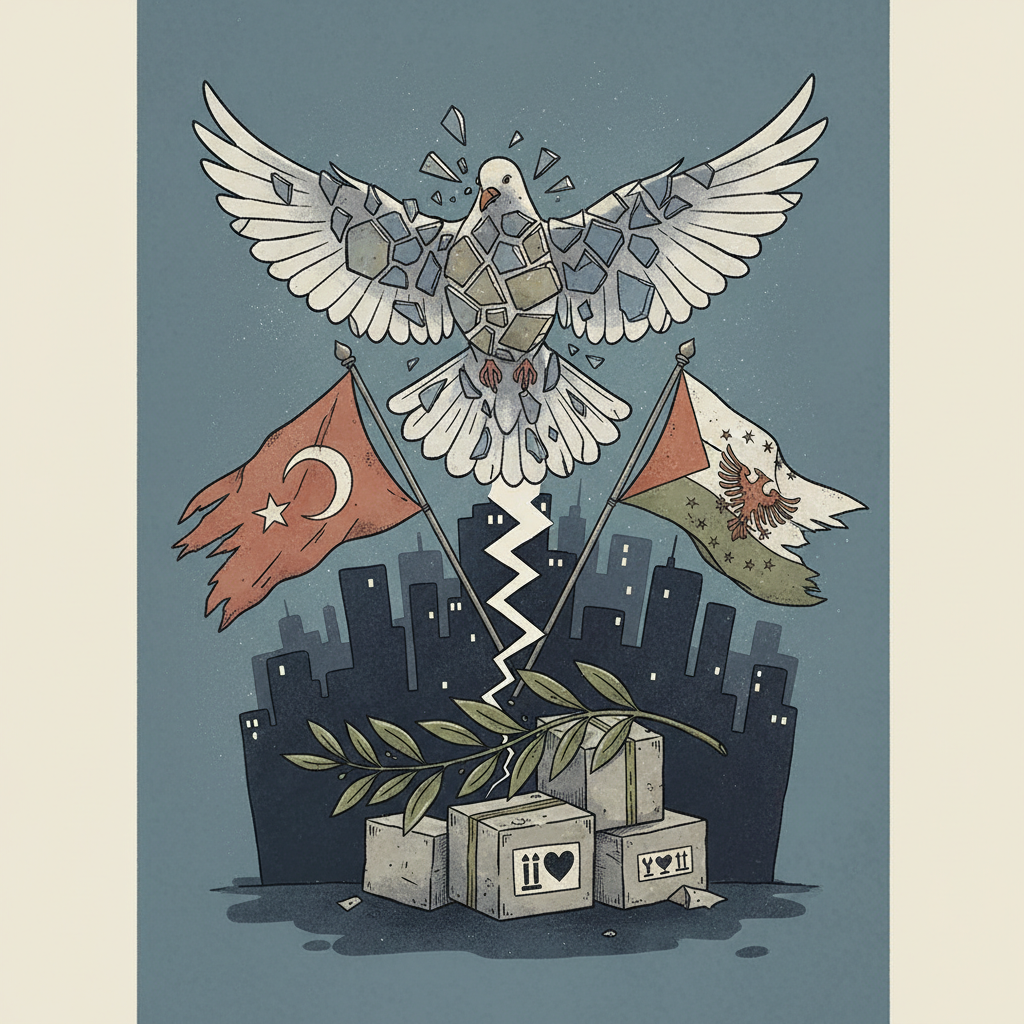
Current Status and Geopolitical Landscape
The conflict in Gaza continues to involve significant military operations, humanitarian crises, and intense diplomatic maneuvering. GeoGazet tracking data highlights the pervasive nature of the crisis, with "Gaza" appearing as a top connection by signal volume at 46 tracked signals. Simultaneously, the urgency for resolution is underscored by "Peace & Ceasefire" leading with 47 tracked signals, closely followed by "Israel" at 45 tracked signals. This data demonstrates a clear global focus on both the conflict itself and the pressing need for a cessation of hostilities. The high volume of signals across these categories reflects the concentrated international effort to monitor, analyze, and intervene in the escalating situation. The overall complexity is further evidenced by a total of 100 tracked events within the GeoGazet graph, illustrating the multifaceted nature of the crisis and its wide-ranging implications.
Regional Implications and External Actors
The Gaza conflict is not isolated but deeply intertwined with broader regional dynamics. Recent signals from GeoGazet tracking reveal these intricate connections. The signal "Stop ‘Greater Israel’ to make peace" points to fundamental political grievances and territorial disputes that underpin the conflict and hinder resolution efforts, resonating with historical calls for a two state solution and an end to occupation. This sentiment reflects deep-seated historical narratives stretching back to the 1948 Arab-Israeli War and subsequent conflicts, where land and self-determination have been central issues.
Furthermore, the conflict has clear spillover effects and external actor involvement. A GeoGazet signal dated "June 20: Heading to Iran talks, Vance says hoping for progress on Lebanon ceasefire and nuclear issue" illustrates how the Gaza situation is linked to other regional flashpoints. Iran's role and influence are critical to understanding the broader stability of the Middle East. The direct query "Why is there fighting in Lebanon?" further emphasizes this interconnectedness, highlighting how the Gaza conflict can ignite or intensify hostilities on other fronts, drawing in regional proxies and creating a wider arc of instability. This mirrors historical patterns seen in past Arab-Israeli wars where conflicts often encompassed multiple fronts and drew in various state and non-state actors.
What to Watch For Next
Observers should closely monitor several key indicators. Progress on the humanitarian front within Gaza, including aid delivery and infrastructure repair, will be crucial. Diplomatic efforts, particularly those involving major international powers and regional actors like Iran, will determine the viability of any sustained ceasefire. The frequency and nature of cross-border incidents, especially those involving Lebanon, will indicate the conflict's potential for further regional escalation. Developments related to the proposed "Greater Israel" concept and any related political shifts within Israel or the Palestinian territories will also shape the conflict's trajectory.