桑达尔·皮查伊做了什么?
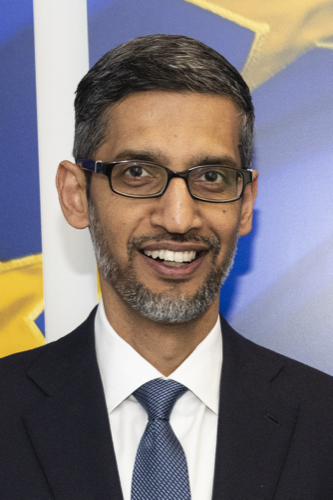
Sundar Pichai has served as CEO of Google and Alphabet since 2015, leading the technology conglomerate through major shifts in artificial intelligence, cloud infrastructure, and regulatory challenges across global markets.
阅读完整报告显示更少
Leadership Trajectory and Appointment
Pichai became CEO of Google in December 2019 and was promoted to lead both Google and parent company Alphabet in 2023, consolidating authority over one of the world's largest technology firms. His tenure spans the company's transition from a search and advertising focused enterprise toward an AI centric organization. Before becoming CEO, Pichai led product development and oversaw Chrome, Android, and Google's core products for over a decade, giving him deep operational knowledge of the company's technical foundation. His appointment reflected the board's confidence in his ability to navigate intensifying competition from OpenAI, Microsoft, and other AI developers.
Current Strategic Challenges
Pichai's leadership faces significant headwinds in 2026. Finland has ordered a halt to work on Google data centre sites, blocking infrastructure projects critical to the company's European expansion strategy. This regulatory action reflects broader European skepticism toward American technology giants and their resource consumption patterns. Simultaneously, OpenAI has launched "dots," a personal AI assistant positioned to handle comprehensive user tasks, directly competing with Google's own AI initiatives and challenging the search company's dominance in consumer facing artificial intelligence products.
影响力与市场地位
Despite controlling one of the world's most valuable companies, Pichai's current influence score stands at 2 out of 100 according to recent geopolitical tracking data, indicating that his direct impact on global political outcomes remains limited compared to government officials or military leaders. This metric reflects the distinction between corporate power and geopolitical influence, two separate dimensions of authority. His decisions affect markets and technology development profoundly, yet his ability to shape state behavior or international relations remains marginal. The gap illustrates how technology sector leadership, while economically consequential, operates differently from traditional power centers.
Forward Looking Position
Pichai continues to navigate dual pressures of maintaining Google's market dominance while adapting to an increasingly fragmented global regulatory environment. The Finland data centre halt exemplifies how geopolitical and environmental constraints now limit expansion even for companies with vast capital resources. With over 100 tracked events monitored in relation to Google's operations and leadership decisions, Pichai's choices cascade through multiple jurisdictions and competitive markets. His success depends on balancing innovation in artificial intelligence, infrastructure development across compliant regions, and stakeholder management in jurisdictions where Google faces growing restrictions. The competitive emergence of advanced AI assistants from other firms means his strategic vision must evolve faster than in previous years, even as regulatory obstacles multiply.