Current Geopolitical Context
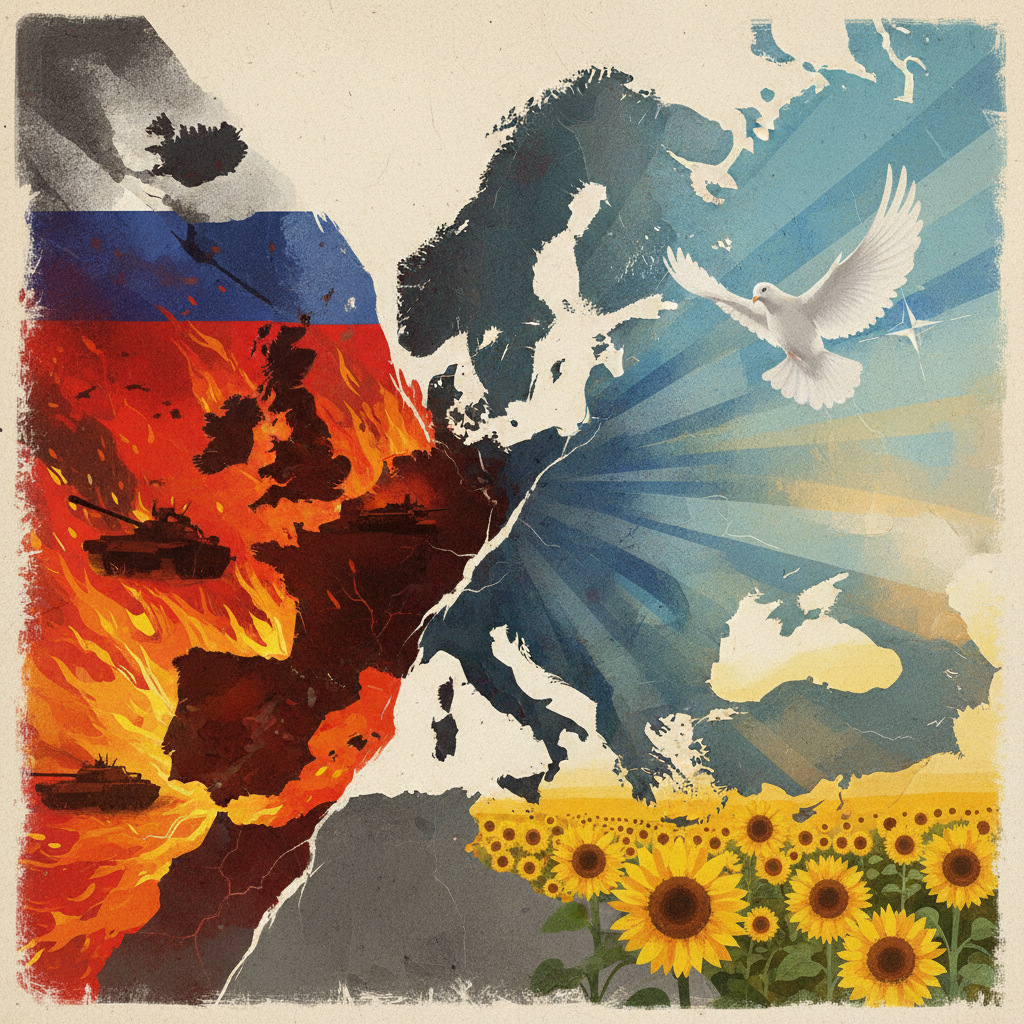
The conflict in Ukraine remains a central focus of global geopolitical analysis, indicated by a current influence score of 89 out of 100 in tracked global events. Key areas of interest for analysts include Ukraine itself, generating 79 tracked signals, Russia with 77 tracked signals, and the extensive sanctions regime, which accounts for 7 tracked signals. These metrics highlight the significant and ongoing nature of the conflict and its broad impact across political, economic, and security domains. The total number of tracked events in the GeoGazet graph, currently at 100, underscores the dynamic and multifaceted character of the war.
Recent Developments and Evidence
Recent intelligence signals from GeoGazet tracking provide concrete evidence of the war's ongoing intensity and evolution, precluding any immediate, astrologically determined end. For example, a signal titled "The Russia-Ukraine War Report Card, June 10, 2026" indicates that the conflict is projected to continue well into the future from a geopolitical analytical perspective. This forward-looking assessment directly contradicts any notion of an imminent, astrologically predicted conclusion. Further signals, such as "Ukraine strikes key logistics in Russian-occupied south" and "Ukraine launches long-range strikes on military and energy sites in Russia," demonstrate active military operations by both sides. These events reflect a continued struggle for strategic advantage, involving offensive actions, logistical disruption, and strikes deep within adversary territory, all of which are characteristic of an active and undecided conflict.
Factors Influencing War Termination
Historically, major conflicts conclude due to factors such as military exhaustion, decisive battlefield victories, significant shifts in domestic political will, the overwhelming impact of economic sanctions, or successful diplomatic negotiations. Examples include the end of World War I through attrition and a combination of military collapse and political upheaval, or the winding down of the Cold War through a complex interplay of economic strain, ideological shifts, and diplomatic engagement, not celestial predictions. The Ukraine war's conclusion will similarly depend on these tangible factors, including the sustainability of international military and financial aid to Ukraine, Russia's ability to maintain its military and economic capacities under sanctions, and the eventual political calculations of leaders in Kyiv, Moscow, and supporting capitals.
What to Watch For Next
Geopolitical intelligence will continue to monitor several critical areas. These include the trajectory of future military offensives and defensive operations by both sides, the effectiveness and enforcement of international sanctions, and their impact on the Russian economy. Analysts will also observe shifts in domestic political stability within Russia and Ukraine, the evolution of international alliances and support mechanisms, and any indications of genuine diplomatic pathways emerging for a negotiated settlement. These verifiable, observable trends, rather than astrological forecasts, will dictate the future course and eventual resolution of the conflict.