Current Landscape of Prolonged Conflict
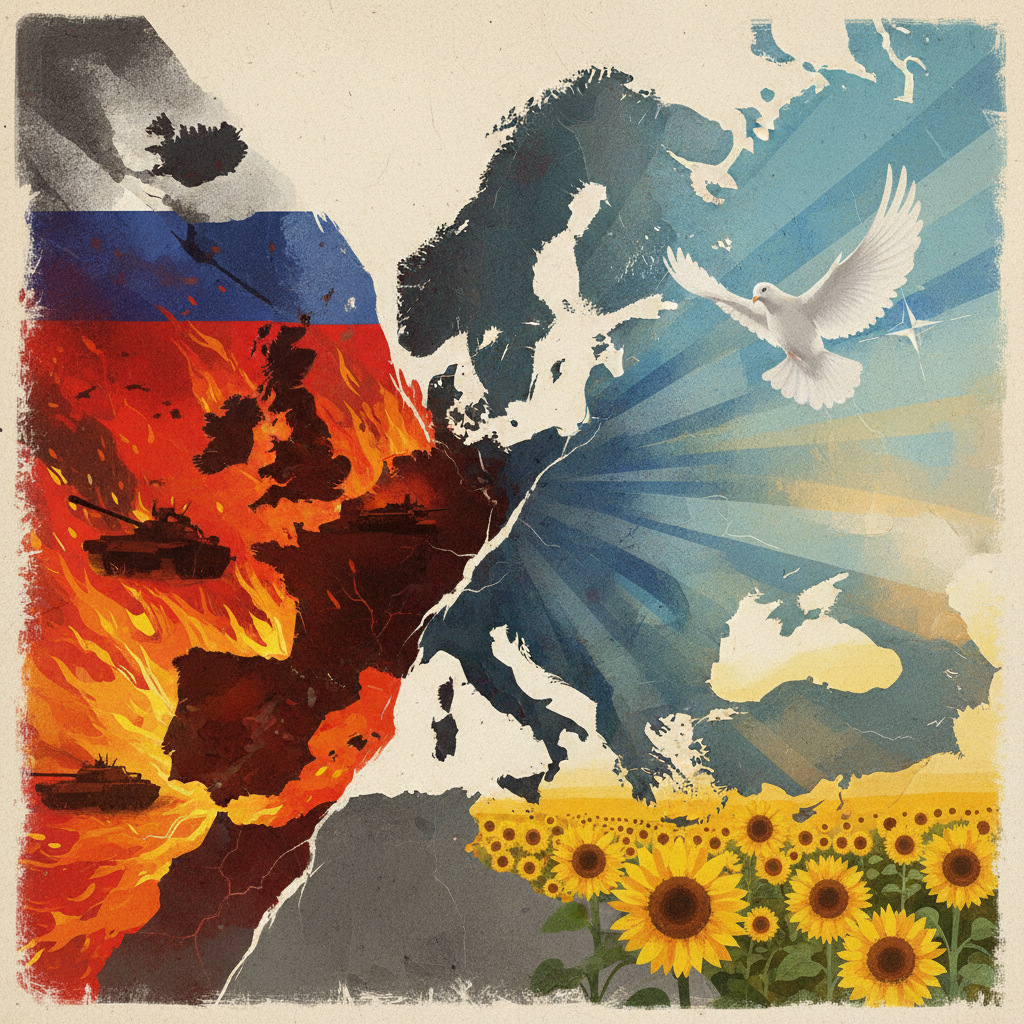
The conflict between Ukraine and Russia, now well past Day 1,570 according to GeoGazet tracking, demonstrates persistent warfare. The human cost remains extraordinarily high, as evidenced by reports such as ‘The defining atrocity of the Ukraine war’: James Verini on the bombing of the Mariupol theater. Despite this devastation, signals of resilience and a long-term outlook persist, exemplified by reports titled ‘Youth, Innovation, and New Reasons for Optimism Amid Russia’s War Against Ukraine.’ The sustained high level of geopolitical attention, with an influence score of 100/100 for the conflict, underscores its global significance. GeoGazet tracking shows Ukraine with 83 signals, Russia with 77 signals, and the United States with 4 signals, indicating the primary actors involved and the concentrated focus of intelligence analysis.
Strategic Stalemate and Geopolitical Dynamics
Both Ukraine and Russia maintain significant, often maximalist, strategic goals. Ukraine’s announced intentions, such as “We Will Isolate Crimea In The Near Future,” signal ongoing offensive ambitions aimed at restoring territorial integrity. Russia, by its continued presence and military actions, indicates a commitment to its perceived security interests and territorial gains. The broader geopolitical context involves varying levels of international support and sanctions, which influence the belligerents’ capabilities and resolve. The sheer volume of analysis, reflected in a total of 100 tracked events in the GeoGazet graph, highlights the complexity and multifaceted nature of the ongoing crisis and the lack of a clear path to resolution.
Historical Precedents for Conflict Resolution
Historically, conflicts of this magnitude rarely conclude swiftly or decisively. Many protracted wars have ended not with outright victory, but through stalemates leading to armistices, as seen in the Korean War, or through long periods of low-intensity conflict and insurgency. The deeply ideological and territorial nature of the Ukraine war suggests that any resolution may be protracted, potentially involving a frozen conflict scenario rather than a comprehensive peace treaty in the near term. The current absence of meaningful diplomatic breakthroughs further reinforces this outlook, requiring significant shifts in military realities or political will for negotiations to gain traction.
What to Watch For Next
Analysts will closely monitor several key indicators for potential shifts in the conflict’s trajectory. These include changes in military capabilities and battlefield momentum, particularly Ukraine’s ability to execute its stated objectives like isolating Crimea. Significant shifts in external support from partners such as the United States, or major internal political developments within either Ukraine or Russia, could also alter strategic calculations. Finally, any credible diplomatic initiatives that move beyond rhetorical positions towards concrete negotiation frameworks would signal a potential, albeit distant, pathway towards de-escalation.