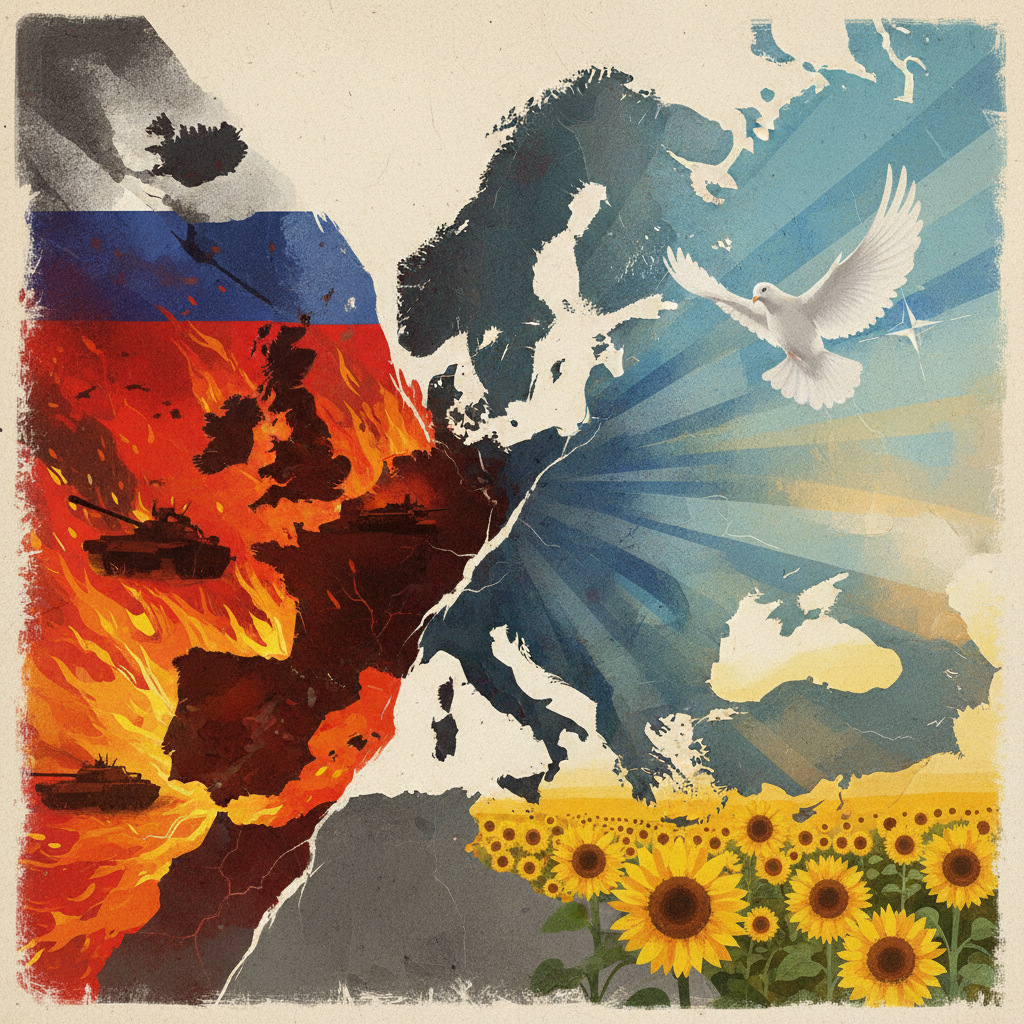
Geopolitical Context of the Ukraine War
The full-scale invasion of Ukraine by Russia, initiated in February 2022, continues to shape the global geopolitical landscape. The conflict remains a primary driver of international relations, influencing energy markets, defense policies, and alliances across continents. The sustained engagement of international actors, particularly NATO members and the European Union, underscores the perceived stakes involved, extending beyond regional security to the stability of the global order established after the Cold War. The humanitarian impact remains severe, with millions displaced and significant destruction across Ukrainian territory.
Key Developments and Intelligence Signals
Current intelligence signals point to continued military engagements and a lack of progress in diplomatic avenues. GeoGazet tracking identifies Ukraine (80 tracked signals) and Russia (75 tracked signals) as top connections by signal volume, reflecting intense ongoing activity. Missiles & Strikes also feature prominently with 9 tracked signals, indicating persistent kinetic exchanges. A total of 100 events are currently tracked in the GeoGazet graph, demonstrating a high tempo of developments.
Recent signals reveal critical insights:
- "Zelenskyy says Russia rejected dozens of Ukrainian proposals to end war in 2026." This statement highlights the profound chasm between the two sides regarding peace terms, suggesting that current conditions are not conducive to a negotiated settlement. This echoes historical patterns in protracted conflicts, such as the Korean War or the various phases of the Israeli-Palestinian conflict, where fundamental disagreements on sovereignty and security preconditions lead to prolonged hostilities despite numerous mediation attempts.
- "Ukrainian strikes hit Russian logistics center." This action indicates Ukraine's continued efforts to degrade Russia's military capabilities by targeting critical supply lines and infrastructure supporting frontline operations. Such strikes are crucial for disrupting troop movements, equipment resupply, and command and control, a tactic employed in numerous conflicts to gain battlefield advantage.
- "Ukrainian drone attacks on Russia kill at least 8, wound dozens." These attacks demonstrate Ukraine's evolving asymmetric warfare capabilities and its willingness to project force deep into Russian territory. The increasing use of unmanned aerial vehicles (UAVs) in this conflict, mirrored in other contemporary battlefields, represents a significant shift in modern military doctrine, allowing for cost-effective strikes against high-value targets and psychological impact.
Analytical Perspective
The rejection of peace proposals by Russia suggests a strategic calculation that military objectives are still attainable or that Ukrainian conditions are unacceptable. This stance complicates any immediate path to de-escalation. Concurrently, Ukraine's strategy appears focused on attrition and disruption, employing a mix of conventional strikes and innovative drone warfare to pressure Russian forces and domestic stability. The scale of drone attacks indicates a growing capacity and willingness to inflict costs on the aggressor beyond the immediate front lines. The focus on logistics centers is a classic military strategy, aiming to "starve" the front, while the cross-border drone attacks serve a dual purpose of disruption and demonstrating offensive reach.
What to Watch For Next
Observers should monitor several key indicators. The frequency and depth of Ukrainian drone attacks into Russian territory will be a critical gauge of Kyiv's evolving offensive capabilities and Moscow's defensive responses. Any shifts in the diplomatic rhetoric from either side, particularly regarding preconditions for negotiations, will be important, despite the current impasse. Furthermore, the impact of Western military aid on Ukraine's ability to sustain its defensive and offensive operations, particularly against Russian logistics, will continue to be a decisive factor. The global influence score for this conflict is expected to remain high given these ongoing developments.