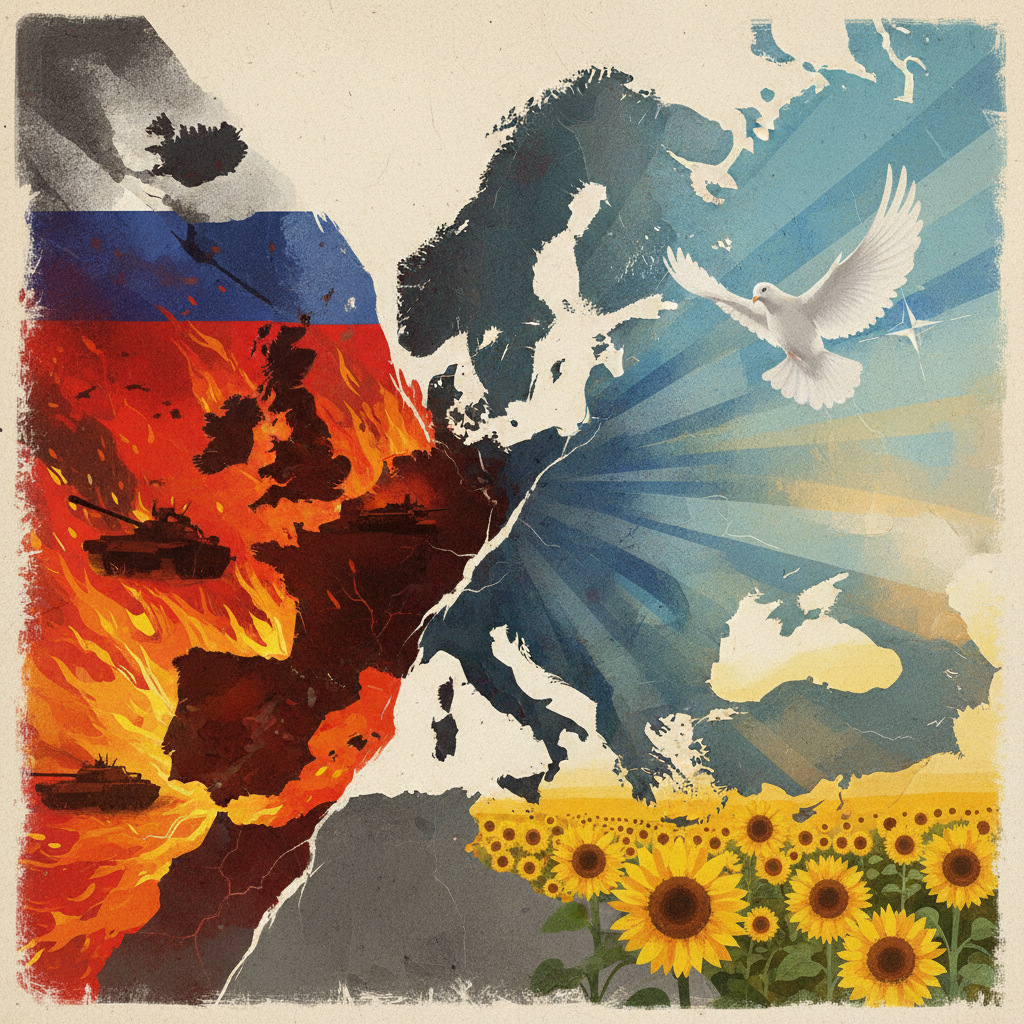
Current Geopolitical Landscape
The Russia-Ukraine war, initiated in February 2022, continues to dominate global security discussions. GeoGazet tracking shows Russia (91 tracked signals), Ukraine (89 tracked signals), and Missiles & Strikes (23 tracked signals) as the top connections by signal volume, highlighting the persistent direct engagement of the belligerents and the continuous nature of combat operations. The current geopolitical situation is defined by a strategic stalemate along much of the front line, ongoing Western military and financial assistance to Ukraine, and Russia's adaptation to sanctions and sustained war production.
Evolving International Support
The trajectory of the conflict into 2026 will be heavily influenced by shifts in international resolve and leadership. Signals from GeoGazet tracking reveal divergent perspectives that could impact future aid. For instance, reports such as "Video Russia-Ukraine war 'doesn’t affect the United States’: Trump" and "See Trump’s shifting blame game on the Russia-Ukraine war" suggest potential challenges to sustained US commitment, particularly in the event of political changes. Conversely, statements like "Ukraine has already won the war against Russia, Finnish president tells CNBC" reflect a narrative of resilience and ultimate Ukrainian success among some allies, potentially bolstering continued support. The total of 100 tracked events in the GeoGazet graph underscores the wide array of factors and opinions shaping the conflict's international dimension.
Military Dynamics and Operational Realities
By 2026, the military landscape is expected to continue its reliance on advanced technologies, particularly drones, and long-range precision strikes. The consistent signal volume for "Missiles & Strikes" confirms these tactics as central to both sides' operational strategies. Both Russia and Ukraine face challenges related to manpower, ammunition supplies, and the sustainability of long-term conflict. Historically, protracted conflicts such as the Iran-Iraq War (1980-1988) demonstrate how wars of attrition can persist for years without decisive breakthroughs, characterized by grinding advances and high costs. Neither side appears to possess the immediate capacity for a complete military victory, suggesting that 2026 will likely see a continuation of localized offensives and defensive holding actions, punctuated by significant missile and drone campaigns.
Economic and Societal Impacts
The war’s economic toll on both nations, as well as its wider global implications for energy, food security, and supply chains, will remain significant. Ukraine's recovery efforts are contingent on sustained international aid, while Russia’s economy continues to adapt to Western sanctions. Societal resilience in Ukraine, despite constant bombardment, and the internal political stability of Russia are critical factors influencing the prolonged nature of the conflict. The war’s ongoing impact on international relations and the global security architecture will also be profound, necessitating continuous adaptation by global actors.
What to Watch For Next
Key indicators for the conflict's direction by May 2026 include the outcomes of major elections in Western countries, particularly the United States, which could drastically alter the volume and type of military aid to Ukraine. Further, observe shifts in domestic political stability within Russia and Ukraine, advancements in military technology and production capabilities, and any renewed efforts towards diplomatic negotiations or peace initiatives. The evolving narratives from international leaders, as tracked by GeoGazet, will provide critical insight into the political will to support or end the conflict.