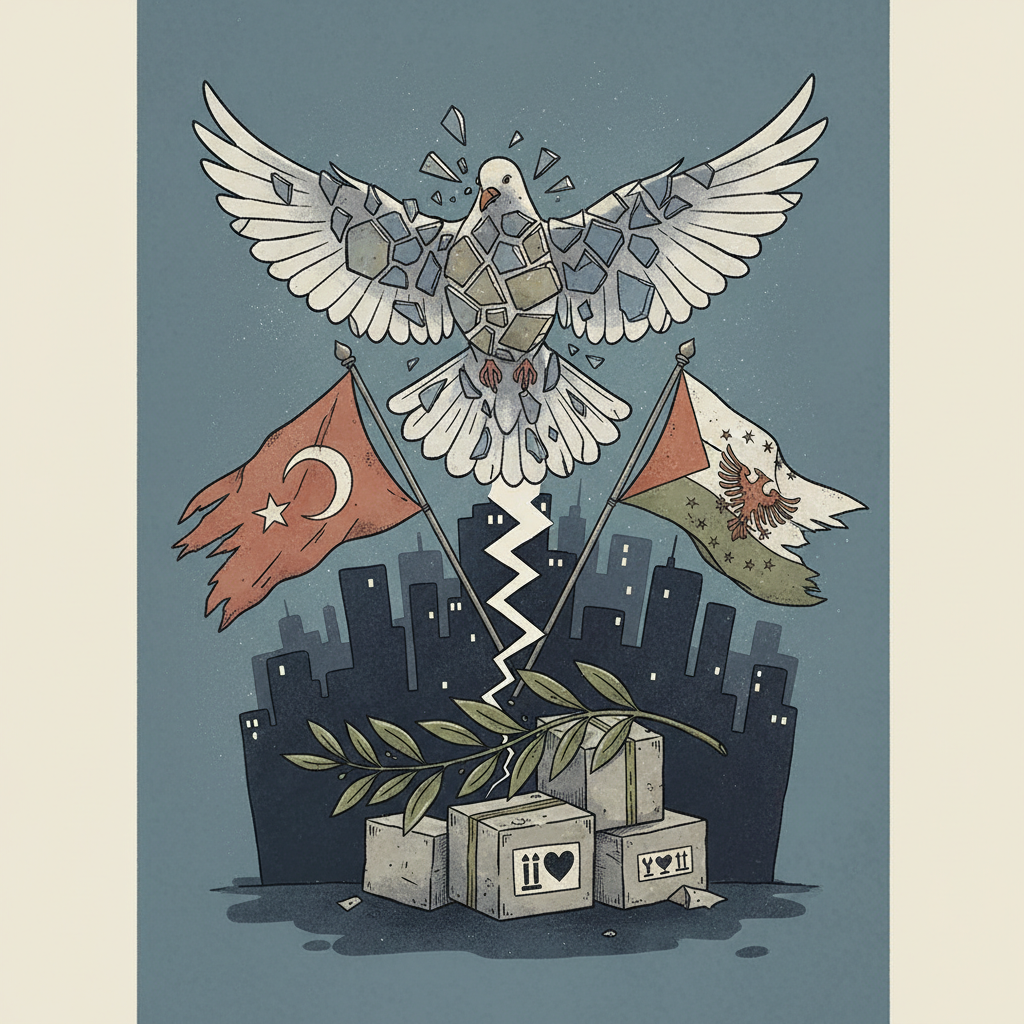
Current Geopolitical Landscape and Obstacles to Resolution
The conflict continues amid simultaneous military operations and intensive diplomatic efforts. Recent intelligence metrics indicate a current influence score of 39/100, suggesting a high degree of instability and a lack of clear pathway to resolution. GeoGazet tracking confirms that "Gaza" (64 tracked signals), "Peace & Ceasefire" (52 tracked signals), and "Israel" (49 tracked signals) are the top connections by signal volume, underscoring the central preoccupations of global observers. This highlights the dual focus on ongoing hostilities and the persistent, yet difficult, pursuit of a ceasefire.
Recent signals from GeoGazet tracking illustrate the persistent challenges. The signal "Palestine weekly wrap: Israel presses deeper into Gaza as Cairo talks begin" demonstrates the concurrent pursuit of military objectives by Israel and the commencement of diplomatic negotiations, indicating a lack of immediate synchronization between military action and peace talks. A major obstacle remains Hamas’s demands, as highlighted by the signal "‘No Deal without Gaza’: Hamas Highlights Iran’s Position on Regional Ceasefire," which emphasizes the group's stance on a comprehensive regional agreement and the discernible influence of Iran. Mediating parties are confronting a wide array of issues, as evidenced by the signal "Mediators for Gaza ’ceasefire’ focus on arms, governance," indicating that discussions extend beyond a mere cessation of hostilities to fundamental questions of control and security arrangements. The "Total tracked events in GeoGazet graph" reaching 100 further emphasizes the dynamic and interconnected nature of the myriad factors at play in this conflict.
Historical Context and End Game Scenarios
Historically, conflicts in the Gaza Strip and the broader Israeli-Palestinian arena have rarely concluded with a clear, definitive end point, instead often transitioning into periods of uneasy truce or low-intensity conflict. Examples such as the multiple Gaza wars of 2008-2009, 2012, and 2014 illustrate patterns of de-escalation rather than outright resolution. Analogies can also be drawn to other asymmetric conflicts globally, where the defeat of one side is often elusive, and endings are negotiated rather than dictated. The current conflict’s conclusion will likely depend on whether Israeli objectives, such as dismantling Hamas’s military capabilities and governance, are perceived as achieved or become politically unsustainable. Concurrently, Hamas’s willingness to accept terms that do not secure its long-term political survival or the release of all prisoners it holds will be crucial.
What to Watch For Next
Key indicators to watch for include tangible progress in ongoing Cairo talks or other diplomatic channels, particularly concerning prisoner exchanges and the provision of humanitarian aid. Any significant shifts in the military strategy of Israel or a substantial reduction in operational intensity would be noteworthy. Furthermore, internal political pressures within both Israel and among Palestinian factions, coupled with evolving regional dynamics and the degree of international intervention, will heavily influence the eventual trajectory of the conflict. The nature of post-conflict governance in Gaza also remains a critical, unresolved question.