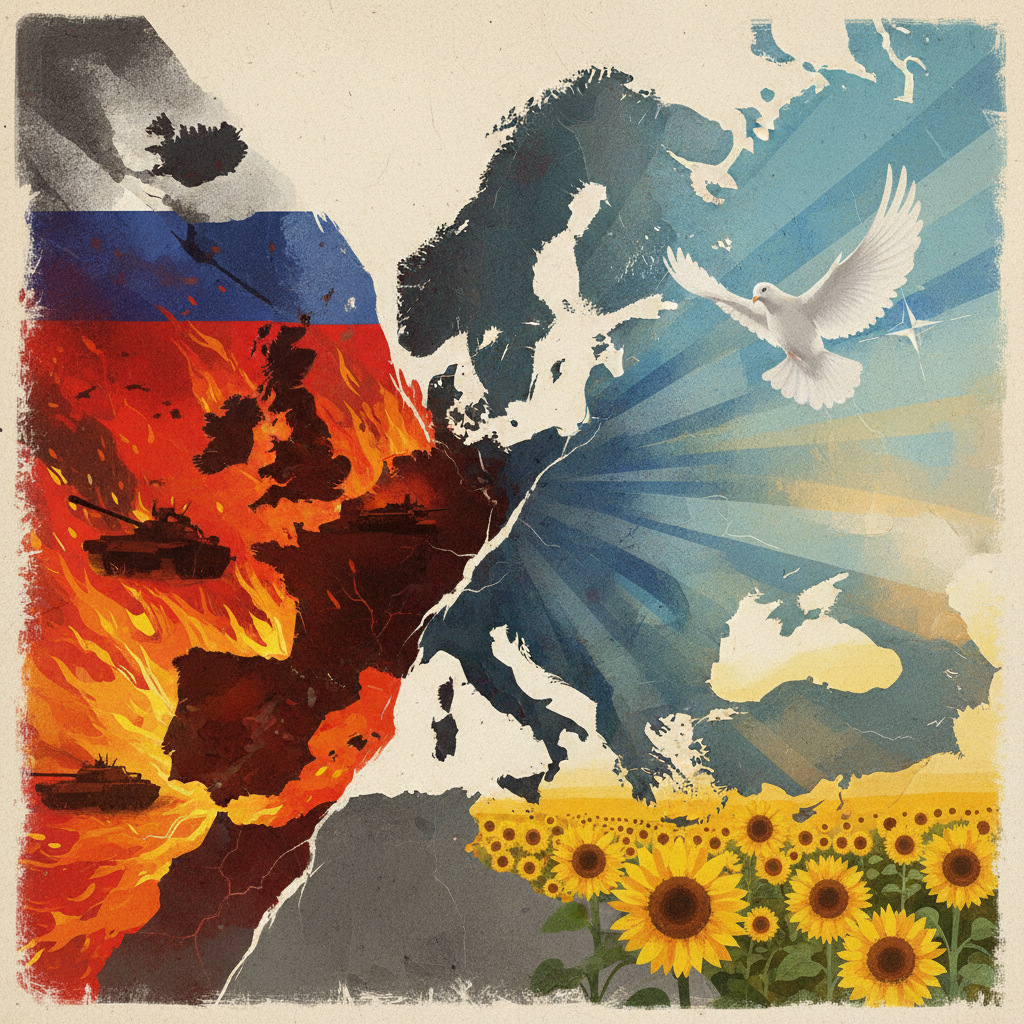
Geopolitical Context of the Ukraine War
The conflict in Ukraine remains a central point of global geopolitical contention, impacting international security, energy markets, and economic stability. Its current influence score stands at 69/100, reflecting its significant and ongoing impact on global affairs. Intelligence tracking indicates that top connections by signal volume are focused on Ukraine with 86 tracked signals, Russia with 84 tracked signals, and Missiles & Strikes with 21 tracked signals, underscoring the enduring intensity of combat operations and the central role of both nations. The GeoGazet graph reports a total of 100 tracked events, signifying a highly active and dynamic operational environment.
Current Geopolitical Outlook
Recent intelligence signals paint a picture of an evolving conflict where economic pressures and sustained military engagements are key drivers. One GeoGazet tracking report suggests the "Russian economy is an 'illusion' built on debt, and a banking crisis will explode, intel report says." This economic vulnerability, if realized, could significantly impact Russia's long-term war-fighting capacity and domestic stability, potentially compelling strategic shifts or leading to internal pressures.
Simultaneously, military actions persist with high frequency. Signals indicate "Nine dead as Russia and Ukraine trade drone and missile salvos," illustrating the continuous attrition warfare across the front lines and rear areas. Furthermore, the operational environment is expanding, as evidenced by reports that "Ukrainian drone strikes force Russia to suspend shipping in Sea of Azov." This suggests Ukraine’s increasing capability to project power beyond direct front lines, disrupting Russian logistics and economic activity in vital maritime zones. These tactical successes, alongside economic vulnerabilities, indicate a multi-dimensional conflict where military pressure and economic attrition are intertwined.
Historical Comparisons
Historically, prolonged conflicts are often determined not only by military might but also by economic resilience and logistical capacity. The strain on Russia's economy, as suggested by intelligence reports, mirrors instances in history where resource depletion and financial instability undermined war efforts, such as the Soviet Union’s later years or imperial powers during extended conflicts. Conversely, the effectiveness of asymmetric warfare, exemplified by Ukrainian drone strikes on strategic targets, resonates with historical precedents where smaller forces leveraged technological advantages or unconventional tactics to challenge larger adversaries. These dynamics suggest that the conflict’s future could hinge on which side can better sustain its war economy and adapt its military strategy.
What to Watch For Next
Analysts will closely monitor several key indicators. These include the actualization of a potential Russian banking crisis and its impact on military funding and public support. The frequency and effectiveness of Ukrainian long-range strikes, particularly those targeting Russian logistical hubs and naval assets, will also be critical. Additionally, the evolution of international support for Ukraine and sanctions enforcement against Russia will continue to shape the external context influencing both sides' strategic decisions.