Ursula von der Leyen Msc 2026
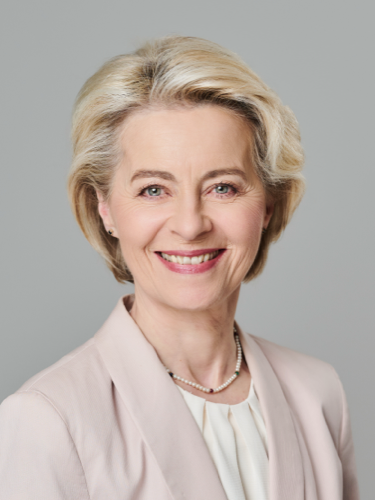
Ursula von der Leyen will address the Munich Security Conference in 2026 as the sitting President of the European Commission, maintaining her maximum influence score and focusing on Ukraine funding gaps and EU strategic autonomy.
Baca laporan lengkapTunjukkan kurang
Von der Leyen's 2026 MSC Role and Influence
Von der Leyen arrives at Munich in 2026 as a consequential voice in European security architecture, holding the EU's top executive position since December 2019. Her influence score of 100 out of 100 reflects her centrality to three overlapping crises: Ukraine's survival, energy security, and transatlantic coordination. The Munich Security Conference represents her key platform to shape narratives on these issues before a global audience of defense ministers, intelligence leaders, and heads of state. Her presence signals the EU's commitment to treating security conferences as venues for binding strategic commitments, not ceremonial statements.
Ukraine Funding and the 82 Billion Dollar Gap
Von der Leyen addressed the most urgent constraint on European support for Ukraine in early 2026: the identified 82 billion dollar funding gap facing Kyiv in 2027. This figure, tracked across geopolitical event data, represents a concrete planning problem rather than an abstract concern. The gap reflects the gap between Ukraine's reconstruction and military needs and current EU and bilateral commitments beyond 2026. At Munich, von der Leyen faces pressure to announce specific funding mechanisms, burden sharing formulas with member states, or new EU borrowing instruments. Her response will determine whether the EU can sustain multi year support or whether funding shortfalls force strategic choices about Ukraine's military capacity.
EU Strategic Autonomy and Energy Relief Pressures
EU leaders pressed von der Leyen heading into 2026 for stronger trade tools, energy relief measures, and coordinated Ukraine support. These demands reflect the tension between supporting Ukraine indefinitely and managing domestic energy costs and manufacturing competitiveness against the United States and China. Von der Leyen must reconcile the call for energy relief, typically understood as negotiating lower gas prices or diversifying suppliers outside Russian sources, with maintaining sanctions on Russian energy exports. Her Munich statement will likely emphasize EU liquified natural gas procurement strategies, renewable energy timelines, and industrial policy coordination. These represent technical levers she can actually control, distinct from larger geopolitical settlements that require US or Ukrainian agreement.
Internal EU Cohesion Tests
Spain's rejection of criticism over its migration policy, noted in tracked statements, illustrates the internal political friction von der Leyen navigates as Commission President. Migration, energy costs, and burden sharing on Ukraine support divide northern and southern Europe, as well as Western and Eastern member states. Von der Leyen cannot resolve these tensions but must prevent them from fracturing EU foreign policy posture on display at Munich. Her credibility at the conference depends on projecting unified European resolve on Ukraine and security investment, even as she manages bilateral tensions over spending, borders, and sovereignty. The 100 tracked geopolitical events in GeoGazet data indicate she operates in a complex, fragmented environment that constantly tests her coalition building.