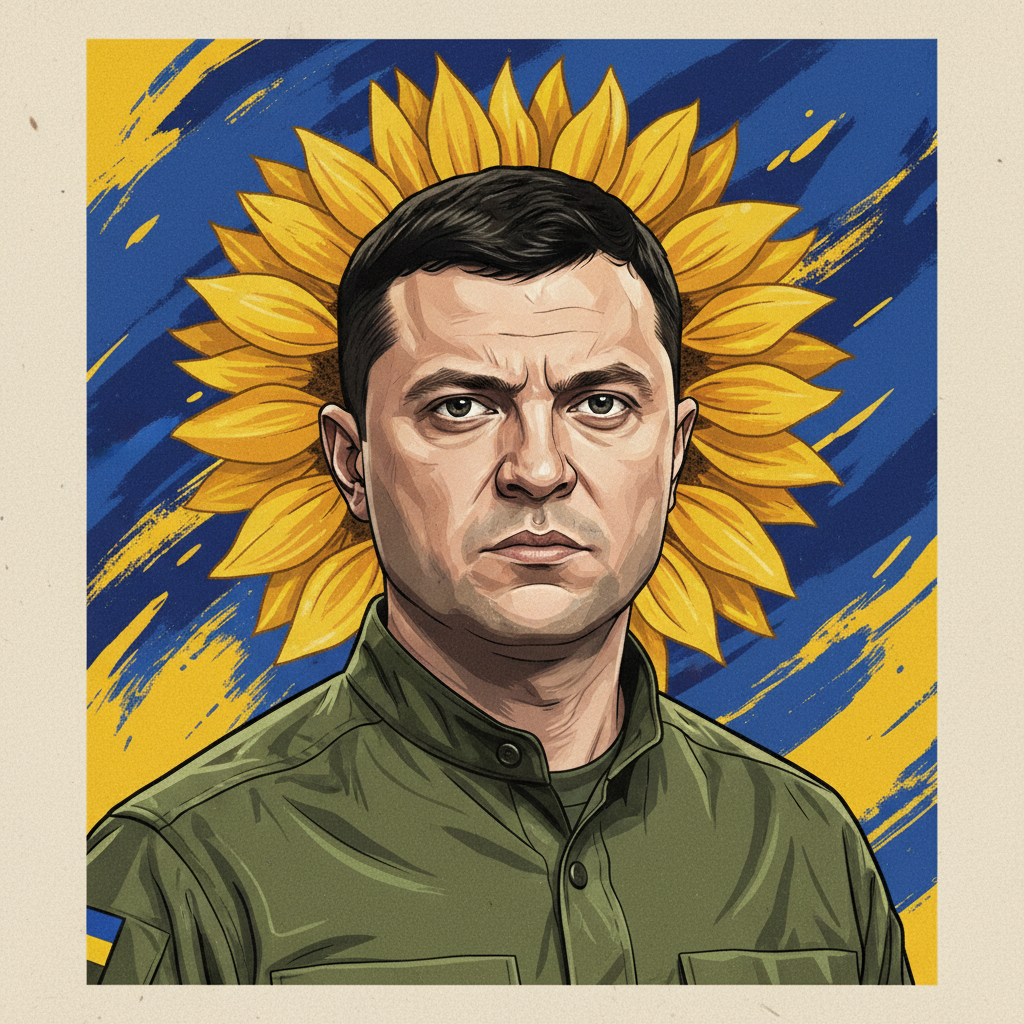
Rise to Political Prominence
Zelensky’s path to the presidency was unconventional. Prior to his political career, he was a successful entertainer and founder of Kvartal 95, a production company. He announced his presidential candidacy on December 31, 2018, and rapidly gained public support. His campaign largely eschewed traditional political rallies, instead leveraging social media and his comedic brand. Running against incumbent President Petro Poroshenko, Zelensky secured a landslide victory in the second round of the election on April 21, 2019, winning over 73 percent of the vote. His platform focused on combating corruption, improving the economy, and bringing peace to the Donbas region. This popular mandate positioned him as a leader committed to democratic principles, despite his lack of prior political experience.
Navigating Wartime Leadership
Since the full-scale Russian invasion began in February 2022, Zelensky's presidency has been defined by his role as a wartime leader. He has successfully galvanized international support for Ukraine, maintaining a steadfast resolve against Russian aggression. His current influence score stands at 33/100, reflecting the intense and ongoing challenges he faces, where traditional measures of political influence are overshadowed by military conflict. GeoGazet tracking indicates his top connections by signal volume are Ukraine (44 tracked signals), Russia (29 tracked signals), and Iran (9 tracked signals), underscoring the war's immediate geopolitical focus and the complex network of state actors involved. The intensity of events surrounding his leadership is further illustrated by a total of 54 tracked events in the GeoGazet graph.
Throughout the conflict, Zelensky has maintained a high profile, actively communicating with both domestic and international audiences. Recent signals from GeoGazet tracking include "Zelensky Says Ukraine Seeing Better Frontline Results as Russian ‘War Bloggers’ Complain," indicating his direct engagement with battlefield narratives. His proactive stance extends to regional diplomacy, as seen in "Zelensky ramps up pressure on Belarus amid fears of deeper involvement in Russia's war." This demonstrates his effort to mitigate security threats from neighboring states. The continuous threat to Ukrainian sovereignty and life is highlighted by signals such as "Ukraine war latest: Russia terrorizes Kyiv with massive ballistic missile, drone attack." His sustained presence and defiance in Kyiv amidst such attacks have drawn historical comparisons to leaders like Winston Churchill, who inspired national resistance during wartime.
What to Watch For Next
Observers will closely monitor several key aspects of Zelensky’s presidency and the broader conflict. Critical developments include the continued flow of international military and financial aid to Ukraine, which is vital for sustained defense. The potential for further escalation or de-escalation of hostilities with Russia, including any shifts in frontline dynamics, will remain a primary focus. Diplomatic efforts, including potential peace negotiations or mediation, will also be scrutinized, alongside the internal political stability of Ukraine as it grapples with reconstruction and ongoing security challenges.